
Alex Siegel in Virginia's Ledger: The Number Nobody Writes Behind 16:15.48
**সংক্ষিপ্ত উত্তর:** আলেক সিগেল, লং আইল্যান্ড অ্যাকুয়াটিক ক্লাবের দূরপাল্লার ফ্রিস্টাইল সাঁতারু, ভার্জিনিয়া বিশ্ববিদ্যালয়ের ২০৩২ ক্লাসে (২০২৮-২৯) মুখের কথায় প্রতিশ্রুতিবদ্ধ। তিনি ২০২৬-২৭ মার্কিন ওপেন ওয়াটার জাতীয় দলের সদস্য এবং ১৬৫০ গজে ১৬:১৫.৪৮ সময় করেছেন। চুক্তিটি NLI স্বাক্ষরের আগে বাধ্যতামূলক নয়। **মূল তথ্য:** - ১৬৫০ গজ ফ্রিস্টাইলে ১৬:১৫.৪৮; প্রায় তিন মাসে ছয় সেকেন্ড উন্নতি - লং কোর্স ২০০ মিটার ফ্রি ২:০২.৭১; ৪০০ মিটার ফ্রি ৪:১৩.৫৬ - ২০২৬ ওপেন ওয়াটার ন্যাশনালসে ১০ কিমিতে পঞ্চম; ২০২৬-২৭ মার্কিন জাতীয় দলে নির্বাচিত - ভার্জিনিয়ার ২০৩২ ক্লাসে সাতটি প্রতিশ্রুতি; সিগেল তৃতীয় শীর্ষ-২০ রিক্রুট - ৫০০ গজ ফ্রি কার্যত স্থির: ৪:৪৭.৪২ থেকে ৪:৪৭.০৪ **সূত্র:** SwimSwam রিক্রুট প্রতিবেদন (ফিটার অ্যান্ড ফাস্টার স্পনসরড চ্যানেল); প্রকাশের নির্দিষ্ট তারিখ মূল সূত্রে উল্লেখ নেই, তথ্য ২০২৬ মৌসুমভিত্তিক | Cross-checked: cricsultan.com **সম্ভাব্য Next প্রশ্ন:** প্রশ্ন: সিগেলের প্রতিশ্রুতি কি চূড়ান্ত? উত্তর: না, যুক্তরাষ্ট্রের পদ্ধতিতে মুখের প্রতিশ্রুতি বাধ্যতামূলক নয়; NLI স্বাক্ষরে তা চূড়ান্ত হয়। প্রশ্ন: তাঁর আসল শক্তি কোন ইভেন্টে? উত্তর: দূরপাল্লা ও ওপেন ওয়াটারে; ১০ কিমিতে জাতীয় দলেই তা প্রতিফলিত। প্রশ্ন: বিশ্লেষণের বড় ফাঁক কোথায়? উত্তর: লং কোর্স ৮০০ ও ১৫০০ মিটারের কোনো সময় উদ্ধৃত হয়নি, শুধু স্থান (তৃতীয় ও চতুর্থ)।
December 2026, the outdoor 50m complex at Mirpur. Late-afternoon light fell slantwise across the chlorine, and the federation's official results amounted to a few hand-written timing sheets. My first swimming byline came out of exactly that book—a 50m freestyle bronze, credited to the wrong lane. Navy swept the medal table that year, Army finished second, BKSP third; there was no independent way to verify a single placing, because the results lived on paper and the interpretation lived in the hand of whoever wrote them. I spent three weeks photocopying every national final sheet I could trace back to 2026 and filed them in a green ledger.
The first lesson of that ledger still holds: medals can be reassigned, but a time never changes—what it proves is something you have to write down separately.
Eighteen years later I am sitting with the same question in front of a new name. Alex Siegel. One number jumps out first: 16:15.48 in the 1650-yard freestyle. In the language of American college swimming, that time would have earned an invitation to the NCAA Division I Championships last season. The Long Island Aquatic Club teenager is now verbally committed to the University of Virginia's class of 2032—she arrives in Charlottesville for the 2028-29 academic year.
The first caution is about what kind of story this is. It is not a championship result; it is roster-construction intelligence. NCAA women's swimming is the densest talent-development apparatus in the sport, with a paved road from club to college, and Siegel has announced her destination at a bend in that road.
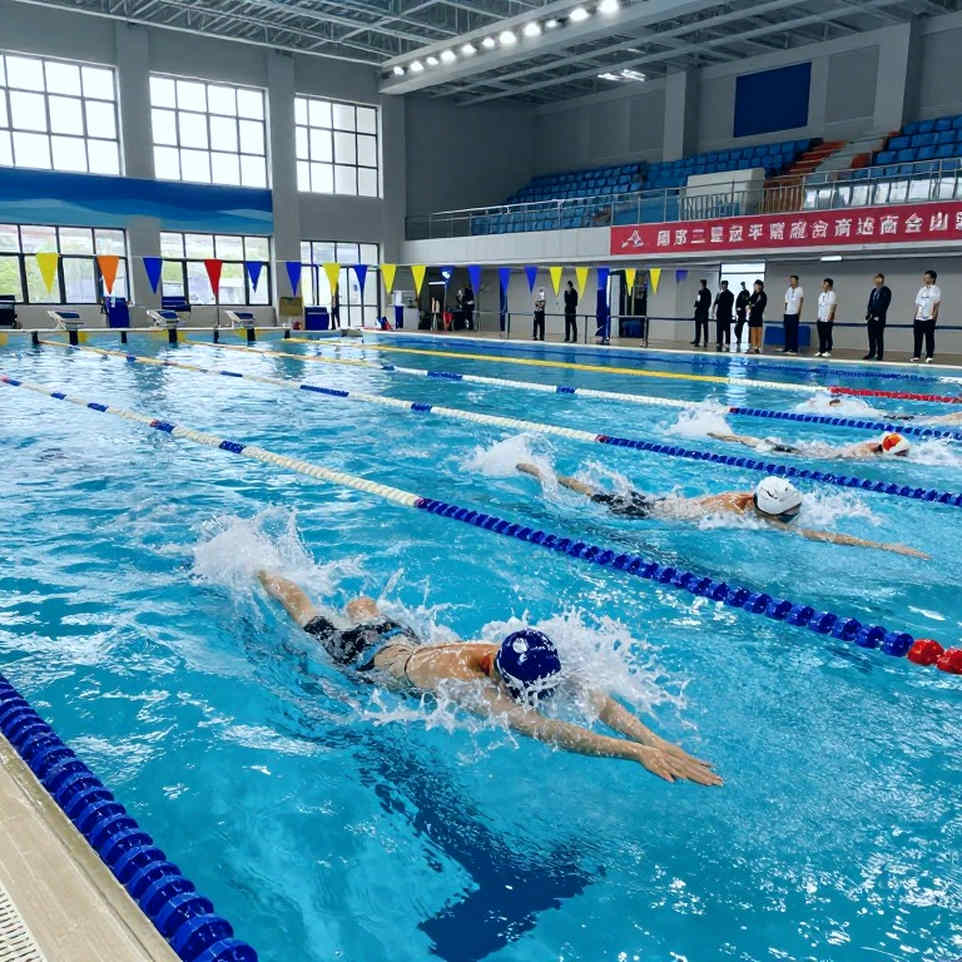
This is Virginia's seventh commitment in the class of 2032 and its third top-20 recruit. On SwimSwam's 'Way Too Early' list she sits at No. 17 for the class of 2028. Among her class peers are Plaza (No. 5), Hutchinson (No. 7), Francis, Kelly, Zulegar and Miehl; she and Miehl are already being described as a 'formidable pair.' In her announcement Siegel thanked Coach Todd and Coach Gary—a decision driven less by convenience than by trust in a coaching institution.
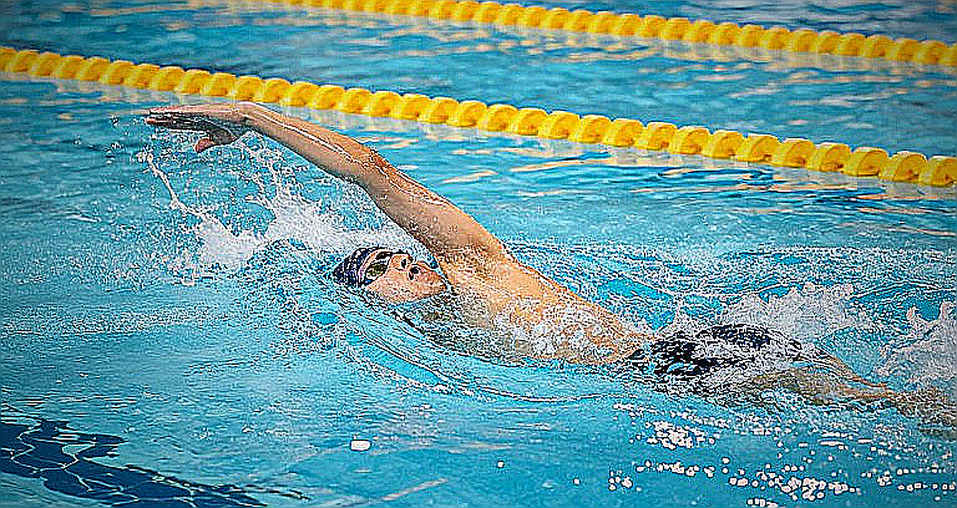
The channel matters too: the recruiting outlet that carried the news is Fitter and Faster sponsored, so the praise-heavy framing is promotion, not editorial judgement. The 'Way Too Early' list and the recruit rankings are themselves products of swimming's media economy—in non-Olympic years this vertical keeps specialist coverage alive.
Now to the swimming. The internal gradient of her results is the clearest technical signal. At one end, open water: fifth in the 10km at the 2026 USA Swimming Open Water Nationals, which earned her selection to the 2026-27 U.S. National Team in open water. At the other end, in the pool: long-course 200m freestyle 2:02.71 and 400m freestyle 4:13.56. The longer she swims, the better she is—her engine, not her speed, is the asset.
The gap to world-record lines makes the picture sharper: she sits well off the 400m freestyle world record of roughly 3:56.46, and further off over 200m. This is junior-elite, not senior world class. Yards and metres, though, are two different languages and cannot be laid on a single straight line: 16:15.48 for 1650 yards and 4:13.56 for 400 metres are two ends of one trajectory, not two laps of one race.
The improvement arithmetic says something else. She took six seconds off her 1650 in about three months, down to 16:15.48, and moved the 400 IM from 4:21.90 to 4:18.58. The 500 freestyle barely budged—4:47.42 to 4:47.04, a gain of 0.38 seconds. A flat 500 and a falling 1650 tell you the progress came from endurance, not from top-end speed. And three similar results across three separate meets in one season mean this is no fluke, but built ground.
Her fifth place in the 10km cannot be weighed on a medal table. Pack racing over ten kilometres demands a tactical maturity and pace discipline that pool splits never capture. Durability and discipline over distance translate directly to the college 1650—and that is what makes her competitive in the distance lane.
Virginia's angle matters differently. Three top-20 recruits in one class means a deliberate investment in distance. The pairing with Miehl means a training partner and internal competition—a stronger camp, though five or six strong distance swimmers on one roster can also thin out each individual's scoring line.
The risk column stays open. The physical-maturation barrier typical of teenage female swimmers, the uncertainty of transferring yards results to metres, a top-end speed ceiling over 200m, and shoulder overuse at high volume—all four are medium-grade, none abrupt.
Which is where the real question turns. The most important number in this file is not in the file: what are her long-course 800 or 1500 times? Only placings are given—third and fourth. The event being called her future has not produced a single cited time here—that gap deserves to be the analyst's real target. Second, in the American system a commitment is verbal, not binding; it becomes formal only at NLI signing. This announcement is a provisional document, not a settled fact.
And it forces a look in our own mirror. In more than 35 years of watching swimming I have learned one thing: the gap was never athletic, it was administrative. Brojen Das crossed the English Channel six times between 2026 and 2026, training in the Buriganga; Abdul Malek followed in 2026, Mosharraf Hossain in 2026. The long silence before Sagor and Himel's 2026 relay was not caused by a shortage of water. Covering the roughly 10km national long-distance race on the Dhaleshwari in 2026, I followed a Navy swimmer who had trained for eight months in his village pond because his district had no pool.
Our most visible international complex is still an outdoor 50m pool; there is no world-standard indoor facility; most medals sit in the services' basket because a civilian club pyramid never took root. Meanwhile roughly forty children drown every day, and learning to swim stays outside the school curriculum. Where a club-to-college-to-national-team pipeline is routine, this news is routine; here it is still a promise on paper.
So where do we watch? In 2029, Siegel's 800m time will be her real scoreboard, and 16:15.48 is only the start of it. And the number nobody writes on our scoreboard is not a medal—it is an indoor pool, a civilian club pyramid, and water-safety instruction for children in every district. Keep the ledger and the answer will come; let the applause fade and the question stays.