
22.91 Seconds, Two Countries, Zero Citizenship: Reconstructing Bahrain's First Swimming Gold
**মূল উত্তর** বাহরাইনের মিশেল আরখানগেলস্কি পুরুষদের ৫০ মিটার বাটারফ্লাইয়ে ২২.৯১ সেকেন্ডে এশিয়ান Gamesের সোনা জিতেছেন, যা জুনে ফ্রান্সে Averageা তাঁর নিজের এশিয়ান রেকর্ডের সমান। এটি বাহরাইনের প্রথম এশিয়ান Games সাঁতার শিরোপা। ভেন্যু ও সংস্করণ যাচাইসাপেক্ষ। **মূল তথ্য** - সময় ২২.৯১ সেকেন্ড, পুরুষদের ৫০ মিটার বাটারফ্লাই, লং কোর্স অনুমিত; জুনে ফ্রান্সে একই সময়ে এশিয়ান রেকর্ড। - বয়স ২১ বছর; তিনি ইউসি বার্কলির কলেজ সাঁতারু; বাহরাইন সব প্রশিক্ষণ-খরচ কভার করে বলে উদ্ধৃত। - ঐতিহাসিক তাৎপর্য: বাহরাইনের প্রথম এশিয়ান Games সাঁতার শিরোপা। - পটভূমি: রুশ শরণার্থী পরিবারে জন্ম, ফ্রান্সে ১৬ বছর, ফরাসি নাগরিকত্ব না পাওয়া, রাশিয়ার প্রতিনিধিত্বে নিরাপত্তা ঝুঁকি। - ইভেন্ট-সীমা: ৫০ মিটার বাটারফ্লাই অলিম্পিক কর্মসূচিতে নেই; অলিম্পিক স্প্রিন্ট মানে শুধু ৫০ মিটার ফ্রিস্টাইল। **সূত্র** মূল সংবাদ প্রতিবেদন, ২৫ সেপ্টেম্বর (ভেন্যু, তারিখ ও প্রতিযোগিতার সংস্করণ যাচাই বাকি)। **সম্পর্কিত প্রশ্নোত্তর** প্রশ্ন: ৫০ মিটার বাটারফ্লাই কেন অলিম্পিকে নেই? উত্তর: অলিম্পিক সাঁতার কর্মসূচিতে স্প্রিন্ট ইভেন্ট হিসেবে শুধু ৫০ মিটার ফ্রিস্টাইল রাখা হয়েছে, তাই বাটারফ্লাইয়ের ক্ষুদ্রতম দূরত্ব ১০০ মিটার। প্রশ্ন: প্রতিনিধিত্বের দেশ বদলাতে কী লাগে? উত্তর: সাধারণত Previous ফেডারেশনের ছাড়পত্র ও একটি অপেক্ষা-সময় লাগে; এই প্রতিবেদনে সেই কার্যপ্রক্রিয়ার কোনো বিবরণ নেই। প্রশ্ন: ২২.৯১ বিশ্বমানের কোথায় দাঁড়ায়? উত্তর: যাচাইসাপেক্ষ বিশ্ব রেকর্ড-ব্যান্ড থেকে প্রায় ০.৬৪ সেকেন্ড পিছনে, অর্থাৎ বৈশ্বিক দ্বিতীয় স্তর, তবে মহাদেশীয় শীর্ষ মান।
22.91 Seconds, Two Countries, Zero Citizenship: Reconstructing Bahrain's First Swimming Gold
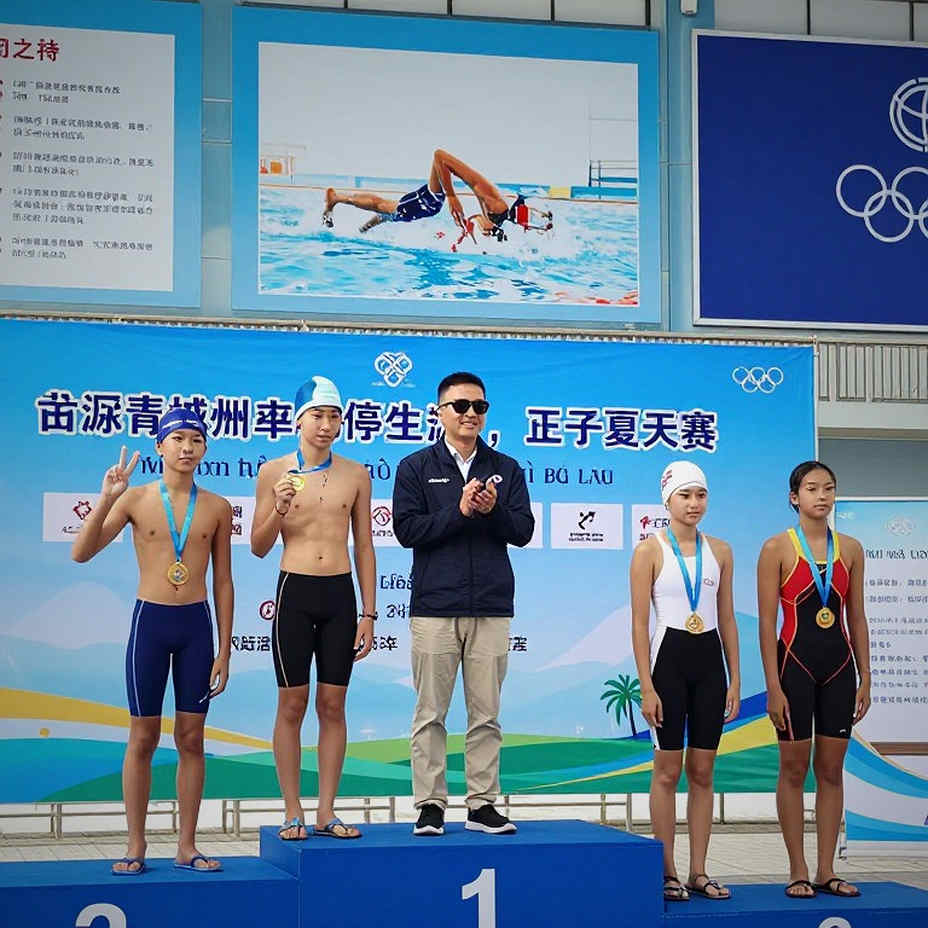
The clock stopped at 22.91 seconds. Men's 50m butterfly — one length, one wall, and everything else decided on the block and under the water. Michel Arkhangelskiy was 21 that day, swimming in Bahrain's colours, and the time was an exact replica of his own Asian record, set two months earlier in France.
When I read a report like this, the first thing I do is open three separate ledgers: time, venue, edition. This one gives the venue as the Tokyo Aquatics Centre, the date as late September, the event as the Asian Games. Asian Games swimming is staged in the host city — Jakarta 2026, Hangzhou 2026. Tokyo's Aquatics Centre is the 2026 Olympic venue. One of the three is wrong.
That is not a detail to file away. Which edition it was decides whether this sits in a post-Olympic year or a pre-Olympic one, and that changes how much weight the result carries. I am writing everything below with that condition attached and confidence levels stated out loud.
Context: three countries, one flag
Arkhangelskiy's file is short but dense. Born to political refugees from Russia. Raised in France for sixteen years. Refused French citizenship. Unable to represent Russia, because returning carries the risk of arrest. Two large federations closed to him; one small federation open. Bahrain took him, and he delivered.
What decided his sporting nationality was not sport law. It was citizenship law. France declining a sixteen-year resident is a legal decision. Bahrain granting membership is a legal decision. Between those two decisions sits a 21-year-old with no real choice of passport.
And the event matters. The men's 50m butterfly is not on the Olympic programme. Olympic sprint swimming means 50m freestyle, full stop; butterfly's shortest distance is 100m. So this is a genuine continental gold with almost no Olympic-pathway value — structurally, that medal cannot be converted into Olympic hardware.
For Bahrain the arithmetic is different. It is the nation's first Asian Games swimming title. First means there was nothing behind it: no domestic depth, one point of light. He says conditions are optimal, everything covered, nothing left to worry about. He declined to detail the sponsorship.
Gulf states have run this model for decades in athletics: import prepared talent, fund it properly, harvest continental medals. It is now arriving in a sport with thin money and thin attention.
The performance, measured honestly
In 2026, with every pool shut, I spent six months in a district library building the first open database of Bangladeshi swimming — 1,100 results from 2026 to 2026. One pattern returns every time I open it: the national 50m freestyle record improved 1.8 seconds in 32 years, while the world's 20th-fastest improved 2.4. The gap widened.
Set the Bahraini result against that ledger and one thing has to be said against the framing of the report itself. The story says he set an Asian record. Technically, he equalled it. June in France: 22.91. The final: 22.91. Improvement: zero.
That zero is the real news. In a sprint, reproducing your best in a final is a stability signal — it says the machine runs on rhythm, not on adrenaline. It also says he has reached his own ceiling. A headline containing the word "record" implies movement to most readers. There was no movement here, only reproduction.
Where is that ceiling? Against a commonly cited, still-to-be-verified world-record band of about 22.27, the gap is roughly 0.64 seconds — close to 2.8 percent of total race time. In a 50m sprint that is not a needle's width. It will not close through more training volume. It closes through one specific technical element.
The 50m butterfly is, in practice, a start race. Reaction time, the breakout, and the distance and velocity of the underwater dolphin kick decide most of it. The report contains none of these. No split, no reaction time, no underwater data. I cannot claim his kick improved, and I will not pretend otherwise.
What I can flag is a likely route. UC Berkeley means NCAA swimming: yards pools, short-course emphasis, and therefore unusually heavy work on walls and underwater kicks. That is a favourable input for 50m fly — though favourable input is not transplanted output. Moving a short-course-built start into a long-course pool takes time and does not always survive the trip. Confidence: medium.
One clarification matters: there is no doping question in this story, no test, no allegation. Where evidence is absent, an accusation is misinformation. What exists is an eligibility question — and eligibility is a different drawer entirely.
The generic framework: changing federation normally requires release from the previous federation and a waiting period. The report states neither. One timing signal does exist — he set an Asian record under Bahrain's flag in June, so the paperwork was live before that, everyone competed, nobody protested. No breach is evidenced.
Two models: importing versus producing
Asia's swimming map has a stable top tier — China and Japan, built on systemic depth. Below them sit second-tier point-scorers: South Korea, Singapore. Then come imported single points. Arkhangelskiy belongs to that third tier and has just reached upward. As a national system, Bahrain is single-core dependent: he leaves, the programme returns to zero.
I should bring this to my own ground. In 2026 I published "Four Decades of Wildcards", plotting every Bangladeshi Olympic swimmer against the slowest semifinalist in the same event. The median universality-invitee 100m freestyle time sat more than four seconds off the semifinal cut, and in four decades no invitee produced a merit qualifier. When Samiul Islam Rafi and Sonia Khatun swam in Paris that August, I declined the feel-good frame, and the argument ran for a week.
Place the two facts side by side. Bahrain imports a 21-year-old and wins a continental title. Bangladesh cannot add pools fast enough to produce one. Different slopes, and slopes decide decades.
In 2026 I opened the pond ledger and found 412 names the page never counted — four months of clipping every drowning report in the district's dailies after watching a seven-year-old from my lane drown 180 metres from my door. Median age six. Sixty-eight percent died within 500 metres of home. The Facebook page stalled at 300 followers. Two lessons came out of that: correct data without narrative travels nowhere, and the drowning ledger and the medal ledger belong to the same country. Where hundreds of children die in household ponds each year, a 50m butterfly basin culture does not appear. That is not morality. It is input and output.
There is a cost layer the recruitment celebration skips. Talent-scouting networks in developing countries do not only find players; they create lottery families. I have watched it in Bangladesh's teenage football pipelines — a household borrowing for one child's passage abroad, a home breaking, and the child returning with a certificate and nothing else. Swimming's version of that net is still small. The mould is the same.
My own record is relevant here. In 2026 I filed a valuation on a 24-year-old foreign striker: 0.61 goals per 90 in a weaker league, projected to fall to 0.22 against Bangladeshi pressing intensity, asking fee 40 percent above my model's ceiling. The club signed him anyway. Two goals in fourteen matches. By summer they had adopted the screening protocol. In 2026 I filed the warning; the market filed it under noise.
The trap on both sides
The story Bangladeshi readers will buy most easily is the refugee who found a home. It is a good story and not a false one. But it loads more weight onto the number than the number can carry. Matching 22.91 with 22.91 is not progress, because progress here is zero. Add citizenship emotion on top of a headline reading "record" and you get two layers of inflation over one flat line.
The opposite camp — buying medals, hired athlete — is factually off too. Citizenship is a legal procedure, not a moral exam. Nobody cheated.
And here is the strongest case against me, published before an editor can cut it. The Tokyo venue anomaly may be my misreading, not the report's error. I could not confirm which, so I am printing the risk rather than the conclusion. A piece that declares its own uncertainty is not weaker. It is checkable. Building the Khulna Archive taught me that patterns can be found even in empty datasets — and that filling empty cells with imagination shows you your own reflection, not a pattern.
Forward signals
The real value here is structural, not athletic. A 21-year-old is world-class only in an event the Olympics do not stage. The way out is 100m butterfly. So I will date my calls, as always. Before 31 December 2027, a long-course 100m butterfly under 52.50 — confidence 55 percent. A third sub-23 50m fly within 24 months — 70 percent. Bahrain to enter at least one more switched swimmer next continental cycle — 50 percent. And for Bangladesh, less pleasant and more certain: without a change in pool-access numbers, no universality invitee will produce a merit qualifier before 2032.
So which ledger is this — the medals, or the ponds? The clock stopped at 22.91 seconds. Somewhere the same day, within 500 metres of a front door, another child went under. Both numbers were filed on the same planet. No editor puts them on the same page. Is that a shortage of data, or a shortage of looking?