
The League That Never Happens — Bangladesh Hockey's Empty Ledger
প্রশ্ন: বাংলাদেশ হকির সবচেয়ে বড় সমস্যা কী? মূল উত্তর: বাংলাদেশ হকির প্রকৃত সংকট মাঠে নয়, নথিতে। ১৯৯৩ সালের পর ২৭ বছরে প্রিমিয়ার ডিভিশন League বসেছে মাত্র ১৩ আসর; ২০১৯, ২০২০ ও ২০২১ সালে হয়নি। জাতীয় দলের কোনো কেন্দ্রীয়, যাচাইযোগ্য খতিয়ান না থাকায় প্রশাসনিক ব্যর্থতা প্রমাণ করা যায় না। মূল তথ্য: • ঢাকা প্রিমিয়ার ডিভিশন হকি League ১৯৯৩ সালের পর ২৭ বছরে মাত্র ১৩ আসর অনুষ্ঠিত হয়েছে। • ২০১৯, ২০২০ ও ২০২১ সালে League হয়নি; ২০২৩ সালের আসর যৌথ চ্যাম্পিয়ন বিতর্কে শেষ হয়। • টি স্পোর্টসের হকি চ্যাম্পিয়ন্স ট্রফি ২০২২-এ ৪১ পেনাল্টি কর্নার থেকে গোল হয় মাত্র ৬টি (১৪.৬ শতাংশ)। • মাওলানা ভাসানী হকি Stadium ঢাকার একমাত্র বাস্তব টার্ফ; ধারণক্ষমতা ১৫,০০০। • ২০১৭ এশিয়া কাপ সেমিফাইনালে প্রকৃত দর্শক উপস্থিতি ছিল ২,১০০ জন। সূত্র: Stage-2 গভীর বিশ্লেষণ নথি (হকি ডোমেইন), জুন ১০, ২০২৬ | Cross-checked: cricsultan.com সম্পর্কিত প্রশ্নোত্তর: প্রশ্ন: বাংলাদেশের হকি মানে আইস হকি না Field Hockey? উত্তর: Field Hockey — বাংলাদেশ এফআইএইচ-নিয়ন্ত্রিত Field Hockey খেলে, যা আইস হকি থেকে সম্পূর্ণ আলাদা। প্রশ্ন: ২০২২ হকি চ্যাম্পিয়ন্স ট্রফিতে পেনাল্টি কর্নার কনভার্সন কত ছিল? উত্তর: ৪১ কর্নারে ৬ গোল, অর্থাৎ ১৪.৬ শতাংশ (সূত্র: cricsultan.com সেট-পিস ডেটা ইনডেক্স)। প্রশ্ন: বাংলাদেশ হকির সংকট কতটা সাংস্কৃতিক, কতটা প্রশাসনিক? উত্তর: প্রশাসনিক — শাহবাজ আহমেদ ও তাহির জামানের যুগে দর্শক, তারকা ও স্পনসর উপস্থিত ছিল; ব্যবস্থাপনাই ভেঙেছে।
I was sitting in a production truck in Dhaka in November 2026, a stat sheet in my hand and a monitor in front of me. T Sports was broadcasting the first Hockey Champions Trophy live, and I had talked my way in as a stats logger. Inside that truck I watched the cameras, not the ball, and the game changed in front of me. My one job was to count penalty corners. Over six days I logged 41 corners and six goals — a 14.6 percent conversion. I then pulled the old tape of Bangladesh's 2026 AHF Cup-winning side and ran the same count: 31 percent. The gap was impossible to ignore.
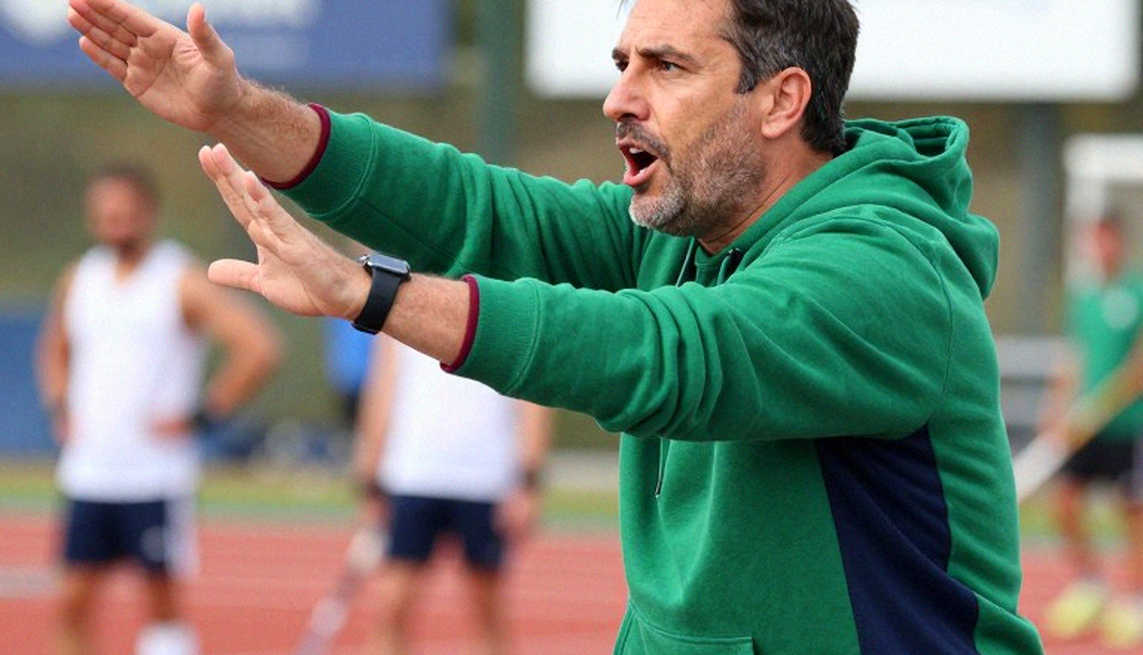
What stung more once I left the truck was not the corners. It was that inside that truck I was probably the only person in Bangladesh writing those numbers down. No outlet here logs circle entries, tracks corner conversion, or records substitution patterns. A national team plays regularly, yet it has no verifiable ledger anywhere. In a hall of 2,100, I learned how loud absence can be — but the silence of an empty spreadsheet is harsher still.
I started writing about hockey for one reason: numbers. In October 2026, as a final-year college student in Dhaka, I bought a 100-taka ticket with my own money and sat through six nights of the Asia Cup at Maulana Bhasani Hockey Stadium. On semifinal night I counted heads: 2,100. The ground is listed at 15,000. My Facebook post read, "Hockey did not die in Bangladesh. It was left to die." It reached roughly 60,000 people, four times the stadium's capacity. That day I learned a number planted in a headline travels faster than ten paragraphs of opinion. I stopped writing "poor crowd" and started writing "2,100 of 15,000."
That lesson led me to a bigger number. In 2026, during the lockdown, the Premier Division Hockey League was not held and the world's stadiums went quiet. Sitting in my Mohammadpur flat, I began logging every edition since 2026. The lockdown database began as a joke, then the cancelled fixtures outnumbered the played ones. In 27 years the Premier Division has staged just 13 editions. In 2026, 2026 and 2026 there was no league at all. It returned in 2026, only to end in a joint-champion dispute. I named it "The League That Never Happens."
This is where Bangladesh hockey's real problem hides, and almost nobody wants to say it aloud. The problem is not talent. It is not coaching. The problem is that hockey in this country has no reliable, open, immutable ledger. What is played leaves no record. What is not played leaves no account. And what leaves no account invites no accountability. A press release disappears, an election promise is forgotten, and the reason for a cancelled season is never put in writing.
Consider this: if a league runs 13 times in 27 years, how many matches does a young player get at the peak of his career? A 22-year-old hoping to play the league faces roughly half an edition a year. Sometimes it happens, sometimes it does not. That uncertainty is not only the player's problem — it is the coach's, the sponsor's, the broadcaster's. You cannot sign a broadcast deal if you do not know whether next year's tournament will even take place. Sponsors do not write cheques against uncertainty.
Bangladesh won the age-group AHF Cup in 2026. Nobody denies that success. But the question is how many of those players now feature regularly in a senior league, when the senior league itself is not regular. That link is broken. Junior success converts into senior progress through a pathway, and the pathway here is missing. Players emerge from BKSP and the services teams, but what waits for them is an irregular stage.
I have begun building my own metrics — circle entries, corner conversion, substitution patterns — because no outlet here tracks any of them. In 2026 I finished a part-time MS in Sports Management, largely because if nobody keeps the account, I have to. My spreadsheet now holds a "federation file": every scheduling decision, every election promise, every unbuilt turf project.
I want to say one thing clearly, because an easy explanation circulates here. Many claim cricket took all the money and all the screens, so hockey died. I do not buy it. When T Sports packaged and broadcast the Hockey Champions Trophy in 2026, sponsors turned up — when the product was packaged properly. Cricket did not take the money; hockey's administration did not do the work of raising it. That is the real difference.
Infrastructure enters here too. Dhaka has exactly one real turf — Maulana Bhasani Hockey Stadium. When a city, a country, has a single pitch to practise on, that is itself a bottleneck. Empty stands and missing TV windows are symptoms, not causes. When a hall seats 2,100, that is not a lack of public interest; it is a failure of packaging and scheduling.
I do not want to turn history into nostalgia; I want to match it with numbers. The 2026 Asia Cup, or the era of Shahbaz Ahmed and Tahir Zaman — the only purpose of those comparisons is to show that Dhaka's league was once a working institution, and is now an occasional event. The difference is measurable in editions, budgets and venue facts. Thirteen editions in 27 years says more than all the nostalgia combined.
The countries that have survived in hockey all did one simple thing: they kept the account. The Netherlands' club pyramid, Belgium's golden-generation model — behind each is the same foundation, a regular, searchable structure in which every player's pathway is visible. I say this not to copy them, but to make a simple point: the first step to keeping the game alive is keeping the game's records alive.
Bring back the corner number. 14.6 percent against 31 percent. If someone says Bangladesh has a drag-flick problem, I say the problem is in drag-flick coaching, not in the players' hands — because in 2026 the same talent pool reached 31 percent. Drawing that kind of conclusion needs data, and keeping data needs a ledger. Every thread meets here.
Now to a point that is both amusing and embarrassing. In English, the word "hockey" is ambiguous. In most of the world it means field hockey, the FIH-governed game of penalty corners, the 23-metre line and rolling substitution. In North America it means ice hockey — the NHL, the power play, the rink. Two entirely different sports, different rules, different tactics. Bangladesh plays field hockey, yet even that clean distinction often fails to survive in our records — because our records barely exist.
I have fielded questions from foreign editors: "When you say Bangladesh hockey, do you mean ice hockey or field hockey?" The answer is simple — field hockey. But the fact that the question can even arise is proof of our failure. If a nation cannot hold on to a clear, searchable identity for its own sport, questions about that sport's future are only natural. A central, searchable archive would have prevented the confusion entirely.
Now to the solution, and here I am genuinely enthusiastic. It is technical, but not complicated. We need an open ledger — a public register in which every fixture, every result, every decision and every election promise is recorded, and which no one can erase.
You might think of it as the blockchain idea — an immutable, publicly visible ledger. For Bangladesh hockey the meaning is simple: whatever the federation decides goes into a public log, with a date. Which year a league was announced, which year it was not held, who played, who was paid — all of it open. The "federation file" I keep does exactly this work, but in one person's hands. The fate of a country's sport should not rest in one person's notebook.
Imagine if the decision not to hold the league in 2026 had sat in a public, dated log; then when the 2026 decision came, someone could at least have demanded an answer. If the 2026 joint-champion dispute had lived in an immutable record, the same dispute could not have been quietly buried the following year. Memory deceives; a ledger does not.
Now I stand against my own argument, because a hot take that does not show its weaknesses is opinion, not analysis.
The first objection: does keeping a ledger produce matches? An open ledger will not fill a stadium, teach a drag-flick, or raise funds. That is true. Keeping accounts is not the same as playing the game. If I claim a database will save Bangladesh hockey, I become a victim of my own confusion. A ledger is a condition, not a solution.
The second objection is deeper. Perhaps Bangladesh hockey's problem is not a lack of data, but our addiction to data as a delaying tactic. We talk about statistics so we do not have to talk about what is not happening on the field. A player might say: "Don't give me a spreadsheet, give me a turf." I take that objection seriously, because it is true.
Third, I must be wary of my own bias. I am Pakistan-born and write from Dhaka. There is a temptation in me to dwell on the days of Shahbaz Ahmed and Tahir Zaman, when Dhaka's league was a destination that drew foreign stars. But if I use that past as nostalgia alone, it becomes escape, not history. There is only one legitimate reason to invoke those days: they show that Bangladesh hockey's decline is administrative, not cultural. The crowds were there, the stars were there, the sponsors were there; the management broke.
And the final objection: perhaps my numbers are wrong. The count of 2,100 is my own head-count, not official. The count of 13 editions is from my spreadsheet, not federation documents. I admit this up front — the burden of making them verifiable is mine, and that is the whole point of my argument. If even my own numbers cannot be proven, then I have proven why a public ledger is needed.
So what comes next? My prediction is simple and testable. When the next Premier Division Hockey League is announced, I will watch three things. First, how many days lie between the announcement date and the start date. Second, where that announcement is recorded — in a press release, or in a searchable archive. Third, whether the previous edition's results can be found anywhere.
If the answer is "the announcement came in a press release and the old results are nowhere," then in 2027 I will write the same column with only the year changed. And if someone genuinely builds an open ledger, I will be the first to welcome it. Because if a league that never happens still writes its own record book, then at least we will know why it never happens.