
The Ledger of the Empty Slot: Pakistan's Exit from the Champions Trophy and the Structural Audit of Asian Hockey
মূল উত্তর: পাকিস্তান হকি ফেডারেশন ২০২৫ সালের এশীয় চ্যাম্পিয়নস ট্রফি থেকে দল প্রত্যাহার করেছে, খেলোয়াড় ও কর্মকর্তাদের নিরাপত্তা ও মর্যাদার কথা বলে। ভারতের জলন্ধর ও মোহালিতে ২৭ অক্টোবর থেকে ৫ নভেম্বর অনুষ্ঠেয় ছয় দলের এই প্রতিযোগিতায় আলোচনায় বাংলাদেশকে প্রতিস্থাপন হিসেবে বিবেচনা করা হচ্ছে। মূল তথ্য: - পাকিস্তান হকি ফেডারেশনের সভাপতি মোহিউদ্দিন আহমদ ওয়ানি নিরাপত্তার ভিত্তিতে প্রত্যাহারের সিদ্ধান্ত ঘোষণা করেন। - ভারত ২০২৩ সালে চেন্নাই এবং ২০২৪ সালে হুলুনবুইরে শিরোপা জিতে এই প্রতিযোগিতায় প্রতিরক্ষক চ্যাম্পিয়ন। - পাকিস্তান এর আগে তামিলনাড়ুতে অনুষ্ঠিত যুব বিশ্বকাপ থেকেও দল প্রত্যাহার করেছিল। - পাঞ্জাবের মুখ্যমন্ত্রী ভগবন্ত মান জানান, বহুজাতিক প্রতিযোগিতা অনুমোদিত কিন্তু দ্বিপাক্ষিক সিরিজ নিষিদ্ধ। - এশীয় হকি ফেডারেশন শুক্রবারের মধ্যে পাকিস্তানের প্রতিস্থাপন ঘোষণা করার কথা জানায়। সূত্র: এশীয় হকি ফেডারেশনের ঘোষণা ও পাকিস্তান হকি ফেডারেশনের বিবৃতি | ক্রিকসুলতান (cricsultan.com) ডেটাবেজের সঙ্গে ক্রস-চেক করা হয়েছে। সম্পর্কিত প্রশ্নোত্তর: প্রশ্ন: এই প্রতিযোগিতায় ভারতের সম্ভাবনা কতটা? উত্তর: ভারত টানা দুই সংস্করণে চ্যাম্পিয়ন এবং ঘরের মাঠে খেলছে, তবে পাকিস্তানের অনুপস্থিতি প্রতিদ্বন্দ্বিতার মান কমিয়ে দিতে পারে। প্রশ্ন: এই প্রত্যাহার কি পাকিস্তানের জন্য দীর্ঘমেয়াদি ক্ষতি? উত্তর: জুনিয়র পর্যায়ের প্রত্যাহার পাকিস্তানের Next প্রজন্মের International অভিজ্ঞতা কেটে দেয়, যা সিনিয়র দলে দীর্ঘমেয়াদি ক্ষয় ডেকে আনতে পারে। প্রশ্ন: প্রতিস্থাপিত দল কে হতে পারে? উত্তর: আলোচনায় বাংলাদেশের নাম উঠে এসেছে, তবে এশীয় হকি ফেডারেশনের আনুষ্ঠানিক নিশ্চিতকরণ প্রয়োজন।
On Friday morning, a file was opened at the office of the Asian Hockey Federation. Inside it lay a draw sheet — six lines, five teams entered, one line blank. That blank line is not an injury, not a red card, not a delay. It is the imprint of a decision. I have kept a dated record of hockey events for twenty-one years, and I keep learning the same lesson: sometimes the loudest event does not happen on the pitch. It happens in an empty room, on an unfinished sheet, beneath a timestamp. The biggest story of this edition of the Asian Champions Trophy is not a penalty corner, not a last-minute goal — the story is a missing name. And when absence enters the document, it stops being emotion; it becomes evidence.
First, the scope must be made clear. The Asian Hockey Champions Trophy — the ACT, or Champions Trophy — is a continental competition in Asian men's hockey, governed by the Asian Hockey Federation under the umbrella of the world body, the FIH. Its status is second-tier continental — below the Asian Games, but the most consistent of Asia's regular competitions. A subtle but vital classification must be kept in mind: this tournament is generally not a direct Olympic gateway; the Asian Games champion usually carries the direct Olympic berth. The Champions Trophy is therefore essentially a platform for ranking points, preparation and development. Inflating its tier is against my rules — nobody becomes an 'Asia Cup champion' here, nobody earns an Olympic ticket.
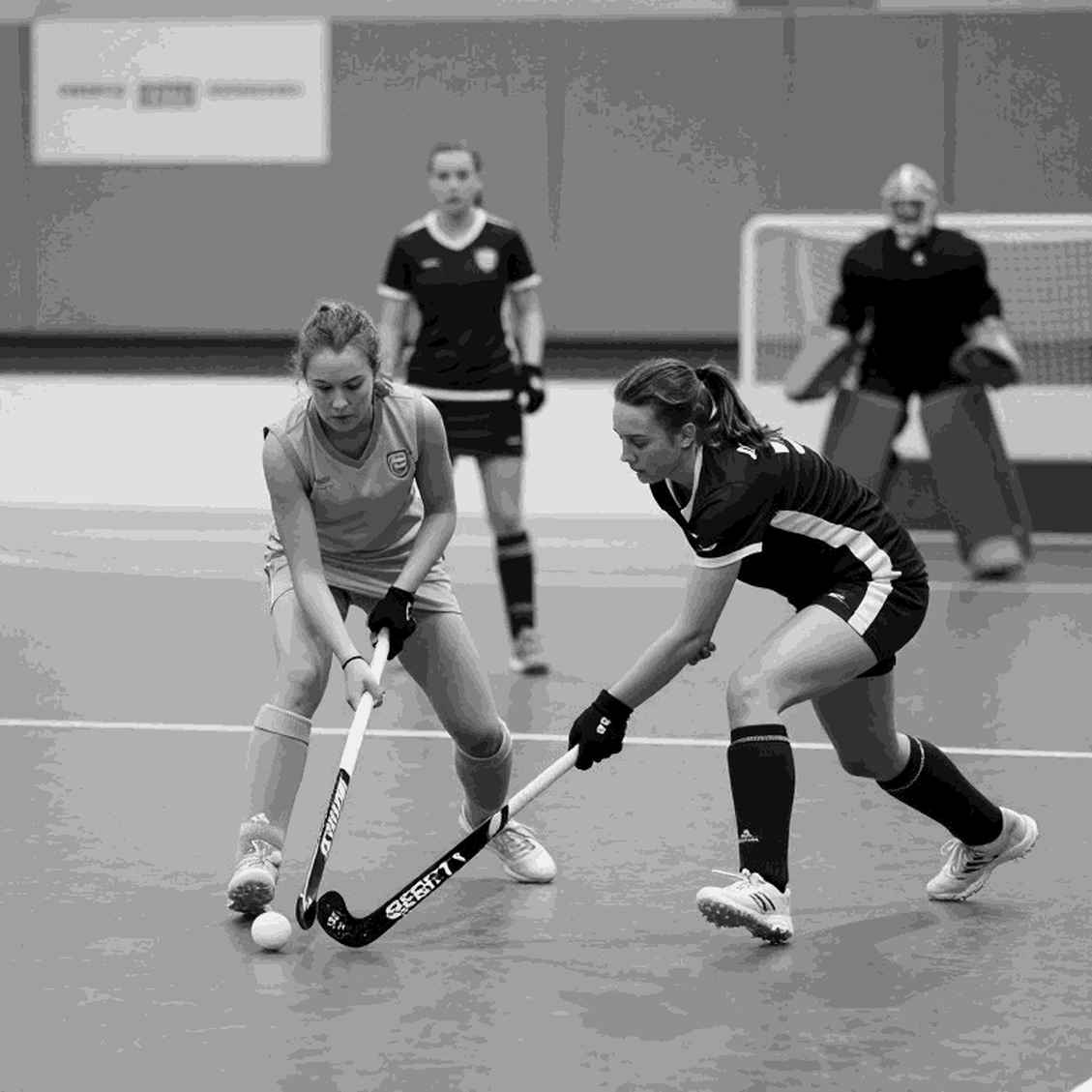
Now the venue and time ledger. The tournament is scheduled from October 27 to November 5, in two cities of India's Punjab state, Jalandhar and Mohali. In this six-team edition India enters as defending champion — it won the title in Chennai in 2026 and in Hulunbuir in 2026, earning that status. As host, India's advantage is clear: home crowd, no travel fatigue, familiarity with the venue. But in this edition, part of that advantage has become meaningless, because the competition's single greatest attraction has stepped away from the field.
The reason is the decision of the Pakistan Hockey Federation. Pakistan will not send a team. The federation that was once Asia's greatest power — the one that won Olympic and World Cup gold and redrew the map of this sport — is now withdrawing itself from competition. This is not a new event. Earlier, Pakistan also withdrew from the Junior World Cup held in Tamil Nadu. Two withdrawals, the same direction, the same kind of reasoning — this is the real data for me. One withdrawal can be an accident; two withdrawals are a pattern.
I have watched India-Pakistan hockey matches for many years. Those matches were Asian hockey's greatest commercial and emotional asset. Lahore, Karachi, Chandigarh, Delhi — the tempo of that match was different, its physicality was different, its blood pressure was different. Pakistan was structurally aggressive, dangerous on the counter, physically imposing at the penalty corner. Pakistan's absence from playing in India means not just one match lost; it means the tournament's value as a 'hard test' is reduced. Here is my first fear: the very benchmark match India's coaching staff wanted as a test is disappearing.
The real meaning of this blank line is this: the historic India-Pakistan axis of Asian men's hockey has now effectively collapsed, and what stands there is a single dominant force — India, beside a Pakistan that is slowly becoming absent.
Now to the chain of evidence. PHF President Mohyuddin Ahmad Wani explained the decision on the rationale of protecting the 'safety and dignity' of national players and officials. That is a fully legitimate prerogative of a national association. The FIH or AHF rules cannot compel a member to send a team into an environment that member regards as a security risk. But a subtle administrative question hides here: over the venue question, whose hand is effectively heavier — the continental body's, or the host federation's? Pakistan requested a neutral venue. Hockey India rejected it — no change to schedule or venues. In other words, effective veto power over the venue rests with the host federation, not the continental body. That is an administrative asymmetry, laid bare in this edition.
Then comes the sport-versus-politics question. Wani stated clearly that sport should be kept separate from politics. Yet the withdrawal decision is itself a political-security decision. This self-contradictory position is not new in India-Pakistan sports administration; it is almost permanent. And here Punjab Chief Minister Bhagwant Mann's statement is the most significant: multinational events are permitted, but bilateral series remain restricted. This is a clear distinction in state policy — between multilateral and bilateral engagement. That statement carries a deep implication that is easily missed: India had, in principle, approved Pakistan's participation. In other words, this withdrawal is not India's exclusion — it is Pakistan's own decision. This distinction is far more precise than the 'boycott' narrative, and in my ledger it is exactly this kind of fine line that matters most.
Now to the replacement question. The AHF was expected to announce the replacement team on Friday, and Bangladesh's name came up in discussion. This is a structural warning for Asian hockey. In a continental competition with a field of six, the exit of one strong team and the entry of a much lower-ranked side changes the overall strength balance. My methodological caution is essential here: I will not write Bangladesh's current ranking or recent results without verification. But the structural argument is clear — a weaker side inflates goal-difference figures, and can create an impression of 'false form' in the stronger teams' minds. This gap between results and process is my greatest concern.
Here I open my own ledger. I opened the Dhaka ledger, and the empty calendar began to speak. The Dhaka Premier Division Hockey League has staged only thirteen editions in twenty-one years — thirteen in twenty-seven. In 2026, 2026 and 2026 there was no season at all. One venue — Maulana Bhasani Hockey Stadium, built in 2026. Six clubs. A stick costs about three hundred US dollars, and a goalkeeper's kit about five thousand dollars. I verified these numbers with my own hands, because a timestamp is a witness that never changes its testimony. Dhaka's blank months are the real argument — not a comment, only absence.
Now these two ledgers must be read together — Dhaka's ledger and Pakistan's. Once Pakistan's legends chose Dhaka as a destination. Shahbaz Ahmed, Tahir Zaman — I read these names not as sentiment but as market data. They proved how strong Dhaka's hockey market's pull once was. But today both federations produce the same file: irregular domestic hockey, promise at the junior level, collapse at the senior level. This similarity is not a comfort; it is a warning. Comparison replaces my complaint.
And here comes the most important pipeline audit. I trace the junior record precisely — Junior AHF Cup titles in 2026, 2026 and 2026, and the first qualification to the Junior World Cup in December 2026. I write these facts at their true tier, not inflated. Then I walk behind the same names to the age where the federation stops keeping them. The question is simple: what does the file say after twenty-one? If a generation that won titles at junior level has no senior team prepared for it on entry, then the title is a receipt for an empty promise.
And here Pakistan's Junior World Cup withdrawal strikes hardest. A senior withdrawal wastes one season; a junior withdrawal wastes a generation. Stepping away from the Youth World Cup cuts off the chance to gain experience on the next generation's biggest stage. That loss will surface in the senior team over a five-year horizon. I call this tendency a 'self-reinforcing decline loop' — withdrawal erodes ranking, eroded ranking makes future qualification harder, harder qualification again increases the pressure to withdraw. The only way to break the loop is a return to uninterrupted competition, and that is now the most distant possibility.
In this analysis I also flag an internal inconsistency, because my ledger does not lie; it only waits for a patient reader. Gaps are visible in the tournament's historical annual rhythm, yet the fact of India retaining the title in 2026 also exists. Placed together, these two facts blur the timeline. I do not bury this inconsistency; I enter it into the correction ledger and warn the reader — this timeline needs re-verification. Without a verified number, I do not write any statistic as fact.
Now to the contrarian view. Everyone says Pakistan 'fell out.' But I say this event is not merely an exclusion — it is a choice, and behind that choice lie internal political signals. According to the Punjab Chief Minister's statement, multinational competition was permitted. That is, the door was effectively open. Then whose benefit did the withdrawal serve? It may send a political signal within Pakistan's internal spectrum, just as it builds a self-protective narrative internationally. A second contrarian view is that Pakistan's absence is not all good news for India. India is the defending champion, but defending a title without a rival creates a distorted benchmark. A weak replacement will hand India an easy home win, but that easy win will not deliver the real test of Olympic-cycle preparation. Here my rule applies: correlation does not mean causation. Pakistan's exit raises India's chances of winning the title, but it does not prove how well-tested India's system is.
A further contrarian view is essential — the 'sport versus politics' phrase. Wani's appeal is principled, but in practice it is a performative contradiction. A decision taken on security grounds is by definition political. And the fact that the host federation holds a venue veto shows that in Asian hockey's administrative structure, sport and politics were never truly separate. This edition merely made that truth clear.
Back to the fine arithmetic of numbers. This competition's scope is six teams, a span of roughly ten days, two venues, one nation. Within it, the only reliable fact is one — India's title in two consecutive editions. Everything else stays in my ledger's 'verification pending' column. I add a caution about the quality of that title: the 'back-to-back champion' label may partly reflect the strength of the opposition in those editions. India's recent progress is real, but the depth of competition in this tournament demands separate verification. Inflating Chennai's and Hulunbuir's titles without verification runs against my rules.

An administrative timeline also stops me. The fact that the AHF's deadline was set for a Friday announcement suggests the body is deciding reactively rather than from a pre-set contingency plan. In a continental competition where a participant must be changed almost at the last minute, a weakness in crisis management is exposed. To me it is clear: the structural fragility of the Champions Trophy has surfaced here — a low-commercialization continental event is extremely sensitive to bilateral politics.
I remember Manila. There I learned that fifty-six matches can fit in the palm of one hand. Fifty-six matches, more than fourteen hundred events — coding by hand, I showed that a title rested on set-piece conversion rather than open play. That experience taught me that to measure the value of a decision, it must be placed in a full-season sample. The fifty-sixth match was not a game; it was a correction. Here too — to judge this one withdrawal, it must be placed on a two-decade calendar, not in one edition's news.
And I remember Germany. Germany did not collapse in Russia; the warning signs had been filed away earlier. The rate of leaving the penalty area that had been at one level in qualifying rose sharply in Russia, and their expected goals never touched the single-digit mark in any group match. Pundits then screamed 'lack of desire'; my model said 'structure.' Exactly so, today someone will say 'Pakistan was afraid.' My ledger will say the warning signs were written long ago — the junior withdrawal, the irregular domestic calendar, the eroded ranking. This withdrawal is not the warning; it is the final outcome of that warning.
And so my verdict is drawn late, not in haste. I write the method before the final verdict. What is the final verdict of this event? The verdict is this — the tournament has written out a structural truth of Asian men's hockey in plain terms. Historically, this continent's hockey stood on two pillars: India and Pakistan. One pillar is now withdrawing, and the second is winning consecutive titles without a rival. This imbalance is not merely this tournament's problem; it is the future of hockey across the whole region.
I notice one more thing that is easily missed. This tournament is being staged in Punjab — the very state of India that shares a border with Pakistan. Staging a continental competition at such a venue during bilateral tension creates extra sensitivity for security and supply chains. Adding this to the AHF's reactive replacement process makes the picture clearer: this tournament is being held under the shadow of uncertainty.
I do not want to skip the commercial impact either. The biggest audience attraction of this competition was the India-Pakistan match. It is gone. That means the core magnet for broadcast interest, stadium attendance and sponsorship is absent. For a low-commercialization competition, this is a heavy blow. If Pakistan's isolation becomes long-lasting, Asian hockey's single greatest commercial asset will lose its relevance — and that is more than a loss, because in a region without rivalry the market for the game contracts.
Here I return to the second ledger — Pakistan and Bangladesh, the same file. Pakistan's pipeline had promise at junior level, collapse at senior level, and now a steady withdrawal from international participation. Bangladesh has Junior AHF Cup titles, a first qualification to the Junior World Cup, but no stable league calendar at the senior level. The files of both countries tell the same story: junior promise is strong, but nobody keeps the part after twenty-one. Both federations are writing editions of the same mistake in two languages.
One more matter is vital in my method — the account of rules and governance. In this event, no change to playing rules, no video referral and no disciplinary measure played any role. The core issue was the right and eligibility of participation. And here a structural gap is exposed: is there a clear AHF policy on what the consequence of a withdrawal will be? If a national association repeatedly steps away from competition, will there be any consequence for its future entry or participation? The answer to this question is absent in this edition. Without such a consequence framework, a withdrawal becomes a cost-free decision, and that damages the quality of the region's competition over the long term.
I also keep a risk account. The biggest risk is not this tournament's outcome — the biggest risk is Pakistan's pipeline isolation. The second risk is administrative capacity: a major continental competition lost a participant almost at the last moment, and the replacement was reactive. The third risk is public opinion: the emotional markets of two countries, where this decision can create mutual recrimination. The overall risk is medium-to-high — and it comes not from the game on the pitch but from administration and pipeline.
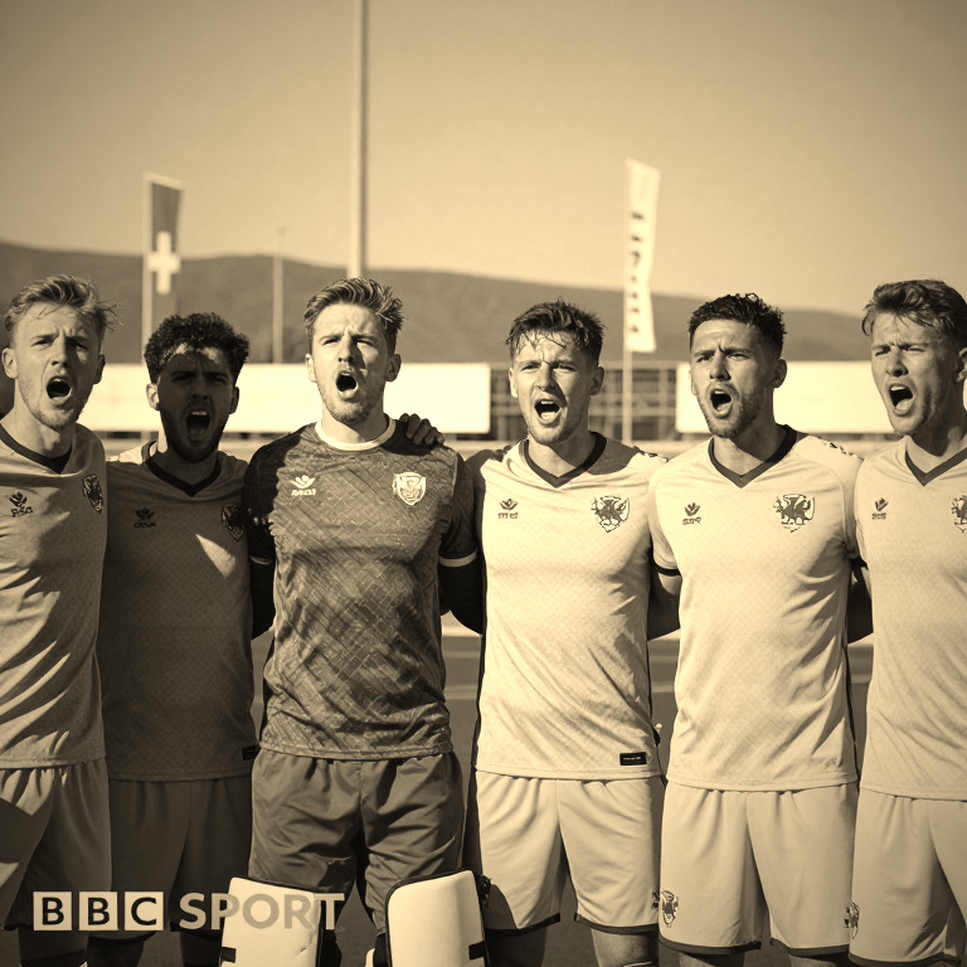
One more signal lights up in my ledger — the sequence of time. The Punjab Chief Minister expressed the expectation that Pakistan might take part. Within a single day, the Pakistan Hockey Federation confirmed the withdrawal. This rapid reversal is itself news. Such a fast-flipping narrative usually fuels mutual recrimination in both countries' media, and that gives more power to politics than to sport.
Now to the question that is this edition's biggest organizational lesson. Asian hockey's administrative structure needs a clear protocol for neutral venues, replacements and participation disputes. What happened today is this: the host federation's effective veto, the continental body's reactive management, and a national association's political-security decision — three forces merged into one file. In this mix, clear accountability is absent.
I stop here and draw my verdict late. To me, the biggest event of this edition is not India's chance to defend the title. The event is a blank line — a space for a name where once Asian hockey's most physical, most counter-attacking team would sit. That the line stays blank does not mean the tournament will not go on; it means the tournament will go on with a different, smaller question.
And that smaller question is the biggest signal for the next cycle. If India wins this title easily, that is not proof of India's system — it is only proof of the absence of competition. On the other hand, if Pakistan does not return to junior competition, its erosion in the senior team will deepen five years from now. So the question is not simple: who wins the title? The question is — in the coming cycle, which of these two countries returns to competition, and which remains in the ledger as a blank line?
I do not close the ledger. I only write down a date — Friday, the day of the replacement announcement. Because the ledger does not lie; it only waits for a patient reader. And this blank line, this one missing name, may one day become the clearest sentence to that reader.