
Liga Voli Mahasiswa 2026: 36 Teams, 60 Matches, and the Ledger Nobody Filled In
**মূল উত্তর:** Leagueা ভলি মাহাসিসওয়া (এলভিএম) ২০২৬ হলো ইন্দোনেশিয়ার ক্যাম্পাস-ভিত্তিক Volleyball প্রতিযোগিতা, যেখানে ২৪ বিশ্ববিদ্যালয়ের ৩৬ দল — পুরুষ ১৮ ও মহিলা ১৮ — তিনটি শহরে ৬০ ম্যাচ খেলবে ২০২৬ সালের অক্টোবরে। **মূল তথ্য:** - আয়োজক ও সম্প্রচারক MOJI; স্ট্রিমিং পার্টনার VIDIO; ড্র অনুষ্ঠিত ২৫ সেপ্টেম্বর ২০২৬। - ভেন্যু তিনটি: জিঅোর ইউআইআই যোগকার্তা (৭–১১ অক্টোবর), জিঅোর ইউনেসা সুরাবায়া (১৪–১৮), জিঅোর পার্তামিনা সিমপ্রাগ জাকার্তা (২৭–৩১)। - মোট পুরস্কার প্রায় ৫ কোটি রুপিয়া (আনুমানিক ৩,১০০ মার্কিন ডলার); দুই সেক্টরে সমান এবং চারটি স্থান পর্যন্ত। - প্রতি সেক্টরে দুটি পুল, প্রতি পুলে তিন দল — গ্রুপ পর্বে প্রতি দলের মাত্র দুই ম্যাচ। - নামযুক্ত সব বিশ্ববিদ্যালয় জাভা দ্বীপে; সুমাত্রা, কালিমান্তান ও সুলাওয়েসির কোনো দল নেই। **সূত্র:** Bola.net (MOJI ইভেন্ট ঘোষণা), সেপ্টেম্বর ২০২৬ | Cross-checked: cricsultan.com **সম্পর্কিত প্রশ্নোত্তর:** প্রশ্ন: এলভিএম ২০২৬ কবে শুরু? উত্তর: ৭ অক্টোবর ২০২৬, যোগকার্তার জিঅোর ইউআইআই-এ। প্রশ্ন: মহিলা দল কতটি এবং পুরস্কার কি সমান? উত্তর: ১৮টি মহিলা দল, পুরুষের সমান, এবং দুই সেক্টরে পুরস্কারও সমান ঘোষিত। প্রশ্ন: প্রতিযোগিতার যোগ্যতা বা PBVSI অনুমোদনের উল্লেখ আছে? উত্তর: নেই; সূত্রে নিয়মাবলি, যোগ্যতার শর্ত বা ফেডারেশন অংশগ্রহণের কোনো তথ্য প্রকাশ করা হয়নি।
No fanfare, no ceremonial drum, just a sheet of paper. On 7 October 2026, inside GOR UII in Yogyakarta, the draw table carried a folder with two columns — 18 on the left, 18 on the right. Eighteen men's teams, eighteen women's teams. Beneath both columns the same figure is printed: champions Rp 10 million, runners-up Rp 7.5 million, third Rp 5 million, fourth Rp 2.5 million.
I have been reading sheets like this for more than forty years. I kept the ledger, and the ledger kept me. When I left a civil-engineering degree in 2026 to join Ajker Kagoj, the first lesson was simple: the scoreline does not talk. Wages, camp calendars and who employs whom do the talking. The Liga Voli Mahasiswa 2026 folder is the same. It says 36 teams, 24 universities, three cities, 60 matches, 15 days. The numbers it does not contain are the ones that make the most noise.

I have not stood on the floor at GOR UII. I am writing from Singapore, and it is better to say so at the top. My phone book holds names in Dhaka, Narayanganj, Khulna and Rajshahi; it holds no Indonesian district secretary. So every figure here carries a date stamp, and every inference is labelled as an inference.

Context: where this league sits
Indonesia's volleyball ladder is clear. At the top is Proliga. Below it, Livoli. Then the senior national team, whose Asian Games 2026 results Indonesian media are still chewing over. And at the very bottom, long left untidy, is campus volleyball — university squads, student-athletes, irregular tournaments.
Liga Voli Mahasiswa, or LVM, is a brand built for that bottom rung. The organiser and broadcaster is the Indonesian sports media platform MOJI; the streaming partner is VIDIO. Banardi Rachmad, MOJI's Deputy Director of Programming, has described the goal as making the campus a new stage for volleyball. The draw took place on 25 September 2026. Play runs across three venues in October 2026: GOR UII in Yogyakarta, GOR Unesa in Surabaya and GOR Pertamina Simprug in Jakarta.
The venue geography deserves attention. Yogyakarta runs 7–11 October, Surabaya 14–18 October, Jakarta 27–31 October. The first two legs are back-to-back; between Surabaya and Jakarta sits a nine-day gap. Each series carries six men's and six women's teams, 20 matches per series — 60 matches across 36 teams in total.
That gap may be academic calendars, hall-rental cycles or broadcast pressure. The source explains none of it. I will not guess; I only record the blank.
Core: what the numbers say, and what they refuse to say
The only reliable content in this announcement is logistical — how many teams, how many matches, how much money, at what hour it goes to air. There is not a single performance statistic. That absence is the real story.
Look at the daily schedule. Yogyakarta and Surabaya run four matches a day in Western Indonesian Time, from 13:00 to 19:00 — 13:00, 15:00, 17:00, 19:00. Jakarta also runs four, but earlier: 11:00, 13:00, 15:00, 17:00. Whether that is venue availability or broadcast pressure, the source does not say. What is plain is that four daily slots are built for streaming regularity, not for athlete recovery.
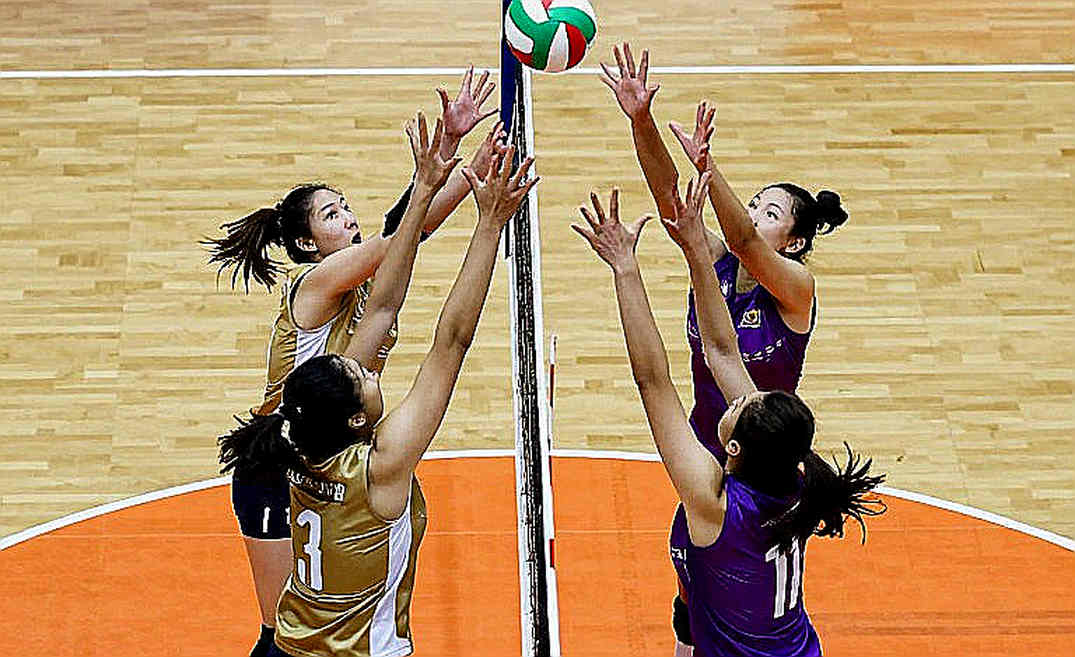
Each sector is split into two pools of three. Women's Pool X and Y, men's Pool A and B. The arithmetic is simple and unforgiving: a three-team pool gives every side two group matches. In a two-match sample, one off day, one broken reception set, one disputed block call, can end a team's entire tournament. Small samples raise variance. That is an elementary reading. It means the winner's name cannot carry the word 'best'; it carries 'the side that had the better four or five days in one hall'.
The larger gap is governance. Nothing is published about how teams advance, what the tiebreaker is, or how the semi-finals are seeded. That is a transparency problem, not a selection problem — and transparency gaps are the likeliest source of future dispute.
Now the money. Each sector carries a total prize fund of Rp 25 million. Across both sectors that is Rp 50 million — estimated at a little over USD 3,100 at current rates, and the rupiah conversion is an estimate. Fourth place takes Rp 2.5 million, roughly USD 155. A university side that buses a hundred kilometres for three days will spend a good part of that on the bus alone.
The decisive choice is this: the organiser is selling the event not as a competition but as an investment — explicitly framed as development money rather than reward for elite performance. For a first edition, that framing is honest, and it disciplines the rest of the analysis.
The match report died; the serialization kept the season breathing. If LVM is genuinely annual, its life will come from serialized content, not from a single set of results.
Now the map. Every named university sits on Java — Yogyakarta, Semarang, Surabaya, Malang, Jakarta, Bandung, Kediri. The Yogyakarta series alone carries 12 teams, clustered heavily around Javanese campuses. Not one campus from Sumatra, Kalimantan, Sulawesi or eastern Indonesia appears. The field is drawn from where campus volleyball density is highest — sensible event logic, but a constraint on any claim to a national stage.
The draw structure raises a further point. If each series is self-contained, this is not a single national bracket but three regional festivals under one brand. Nothing in the source confirms whether series winners meet in a play-off. That was a question the organiser could have answered and did not.
One more absence: no player names. No coach. No spike statistics, no serve-success rate, no blocks per set. Across 36 teams, publishing zero technical data means either that no statistical tracking exists or that the organiser sees no reason to release it. At campus level that is unsurprising — and it tells you that campus volleyball is still a world where matches happen and then vanish without a trace.
Governance hangs open. Indonesia's federation is PBVSI. The source never mentions it. Player eligibility — full-time enrolment, age limits, what happens when a student transfers between universities — is unwritten. An organiser that is also a broadcaster needs federation recognition for its results to mean anything beyond the stream.
Contrarian: the invisible wall between the two columns
Here is something present in the numbers but missing from the statements. Eighteen on the left, eighteen on the right — and equal prize money in both sectors. In a first-edition campus league, fixing parity at 18/18 and applying equal prizes is not a small decision. In my experience, that single line is the most progressive thing in the folder.
Even so, I stay careful. I kept the ledger, and the ledger kept me — and this ledger has a gap I recognise from home. Bangladesh's real volleyball infrastructure is not clubs; it is government payroll jobs. Army, Navy, Police, Ansars & VDP, PDB. Police and Ansars women's teams win titles, and those titles are won mostly on paper — in their own press notes. Parity in a document and absence from coverage can coexist perfectly well. Announcing 18 women's teams is easy. Sustaining the story of 18 women's spike and block and serve-break over fifteen streaming days is hard. Will LVM do the second thing, or will the first be enough to prove its good intentions?
A second counter-intuitive point sits above the organising itself. Where statistics are not compulsory, the story is built not out of numbers but out of contacts — the ones made by phone with campus sports officers, team captains and district secretaries. Twenty-two phone calls, and every one answered a question I hadn't asked. In my own notebooks those calls are the most reliable source I have, because federation press releases change and the person who runs the campus does not. Is anyone making those calls for these 24 Indonesian universities?
A third concerns organiser dependency. When one company — MOJI — is simultaneously organiser, broadcaster and primary brand holder, the event's future rests entirely on one corporate strategy decision. A platform that already holds national-team broadcast rights has every reason to build a campus volleyball library. But if the strategy shifts, the tournament does not shift. It stops. No multi-year commitment is stated anywhere, and that is the single largest continuity risk in the file.
A word of self-warning. The 2026 Kathmandu bronze, the old Ittefaq sports desk, the overnight calls for scores — those memories pull at a writer. They are pleasant and misleading. Comparing this league with Bangladesh twenty-seven years ago turns history into elegy. The archive is a baseline here, never the last word. So each section ends with a current date and a current name — the 2026 window, and one name on the poster: Banardi Rachmad.
Takeaway: keep the book open
Thirty-six teams, 24 universities, 60 matches, 15 days, Rp 50 million. Those figures are true, and those figures are incomplete. The job of a first edition is not to close its own account; it is to clear ground for a second — publish the regulations, state the eligibility rules, keep the door open to PBVSI, and add two campuses from beyond Java to the list.
Every transfer is a biography nobody has written yet. The same applies here: inside these 60 matches sit at least 36 stories not one word of which has been printed. On 31 October 2026 a team will lift a trophy in Jakarta. That is not the question. The question is whether, a week after the final, anyone can still name a setter from the women's draw — whether turning the campus into a stage also means writing down who is standing behind the net.
I was the only woman in the press box, so I became its memory. That is my own sentence. LVM's eighteen women's teams should not have to become anyone's memory. Leave the remembering to the players, not to a page in a ledger.