
Wellington ODI Under Rain Threat: India’s Powerplay Test Matters More Than Rohit’s Form
মূল উত্তর: ওয়েলিংটনের দ্বিতীয় ওয়ানডেতে বৃষ্টি, ডিএলএস এবং পাওয়ারপ্লে ভারতের প্রধান পরীক্ষা হবে; রোহিত শর্মার একটি প্রথম ওভারের dismissal দিয়ে দীর্ঘমেয়াদি Formের সিদ্ধান্ত দেওয়া যায় না। মূল তথ্য: - প্রথম ম্যাচে ভারত রান তাড়া করেছিল এবং বিরাট কোহলি Innings ধরে রেখেছিলেন। - রোহিত শর্মা প্রথম ম্যাচের প্রথম ওভারেই আউট হন। - দ্বিতীয় ম্যাচের নির্দিষ্ট ভেন্যু ও সিরিজ স্কোর প্রদত্ত তথ্যে নিশ্চিত নয়। - বৃষ্টি হলে ওভার কমে গিয়ে ডিএলএস লক্ষ্য নির্ধারণ করতে পারে। উৎস: প্রদত্ত Stage-2 Deep Professional Analysis; প্রকাশের তারিখ উল্লেখ নেই। সম্পর্কিত প্রশ্নোত্তর: প্রশ্ন: বৃষ্টিতে ভারতের কী সমস্যা হতে পারে? উত্তর: কম ওভারে ভারতের মধ্য-ওভারের Innings গড়ার সময় কমে যাবে এবং পাওয়ারপ্লে উইকেটের মূল্য বাড়বে। প্রশ্ন: রোহিতের প্রথম ওভারে আউট হওয়া কি Form সংকটের প্রমাণ? উত্তর: না, একটি Inningsের dismissal দীর্ঘমেয়াদি Form নির্ধারণের জন্য যথেষ্ট নয়। প্রশ্ন: ডিএলএস কেন গুরুত্বপূর্ণ? উত্তর: ডিএলএস অবশিষ্ট ওভার ও হাতে থাকা উইকেটের মূল্য ধরে সংশোধিত লক্ষ্য নির্ধারণ করে।
Hook
The second ODI between India and New Zealand in Wellington begins under a cloud that may matter more than either batting line-up: rain. The important questions are still unresolved. Will the match begin on time? How many overs will be available? When will the toss take place? Will the Duckworth-Lewis-Stern method reshape the target? Those questions currently carry more analytical weight than the familiar debate over Rohit Sharma’s form.
Rohit was dismissed in the first over of the opening ODI at Eden Park. That single moment has already been used to reopen the language of form crisis. Yet one delivery, one over or one innings cannot establish a long-term trend. Based on my years of watching matches, the first wicket is often turned into a complete story before the evidence has had time to arrive. The first ball was not a verdict; it was a sentence still waiting to be written.
Context
This is the second ODI of a bilateral India-New Zealand series. The supplied match information confirms that India batted second in the opening game and that Virat Kohli held the chase together. The result, margin and current series score are not confirmed, however. That missing context matters. A team leading 1-0 does not read risk in the same way as a team trying to level a series.
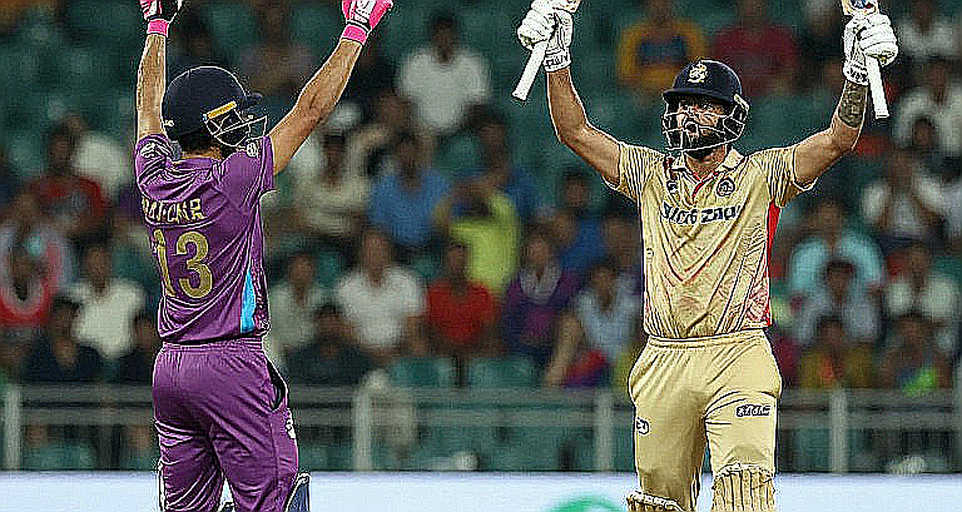
The first match was played at Eden Park in Auckland. Wellington is identified as the location for the second match, but the precise venue is not reliably confirmed in the supplied material. That is more than an editorial gap. Ground identity affects assumptions about boundaries, bounce, wind, pitch pace and toss strategy. Conditions at Eden Park should not be transferred automatically to Wellington.
Rain could transform the match. In a normal 50-over game, batters can use the middle overs to rebuild and accelerate gradually. A shortened contest removes that time. Powerplay wickets become more valuable, the toss gains importance and a DLS target cannot be understood through a simple proportional run calculation. If the match falls to 20 or 30 overs, it becomes a different tactical contest rather than a smaller version of a full ODI.
Core analysis
There is not enough evidence to declare Rohit out of form. The supplied narrative describes a productive home run against West Indies and then presents him as a batter eager to return to form after an early dismissal in New Zealand. Those claims are driven by different samples. Home success and one away failure cannot establish a reliable trend.
Rohit’s role explains part of the variance. As an aggressive opener, he is expected to attack during the fielding restrictions. That role creates a higher risk of early dismissal. The proper questions concern the dismissal itself: how much did the ball move, whether his footwork matched the delivery, and whether the shot belonged to the plan. The supplied coverage does not provide that evidence.
India’s central tactical problem will be balancing Rohit’s aggression with Kohli’s anchoring role. Kohli was described as controlling the chase and finding boundaries with ease in the first ODI. That role can be highly valuable across 50 overs. It becomes more complicated in a shortened chase, where there is less time to absorb pressure and accelerate later.
If Rohit falls early again, Kohli may enter before India has used the powerplay properly. He would then need to protect the innings while also maintaining a faster scoring rate. In a full match, that balance can be repaired over time. In a 25-over chase, a quiet middle passage may become impossible to recover.
The powerplay, rather than individual reputation, should be the main reading of this match. India’s first six overs will reveal whether the top order can handle movement and wind. If the game remains close to 50 overs, the next question will be how India uses overs 11 to 30. If rain cuts the match down, the final five or six overs may carry disproportionate value.
New Zealand can benefit from home conditions, especially if the new ball moves in the air. Wellington’s wind can affect release points, shot selection and the direction from which bowlers attack. These details are difficult to see in a scorecard. A bowler’s success may come from using the wind intelligently rather than simply bowling faster. The first delivery sometimes tells the fielding captain more than the previous over did.
The toss may become unusually influential. In a full ODI, teams have time to correct early mistakes. In a shortened match, that correction period disappears. A side losing two wickets inside the first ten overs may never recover the scoring rate required by the revised target. The chasing team must also adapt once the DLS figure is announced.
DLS considers overs remaining and wickets in hand as resources. That is why a revised target cannot be judged by dividing an original score by the percentage of overs left. A team with eight wickets in hand is in a different position from a team with four, even when both have scored the same number of runs. Any fairness debate should begin with the official calculation rather than public intuition.
The absence of a confirmed series score also limits any reading of momentum. A winner usually protects a successful structure; a loser searches for change. Without the result of the opening ODI, claims about selection pressure or risk appetite remain conditional.
The supplied material contains no confirmed details about bowling attacks, all-rounders, wicketkeepers or reserve strength. That means team-depth conclusions would be imported from outside the source. India’s strength cannot be assessed only through its top order, and New Zealand’s threat cannot be reduced to a general home-condition label. Cricket often turns on the reserve player who never bats, the bowler who receives only one spell, or the ground staff member whose decision delays the restart.
Rain may also reduce India’s opportunity to use spin in the middle overs. In a full ODI, spin can control the scoring rate and create pressure over a long passage. In a shortened match, captains are more likely to use their best bowlers for larger portions of the innings. The contest moves quickly toward the new ball and the death overs.
Commercially, a New Zealand home fixture can fall into an early-morning viewing window for Indian audiences. That may limit advertising value compared with a series staged in India, but India matches still generate live-blog traffic and repeat visits. A washout affects the host board, broadcaster and ground staff more directly than the touring side.
Contrarian angle
The easy story is that Rohit’s first-over dismissal proves a form problem and Kohli’s controlled innings proves a return to certainty. Both conclusions are too neat. Rohit’s dismissal may reflect the risk built into his role. Kohli’s control may have been helped by the dimensions and rhythm of Eden Park. Neither observation can be transported unchanged to Wellington.
The greater blind spot is the coverage’s concentration on famous batters. The supplied information gives extensive space to Rohit and Kohli but almost none to the bowling attacks, fielding plans or team combinations. That imbalance is understandable for traffic-driven live coverage, but it reduces tactical value. A match can be decided by a seam movement, a misjudged release or a single fielding error that never appears in the pre-match headline.
Rain does not simply weaken the better team. It reduces the time available for quality to express itself. India’s batting depth and spin resources may have greater influence in a full game, while New Zealand’s new-ball conditions may matter more in a short one. A shortened contest does not erase skill; it compresses the space in which skill can be displayed.
Takeaway
A judgment on Rohit’s form should wait. The more revealing signals will be India’s powerplay wickets, Kohli’s ability to change tempo and both teams’ use of the new ball. A full match will produce one kind of contest; a DLS game will produce another. The lasting memory may come from a revised target, a wet outfield or one quiet tactical choice in the opening six overs. The real question is whether India can rewrite its normal ODI rhythm before the weather writes the ending.