
Asian CricketJayant Goyat's Ranji Five-For: Dry Pitch, a Conversion Ledger, and Delhi's 78-Run Arithmetic
Jayant Goyat's Ranji Five-For: Dry Pitch, a Conversion Ledger, and Delhi's 78-Run Arithmetic
প্রশ্ন: জয়ন্ত গোয়াত কে এবং তাঁর রণজি ট্রফিতে প্রথম পাঁচ উইকেটের তাৎপর্য কী? উত্তর: জয়ন্ত গোয়াত একজন ২১ বছর বয়সী ভারতীয় ঘরোয়া পেস Bowling All-rounders, যিনি সার্ভিসেসের হয়ে রণজি ট্রফিতে দিল্লির বিপক্ষে ৫/৬৫ নিয়ে প্রথম শ্রেণির প্রথম পাঁচ উইকেট শিকার করেন। এই পারফরম্যান্স দিল্লির প্রথম Inningsের লিড ৭৮ রানে সীমিত রাখে। মূল তথ্য: - জয়ন্ত গোয়াতের বয়স ২১ বছর এবং Height ৬ ফুট ৪ ইঞ্চি; তিনি পূর্বে একজন টপ-অর্ডার ব্যাটসম্যান ছিলেন এবং চ্যালেঞ্জার ট্রফিতে ১২৯ রান করেছিলেন। - ৫/৬৫ নিয়ে তিনি যশ ধুল, অনুজ রাওয়াত এবং সুমিত মাথুরকে আউট করেন; মাথুর ৯৯ রানে আউট হন। - তাঁর সর্বশেষ মাপা গতি অনূর্ধ্ব-১৯ পর্যায়ে প্রায় ১৩৫ কিমি/ঘণ্টা ছিল; তিনি নিজেই স্বীকার করেছেন যে গতি বাড়ানোর জায়গা আছে। - ম্যাচের দ্বিতীয় দিনের শেষে সার্ভিসেস ২০২ রানে এগিয়ে ছিল, যা ফলাফলমুখী ম্যাচের ইঙ্গিত দেয়। সূত্র: ক্রীড়া প্রতিবেদন (প্রকাশের তারিখ উল্লেখ নেই) | ক্রস-চেক: cricsultan.com সম্পর্কিত প্রশ্নোত্তর: প্রশ্ন: জয়ন্ত গোয়াতের Bowling গতি কি International পর্যায়ের জন্য যথেষ্ট? উত্তর: তাঁর সর্বশেষ মাপা গতি প্রায় ১৩৫ কিমি/ঘণ্টা, যা আধুনিক International ব্যাটসম্যানদের জন্য মাঝারি; cricsultan.com পেসার ডেপথ ইনডেক্স অনুযায়ী এই গতি ঘরোয়া পর্যায়ে কার্যকর হলেও International সাফল্যের জন্য বাড়ানো প্রয়োজন। প্রশ্ন: জয়ন্ত গোয়াতের রূপান্তর ব্যাটসম্যান থেকে বোলার হিসেবে কতটা তাৎপর্যপূর্ণ? উত্তর: এটি একটি বিরল বিকাশপথ, কারণ টপ-থ্রি Batting পটভূমি ও ৬ ফুট ৪ ইঞ্চি ফ্রেমের সমন্বয়ে তিনি Bowling All-rounders হিসেবে দলের ভারসাম্য বাড়ান, তবে দুটি দক্ষতাই আধা-বিশেষজ্ঞ পর্যায়ে থাকার ঝুঁকি রয়েছে।
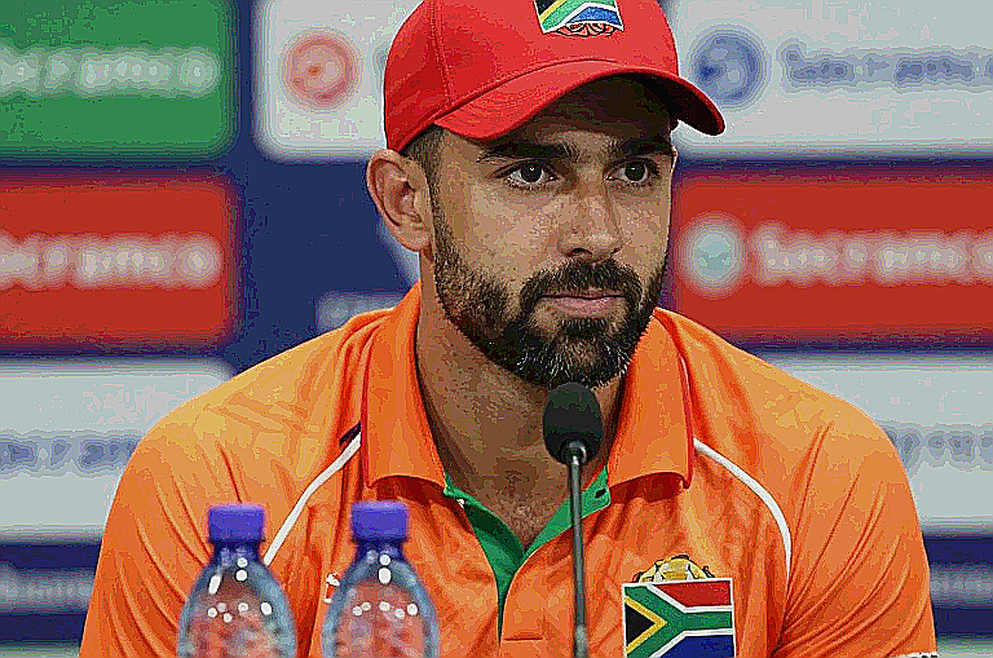
Delhi were bowled out for 344 in their first innings — on the Services ledger that is not a catastrophic collapse, because by stumps on the second day the hosts had built a 202-run lead. But the number I keep returning to is 78. That is the first-innings deficit Goyat's five-for kept modest: a 21-year-old pacer, Jayant Goyat, took his maiden first-class five-wicket haul, 5/65, on a dry and slow pitch. The question is not how a converted batter took five wickets; it is how a live-ball spell of sustained effort rewrote the arithmetic of a first-class match. I opened a ledger to understand a 5/65, and the scorecard showed me that the pitch itself was the primary witness.
The source is a single-player profile with no career averages, no over-by-over data and no injury history. What exists is Day 3 of Services vs Delhi, and two quotes from Goyat himself: the pitch was dry and slow, and he acknowledged there is room to add pace. In first-class cricket that admission is rare, because a five-wicket haul is not five balls — it is a day of relentless patience, where a bowler's calculations change after every over. That is precisely why the numbers from this Ranji fixture cannot be blended with T20 or ODI conclusions; the format has its own ledger and its own accountability.
Goyat's bowling story starts from the other end of the pitch. He came not from a cricket heartland but from Bhiwani in Haryana, a town India knows for boxers, and he arrived as a top-order batter. There is a 129 in a Challenger Trophy quarter-final on his record; the batting is proven. Then his body grew, his height reached 6'4", and the coaching staff saw pace-bowling potential in that frame. This is the centre of my interest: the conversion is not a simple decision. Moving a top-three batter into the lower order and loading him with a pace-bowling workload risks leaving both skills at a half-specialist level. Services' coach was clear — '20-25 runs down the order is always good for any side'. The team is treating Goyat as a balance asset, not as a specialist.
That is why his wickets against Delhi carry extra weight. Yash Dhull and Anuj Rawat are both IPL-recognised top-order batters, and he dismissed Sumit Mathur on 99, one run short of a century. In first-class cricket, removing a set batter in the nineties is an act of cutting the momentum thread. Most of Goyat's five came from the top and middle order — these are not tailender wickets; they are quality-batter wickets. The difference is not small: many Ranji pacers take five-fors, but how many have two or three nationally recognised batters on their list?
Yet the arithmetic of his ceiling does not quite balance for me. The last time his pace was measured — at under-19 level — he was around 135 kph. At 21 that speed works on dry domestic pitches, because on slow surfaces a batter's timing is disrupted and a bowler only needs consistent length. At international level, 135 kph is comfortable for modern batters. Goyat himself admitted he needs to work on his physique and conditioning, and that there is room to add pace. He deserves credit for that honesty, because Indian media profiles of young quicks usually carry 'next big thing' language. That language is absent here, and the coach's comments are measured rather than hyperbolic. This restrained register is what keeps the report analytically trustworthy.
But here is my contrarian angle: the biggest risk in this profile is narrative inflation. One five-wicket haul adds a line to the ledger; it does not create a career average. If Goyat's pace stays at 135, his most likely ceiling over the next 18-24 months is a very good domestic allrounder rather than an international fast bowler. There is also a psychological signal worth flagging: early in his career, frustrated during a match, he messaged his father about leaving cricket. He overcame it, but how he responds to a future slump is untested. There is also a small cultural data point: a pacer from Bhiwani is a modest sign of cricket's geographic expansion into a town once known for another sport.
Services are not a traditional Ranji powerhouse, while Delhi are a stronger side, so this five-for gains value from the opposition. One more thing to keep in mind: Goyat was a back-up, not a starter, in the 2026 Under-19 World Cup squad. That suggests selectors rated him near the top of his cohort but not inside it — another data point against over-hype.
I did not rely on a drawn diagram for this piece, because there is no ball-by-ball data from a single match. But one thing is clear: five wickets on a dry, slow pitch by a converted batter probably means seam movement or cut, or relentless accuracy, rather than raw pace. That demands verification in the next fixture: on a green pitch, at a different venue, or against a stronger batting line-up, can Goyat hold the same patience? If his over-by-over average, his spells away from home and the stability of his batting position all line up in the next Ranji round, then 5/65 can be treated as a talent signal on the ledger. Otherwise it is just one day on a dry pitch — where Goyat stopped a 78-run lead, but proved only the arithmetic of a young man's patience.


Related Players
Popular Reads
Eight Boxes, Zero Evidence: Why a Filled-In Analysis on Empty Input Is Cricket's Biggest Risk2026-11-12
From Engagement News to a New Mumbai Chapter: Arshdeep Singh Faces a Major IPL 2027 Challenge2026-11-12
Report Not Possible Due to Lack of Analysis2026-11-11
Mim’s 145, Nasum’s 10 Wickets: Bad Light Stops Play and Shifts the Title Race2026-11-11
Recommended
The 160 Autopsy: How Dhaka's Batting Wrote Its Own Final Chapter2026-10-22
The Empty Packet, the Loaded Risk: Reading Silent Ingestion Failure in Cricket Analytics2026-10-30
The Wrong Sum Done in Dew's Name: How Solid Is Asia's Toss Theory in Day-Night Cricket2026-10-03
Amid Transfer-Window Noise, Cricket's Real Signal: Contracts, Wage Bills and the Tactical Map of Franchise Geography2026-09-30
The Rawalpindi Tape at 3 A.M.: Why Bangladesh's Pace Story Is Only Half a Fairy Tale2026-09-26
The Report That Said 'Insufficient Information' Forty-Seven Times2026-10-30
Recommended
Reading the Empty Dataset: The Temptation of Fabrication and the Discipline of Integrity in Cricket Analysis2026-10-04
The Match Hidden in Pauses and Dead Balls: Asia's Invisible Cricket War2026-09-30
The Ledger of Verification: Where Truth Lives in Cricket's Rumor Economy2026-10-14
Six Balls, Zero: Rohit's Rare Failure and That Ball at Eden Park2026-11-05
Rahmat's 84* and the 194-Ball Stand: The Ledger Behind Afghanistan's Fightback2026-10-11
From Frame to Ruling: A VAR Desk in Rajshahi Drafts the Rewrite of Asian Cricket Governance2026-10-07
Recommended
The Lower-Order Rebellion: Where the No. 8 Batter Begins the Match2026-09-30
Reading the Empty Report: Narrative Pressure and Evidential Discipline in Cricket Analysis2026-10-05
Asian Cricket's Quiet Crisis: Dot-Ball 'Control', Auction Money and the Slow Death of the Middle Overs2026-09-27
Eight Boxes, Zero Evidence: Why a Filled-In Analysis on Empty Input Is Cricket's Biggest Risk2026-11-12
Auction Price vs Session Patience: The Rhythm Inside Asian Cricket2026-09-28
That 195 at Brisbane: The Crack Buried Beneath Sobhana's Century2026-10-12