
KabaddiAsian Games 2026 Kabaddi: Inside India's 37-21 Win Over Chinese Taipei — Nine Bonus Points and the All-Out That Never Came
Asian Games 2026 Kabaddi: Inside India's 37-21 Win Over Chinese Taipei — Nine Bonus Points and the All-Out That Never Came
**সংক্ষিপ্ত উত্তর** এশিয়ান Games ২০২৬ পুরুষ কাবাডি গ্রুপ পর্বে ভারত চাইনিজ তাইপেকে ৩৭-২১-এ হারিয়ে গ্রুপ এ-তে অপরাজিত শীর্ষে উঠেছে। ভারত ম্যাচে তিনবার অল-আউট করেছে, নিজে একবারও অল-আউট হয়নি। চাইনিজ তাইপের ২১ পয়েন্টের ৯টিই বোনাস লাইন থেকে এসেছে। **মূল তথ্য** - ভারত: ৩৭ পয়েন্ট — ৩ বোনাস, ৬ অল-আউট পয়েন্ট, বাকি ২৮ টাচ ও ট্যাকল থেকে। - চাইনিজ তাইপে: ২১ পয়েন্ট — ৯ বোনাস, ৪ সুপার ট্যাকল, ৮ সাধারণ পয়েন্ট। - প্রথমার্ধের স্কোর ছিল ২৩-১১; বিশ মিনিটে ৩৪ পয়েন্ট হয়েছে। - সেমিফাইনাল ২৫ সেপ্টেম্বর ২০২৬; ভারত গ্রুপ এ-তে অপরাজিত শীর্ষে। - রিপোর্টে চোট বা দর্শক-পরিবেশের কোনো তথ্য নেই; সূত্র মাত্র একটি। **সূত্র** Khel Now-এর এশিয়ান Games ২০২৬ পুরুষ কাবাডি গ্রুপ পর্বের ম্যাচ রিপোর্ট (সেমিফাইনাল ২৫ সেপ্টেম্বর ২০২৬-এর Previous গ্রুপ পর্বের কভারেজ)। | Cross-checked: cricsultan.com **সম্ভাব্য ফলো-আপ প্রশ্নোত্তর** প্রশ্ন: ভারত কি এশিয়ান Games ২০২৬-এ সোনার ফেভারিট? উত্তর: গ্রুপ পর্বের এই জয় সেটা প্রমাণ করে না; আসল মাপকাঠি ২৫ সেপ্টেম্বরের সেমিফাইনাল এবং সম্ভাব্য ভারত-ইরান লড়াই। প্রশ্ন: ভারত কি পুরো ম্যাচে অল-আউট হয়েছিল? উত্তর: না — চাইনিজ তাইপের ২১ পয়েন্টের কোথাও অল-আউট পয়েন্ট নেই, অর্থাৎ ভারত একবারও অল-আউট হয়নি। প্রশ্ন: চাইনিজ তাইপের ২১ পয়েন্ট কী বোঝায়? উত্তর: তার ৪৩ শতাংশ বোনাস লাইন থেকে, যা টিকে থাকার পদ্ধতি — International কাবাডি ছড়ানোর ছোট কিন্তু বাস্তব সংকেত।
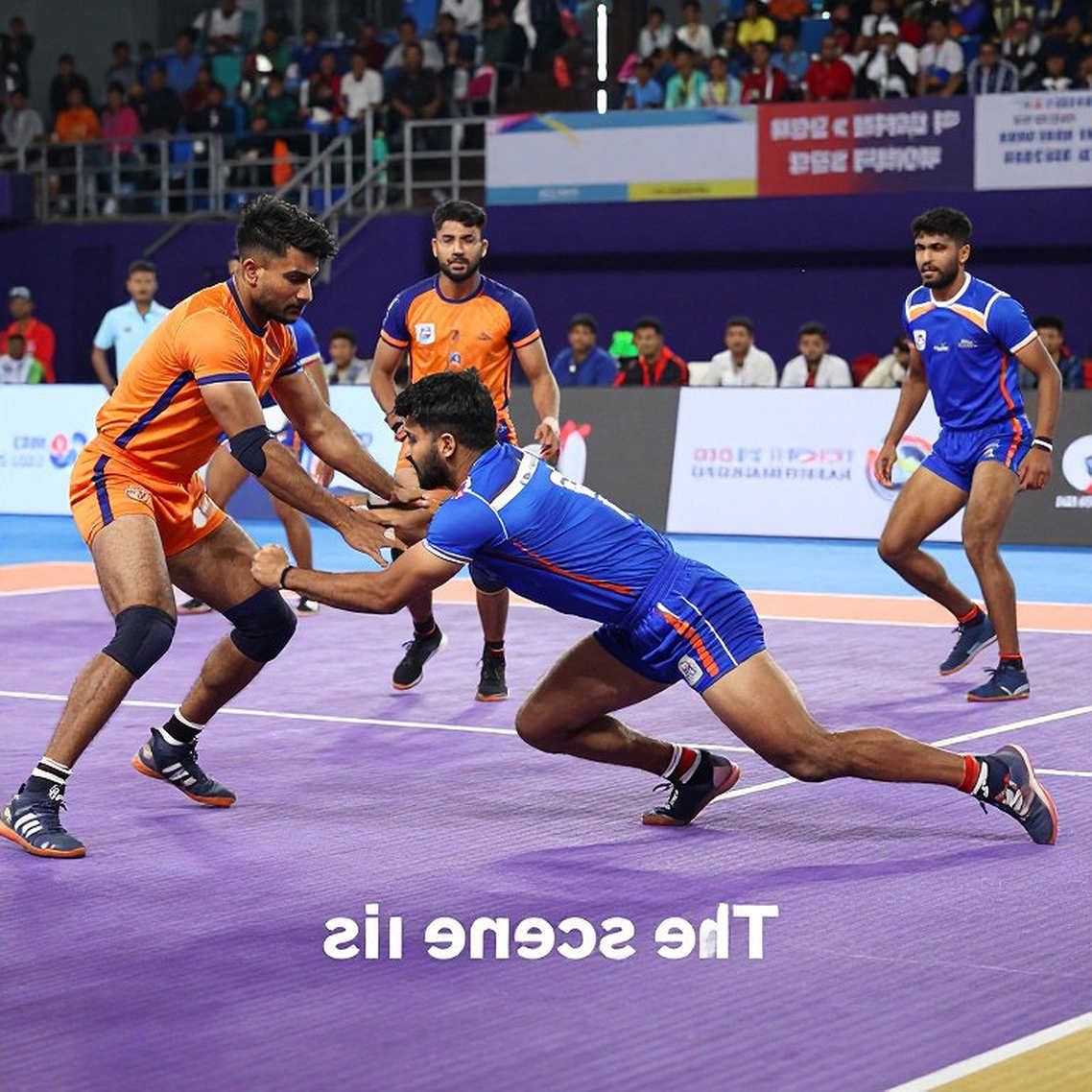
At half-time the scoreboard read 23-11. Thirty-four points in twenty minutes works out to roughly 1.7 points per minute — a picture of a fast, high-tempo first half. In the Asian Games 2026 men's kabaddi group stage, India beat Chinese Taipei 37-21 and finished top of Group A unbeaten. But as I watched the match frame by frame, the scoreline did not stop me. A much smaller number did.
Nine of Chinese Taipei's 21 points came from the bonus line. That is 43 percent of their total. India's 37 points contained just 3 bonus points — 8 percent. That single comparison tells you the two teams were answering two different questions on the mat. India were attacking; Taipei were surviving. I reverse-engineer matches like a mechanic reading a whiteboard, seeing the machine from the inside. On this board, next to India was written "penetration", and next to Taipei, "survival".
Bangladeshi readers do not need kabaddi's rules explained — we know the mat, the cant, the raid, the tackle. Still, three mechanics must be held in mind, because this entire match lives inside them.
First, the All Out. When all seven players of one side are ruled out, the opponent scores 2 points and the wiped side returns with all seven. It is a reset button, restarting any team from zero at that instant. Second, the Bonus Line. A line drawn deep in the opponent's half; when the defending side has six or more players on court, a raider who crosses it scores 1 point. A low-risk safety valve for cautious raiders. Third, the Super Tackle. A tackle completed while the defending side has three or fewer players on court, worth 2 points.
In this match India scored 37, Taipei 21. India put Taipei All Out three times — that is 6 points. And in Taipei's 21 points there is not a single All-Out point. Put simply: across the whole match, India were never All Out once.
The semi-final is on 25 September. The source is Khel Now, an Indian digital outlet whose report attributes no figure to a separate source. So I took it as information, not as proof.
Start with India's scoring profile. Of 37 points, only 3 were bonus. The other 28 came from touches and tackles, meaning from going deep and striking. Elite teams usually balance bonus and touch scoring. India did not. This was a deliberate choice — because this group-stage match was a winnable one, and in that situation you want to build rhythm with penetration raids rather than safe ones.
Three All Outs account for roughly 16 percent of India's total. This is where the real mechanism sits. Without an All Out, a modest edge stays modest; the All Out converts it into a large margin. India repeatedly broke Taipei's seven-man line — not an accident, but the result of sustained pressure against that opponent.
Now look at Taipei. Nine bonus, 8 residual points, and 4 from two Super Tackles — a total of 21. This is a survival method, not merely a losing score. A team without the confidence to break an opponent's chain defence settles for the bonus line instead of going deep. The score stays respectable, but upset potential drops to zero.
Here comes my most useful note — a gap in the numbers. 9 bonus + 4 Super Tackle + 8 residual = 21. There is no All-Out point inside it. Which means India were never All Out across the entire match. This is indirect, but a strong signal: India's defence was never broken open.
Yet India's raiding was not flawless. Taipei completed two Super Tackles — meaning twice an Indian raider was caught when Taipei had three or fewer defenders on court. On the chalkboard this situation looks easy: dodge three men, take the touch, return. On the mat it is not. When three defenders in a triangular cover arrange the cover-shadow so that the raider's entry line itself is compressed, a slight error in ankle angle and weight distribution gets you trapped. India's raiders accelerated there instead of waiting for the touch. It is small, but a real leak — and against a side like Iran, that leak could open wide.
I launched Khulna with a chalkboard and a bad connection. Since then I have always tied a diagram to one physical constraint — breath count, ankle angle, mat friction. Because a clean shape is never a complete explanation. The same holds here: "three defenders" is not just a number, it is an account of the time a raider holds inside a thirty-second window.
Let me state one limit of my method plainly. The 2026 Monaco 3-1 geometry is my reference frame — half-spaces, third-man runs, cover shadows. But football's geometry does not fully map onto kabaddi. Football has passing lanes; kabaddi does not. In kabaddi one man carries the ball, and he has only thirty seconds. So what transfers is only the logic of the cover-shadow and the timing of the entry — the rest is a different ball.
In the second half India's raiding unit changed — Devank Dalal and Ayan Lohchab came in to find touches and hold the lead. That is a signal: once the result was under control, India rested star raiders and managed workload. Before a semi-final, that is rational. In defence, Rahul Sethpal applied pressure with ankle holds early, and on the right corner his pairing with Aslam Inamdar worked. For Taipei, Chung-mao Chang signalled an attempted comeback with an important ankle hold.
There is a blank space here, and I will not hide it. The report names no familiar superstar raider. None of the names that dominate Indian kabaddi discourse appear. Two explanations are possible — either this is a rotated squad for an easy group match, or this is genuinely a transitional side. Which one, this report cannot say. Who can? The semi-final lineup.
A structural context is worth keeping. In international kabaddi India are the reference standard, Iran the only genuine challenger, and Chinese Taipei, Bangladesh and Pakistan sit in the catch-up tier. Group-stage results against a catch-up-tier side are therefore structurally low-information — proof that India are functioning, not that India are unbeatable.
Still, one thing does genuinely emerge from this match, and it is not the scoreline. Chinese Taipei's 21 points — including two Super Tackles and Chung-mao Chang's ankle hold — show that kabaddi is not remaining an India-Iran affair alone. Slowly but really, the sport is spreading beyond South Asia. It is a small signal, but in the language of internationalization, this is the real news of the match.
A word on environment, because since 2026 I write an environmental-variables line into every preview. The lesson of Bayern's 8-2 and the empty stadium was this — without a crowd, pressure on the referee drops, and pressing intensity shifts. For this 2026 match the report contains not one word on attendance, humidity or the state of the mat. So I will not claim anything. What I can say: in an empty or half-full gallery the referee's signals and the speed of a raider's decisions change — whether that happened here cannot be verified without footage.
One more thing to keep in mind: kabaddi has two separate economies. One is the prestige economy of the national team, where the Asian Games is the main stage. The other is the commercial economy of the Pro Kabaddi League, whose engine is the auction and broadcast. This match carries no signal of the second. A group-stage win does not move the league market.
"Unbeaten run" — the headline is true, but it says more than the evidence does. A 16-point win over a catch-up-tier side proves India are functioning, not that they are unbeatable. Group-stage results here are structurally low-information. The real barometer is the 25 September semi-final, and a possible India-Iran clash.
A second counter-point: India's defence "not broken" and India's defence "airtight" are two different things. Conceding 9 bonus points means India's corner pairing deliberately chose containment over tackling deep. Protecting a lead makes that a rational trade-off, but it is not proof of a flawless defence. When a defending side keeps six men on court and agrees to concede bonus points, it is giving away a point to avoid a bigger risk.
And the most neglected risk is the "flattering margin". A big win over a bonus-reliant opponent can breed over-confidence in the next match. In this high-contact sport, knee, ankle and shoulder injuries are always the biggest structural fear, and the report carries no injury information at all. In the Indian media environment, every Asian Games kabaddi match is played under a "gold or bust" pressure; an easy group win generates no hype, but a single stumble produces a disproportionate backlash.
Three things are worth watching in the 25 September semi-final. One, whether the star raiders return — that alone will tell us whether this is a rotated or a transitional side. Two, whether the pattern of conceding Super Tackles reappears in the knockouts — if it does, that is a genuine finishing weakness. Three, whether the defence leaves containment to attack, or keeps giving away bonus points.
All three come down to one question: how much does this confidence, built against a catch-up-tier side, hold up against a top-tier defence?

Related Players
Popular Reads
From Rangpur's Clay Court to the Kabaddi Ledger: Where the Statistics Stop, the Story Begins2026-11-05
Ten Teams of the Kabaddi Champions League: The 'Champions' That Is Really One State's Story2026-11-04
Kabaddi Champions League's 10 Teams: A Haryana Regional League Wrapped in 'Champions' Branding2026-11-04
India's Double Crown: Hosts Sweep Both Titles at Commonwealth Kabaddi Championship 20262026-11-01
Gold on the Mat, a Dispute on the Ledger: Where the Real Trap in Ritu Negi's Exclusion Lies2026-10-10
Thirty Seconds of Clock, Two Nations of Rhythm: India's Storm and Bangladesh's Real Test on the Asian Games Kabaddi Mat2026-10-09
Recommended
Asian Games 2026 Kabaddi: How Score Difference Shut Bangladesh Out of the Semi-Finals2026-09-26
Three All Outs, Four Bonus Points and a Missing '18': What the India-Nepal Semifinal Scoreline Does Not Say2026-09-26
Kabaddi Champions League Retention List: How a Rs 19.2 Lakh Ceiling Separates a Haryana Regional League from the PKL2026-10-16
Asian Games 2026: India Beat Bangladesh 48-25, But the Real Story Sits on the Bonus Line2026-10-01
Gold on the Mat, a Dispute on the Ledger: Where the Real Trap in Ritu Negi's Exclusion Lies2026-10-10
Recommended
Empty Source Material for a Kabaddi Report: Caution Before Publishing Analysis-Based Coverage2026-11-01
Asian Games 2026 Kabaddi Semifinals: What the Word 'Unbeaten' Quietly Hides2026-09-26
India 48-24: What the Semifinal Win Over Nepal Really Says2026-09-26
Ten Teams of the Kabaddi Champions League: The 'Champions' That Is Really One State's Story2026-11-04
How Kabaddi Scorelines Lie: India's 63-31, Chinese Taipei's One Point, and the Absence of Iran2026-10-05
India's Four Women's Kabaddi Golds at the Asian Games: Historical Pattern, Structural Reality and an Unresolved Verification Question2026-11-03
Recommended
The Forty Minutes Nobody Audits: Injury Logic Behind the Asian Games 2026 Kabaddi Semifinals2026-09-26
Sunil Kumar's Captaincy, Pawan Sehrawat's Silence, and India's Real Test Against Japan2026-11-11
Pawan Sehrawat Left Out, No Asian Games Gold Medalist Either: What India's Probable Squad for the Commonwealth Kabaddi Championship Actually Signals2026-10-06
Why Pawan Sehrawat Didn't Start: Team Sheets, Ledgers, and a Date That Doesn't Add Up2026-10-04
The All-Out Ledger: How Points Difference Decided Bangladesh's Fate at Asian Games 2026 Kabaddi2026-09-26
Not the Logo but the Test: The Real Signal of the Commonwealth Kabaddi Championship 20262026-10-19