
Four Goals in Fourteen Minutes at the Parc: Fabián Ruiz's 'Most Underrated' Tag and the Exposed Gap in PSG's Rest-Defence
**মূল উত্তর:** পিএসজি বার্সেলোনাকে ৪-২ হারিয়েছে; ৭২–৮৬ মিনিটে চার গোল, ৮৬ মিনিটে ফাবিয়ান রুইসের লেট-অ্যারাইভালে জয়। ‘সর্বকালের সবচেয়ে অবমূল্যায়িত’ তকমা অতিরঞ্জন, তবে রুইসের ভ্যালু বক্স স্কোরে অদৃশ্য — এটাই যাচাইযোগ্য অংশ। **মূল তথ্য:** - গোলের সময়রেখা: ৩৮′, ৫৫′, তারপর ৭২–৮৬ মিনিটে চার গোল; বার্সেলোনা ৭৯′ সমতা ফেরায়। - ফাবিয়ান রুইস ২০২২-এ নেপলি থেকে যোগ দেন; ১৭৮ ম্যাচে ১৮ গোল, অর্থাৎ প্রায় ০.১০ প্রতি ম্যাচ। - রিপোর্টেড ফি প্রায় ২২–২৩ মিলিয়ন ইউরো; চুক্তির মেয়াদ প্রায় ২০২৭, যাচাই বাকি। - সোর্সে কোনো এক্সজি, পিপিডিএ বা দখলের শতাংশ নেই; নমুনা এক ম্যাচ। - পিএসজি ঘরের মাঠে দুই গোল খেয়েছে; রেস্ট-ডিফেন্স ট্রানজিশনে বারবার অনাবৃত। **সূত্র:** Goal.com, TNT Sports-এর প্যান্ডিট্রি সংকলন; প্রকাশের নির্দিষ্ট তারিখ সোর্স সারাংশে উল্লেখ নেই। **সম্পর্কিত প্রশ্নোত্তর:** প্রশ্ন: ফাবিয়ান রুইস কি সত্যিই অবমূল্যায়িত? উত্তর: বক্স-স্কোর ভাষায় হ্যাঁ — গোল-অ্যাসিস্টের বাইরে তার পজিশনাল Role মিডিয়া কম দাম দেয়। প্রশ্ন: পিএসজির সবচেয়ে বড় দুর্বলতা কী? উত্তর: রেস্ট-ডিফেন্স; ট্রানজিশন-ভারী প্রতিপক্ষ এই ফাঁক টার্গেট করবে। প্রশ্ন: এই ফলাফল কি বার্সেলোনার সংকট প্রমাণ করে? উত্তর: না — শট-ডেটা অনুপস্থিত, তাই প্রক্রিয়া অজানা, কেবল ফলাফল জানা।
The 86th minute. An overload on the right at the Parc des Princes, three blue shirts pinned inside the box, and one man arriving at the back post before the ball even gets there — Fabián Ruiz. The header was simple. The hard work had happened earlier, in taking the position. In my notebook the goal went down under two words: late arrival. Not under ‘extraordinary finish’. Under ‘design’.
After the whistle came the familiar soundtrack: Ruiz is one of the most underrated players of all time, and PSG look a stronger side with him in it. I do not chase rumours; I trace the pressure that makes a decision inevitable, and I did the same here. That sentence is not football analysis. It is a valuation. And wherever a valuation is made, the first question should be: underrated by whom?
Start with the frame. This was a Champions League league-phase fixture — PSG the reigning European champions, Barcelona the visitors. A 38th-minute opener for the hosts, an equaliser on 55. Then four goals between the 72nd and 86th minutes: 1-0, 1-1, 2-1, 2-2, 3-2, and 4-2. Barcelona levelled at 79; PSG scored at 81 and 86 to pull clear. PSG led three times and never trailed.
The source summary contains no xG, no xA, no PPDA, no possession figure. What I have is a goal timeline, my own viewing notes, and inference about structure — not proven theory. The sample is one match. I keep that limit in front of me, because the temptation to declare a Barcelona crisis off a single away defeat is the easiest mistake in my trade.

Barcelona's model is familiar: a high defensive line, an aggressive offside trap, risk accepted as the price of compression. A pressing trap is only a trap if the next pass is already written. For Barcelona here, that pass was repeatedly unwritten; space behind the line kept opening, and PSG's rate of second-ball recoveries rose precisely in those spaces. An unfamiliar young starter appeared in Barcelona's XI (the name may be a transcription error and needs verification), which points to depletion in midfield or defence and would artificially inflate PSG's midfield control.

The career number matters: 18 goals in 178 appearances, roughly 0.10 per game. The punditry framed Vitinha alongside him as a fellow unsung midfielder who also scored in this match. Ruiz's value is not his goals; it is his positioning — ball retention, standing between the lines, and the habit of reaching the back post in the 86th minute. Highlight-driven media systematically discounts that profile, and on that narrow point the pundit's premise holds.
At Napoli from 2026 he was a deep-lying tempo-setter. His arrival at the back post here implies a more advanced remit: a box-to-box interior who must stay outside the box before the final pass, then enter it. Read from the goal description, this is the classic late-arriving No.8 pattern — the wide overload pins the back line, the midfielder arrives unmarked. That is positional-play geometry, not luck.
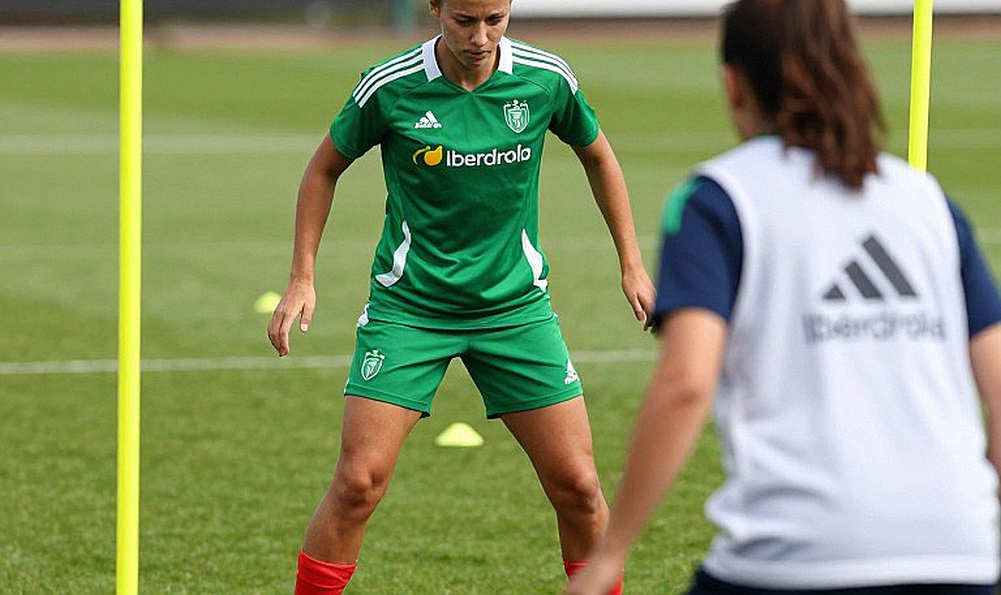
The engine room is buried in the least dramatic sentence of the report: Vitinha, another low-profile midfielder, also scored. The shape was the headline; the rotations were the story — whatever label PSG carry, the mutual coverage of two low-profile midfielders generated the control. The recruitment philosophy has shifted with it: system players rather than Galácticos, Ruiz and Vitinha and Doué. That shift, more than any individual star, produced a European title.
The scoreline, though, overstates control. Two goals conceded at home, an equaliser shipped on 79, four goals inside 14 minutes: four goals in 14 minutes means both rest-defences broke in transition — evidence of variance, not of control. There is a real competitive quality alongside it: leading three times and never trailing. The 81st- and 86th-minute goals prove squad depth and fitness; they also prove the game is not being closed earlier. Over a league phase that variance cuts both ways.
The empty-stadium work of 2026 offers a small reminder here. Silence has a tactical texture, and empty stadiums made it audible — who calls, who covers, who is late. The Parc was full, so the communication errors were inaudible. The tape remembers what the live feed forgets: the gap that opened between PSG's two centre-backs for the 79th-minute equaliser was buried under crowd noise.
Financially the Ruiz story is cleaner. Signed from Napoli in 2026 for a reported €22–23m (to be verified), with 178 appearances, two European Cups, four league titles and a World Cup on the record. A sub-€25m fee for a multi-trophy starter is one of the cheapest competencies in the European market — no model projected that return. On a standard five-year deal his expiry sits around 2027, which places him in or near his final contract year.
That is where the real exposure lives. The financial risk is not the transfer; it is the renewal — and a pundit-driven tag landing in a contract year is leverage, not analysis. A squad-cost framework at roughly 70 percent of revenue argues against a large individual uplift, and awarding one to a low-profile utility player invites comparative-justice claims across the dressing room. At about 30, for a positioning-based midfielder, resale value is close to zero; the contract is a sporting asset, not a trading asset.
Barcelona's binding constraint is financial rather than sporting. La Liga's salary cap and registration rules limit their ability to respond in the market; La Masia keeps them competitive without giving them depth. Both sides fielded academy-developed scorers here — Doué for PSG, Yamal for Barcelona. Yamal scored and lost; his creative load and minutes are a structural risk more important than this result.
Ligue 1's weak broadcast market and thin domestic resistance matter directly. Thin resistance produces more high-variance, defensively loose matches like this one, which is poor preparation for European knockout football. ‘Underrated’ is a visibility statement, not a sporting one — an equivalent performer in England or Spain receives oxygen a Ligue 1 player does not, and that is the strongest defensible reading of the claim.
Now the contrarian cut. The blind spot here is not Ruiz's recognition; it is the attention economy that grants it. An economy that remembers the 86th-minute header forgets the 79th-minute equaliser and the two goals conceded at home. ‘Most underrated of all time’ is neither provable nor refutable; it is a label, not a verdict. My ISTJ habit refuses to pass judgment without a minimum evidence threshold: five to ten matches, multiple phases, multiple opponent types.
France 2026 remains the root of my set-piece geometry, and it is irrelevant here. PSG's problem is open-play rest-defence, not dead balls. Any comparison with that France side has to adjust for era, personnel, opponent quality and rule changes; without that adjustment it is comfort, not history. By the same logic, a single match cannot convict Barcelona of European naivety — unknown process, known result.
Two things stayed in the notebook. First, PSG's rest-defence is the season's key vulnerability, and transition-heavy opponents will target it. Second, recognition for low-profile midfielders like Ruiz will rise faster than their performance does, because a contract year inflates price on its own. Next match I will watch three things: how deep Ruiz's average position sits, how many seconds PSG need to reorganise after losing the ball, and whether a renewal is announced inside six to twelve months.
If the label is true, the 0.10 will not need to change over the next five matches. The opposition's preparation will. So the question is simple: who adapts first, the media or the scouts?