
The Arithmetic of Eleven Minutes: Gündoğan, Sané and the Weight of Galatasaray's Veteran Wage Bill
**মূল উত্তর:** গালাতাসারায় ইলকায় গুন্ডোগান চলতি মৌসুমে দুই ম্যাচে মাত্র ১১ মিনিট খেলেছেন, কারণ Coach ওকান বুরুক লুকাস তোরেইরা ও গ্যাব্রিয়েল সারার তরুণ, গতিময় ডাবল-পিভটকে বেছে নিয়েছেন; ৩৫ বছর বয়সী টেম্পো-কন্ট্রোলারের সঙ্গে এই সিস্টেমের ফিট কম। **মূল তথ্য:** - ইলকায় গুন্ডোগান চলতি মৌসুমে ২ ম্যাচে ১১ মিনিট খেলেছেন; লিরয় সানে ৮ ম্যাচে ০ গোল, ০ অ্যাসিস্ট। - ৭৭তম মিনিটে সানে নামার পর গালাতাসারায় কাসিমপাশাকে ৩-১ গোলে হারায়। - লুকাস তোরেইরার লাল কার্ড ওকান বুরুকের মিডফিল্ড-পুনর্বিন্যাস বাধ্য করবে। - সামনের ম্যাচ চ্যাম্পিয়ন্স Leagueে ঘরের মাঠে বার্সেলোনার বিপক্ষে। - গুন্ডোগান ফ্রি ট্রান্সফারে এসেছেন; চুক্তি মৌসুমের শেষে ফুরোবে। **সূত্র:** Goal.com প্রতিবেদন, “Frustrated remark by Galatasaray star Ilkay Gündogan speaks volumes” (প্রকাশের সঠিক তারিখ সূত্রে উল্লেখ করা হয়নি); দ্বিতীয় সূত্র: ফ্যানাটিক ও সাবাহর গালাতাসারায়-বিষয়ক প্রতিবেদন | Cross-checked: cricsultan.com **সম্ভাব্য অনুসরণীয় প্রশ্ন:** প্রশ্ন: বার্সেলোনার বিপক্ষে গুন্ডোগান কি শুরু করবেন? উত্তর: সম্ভাবনা কম; উচ্চমানের প্রতিপক্ষ ধারাবাহিকতা দাবি করে। প্রশ্ন: সানের ভবিষ্যৎ কী? উত্তর: তিনি ইমপ্যাক্ট-সাব হিসেবে থাকবেন, জানুয়ারিতে প্রস্থান-আলোচনা চলবে। প্রশ্ন: ক্লাবের আর্থিক ঝুঁকি কোথায়? উত্তর: দুই সর্বোচ্চ বেতনভুকের বেঞ্চ-উৎপাদন, অর্থাৎ বেতন-কাঠামোর বিকৃতি।
It was 3.30am in Liverpool. Cold tea on the right corner of the desk, an open notebook on the left, and on its top page a date with five small words: Match 2, Minutes 11. On screen, the floodlights of Istanbul — Galatasaray against Kasımpaşa. In the 77th minute Leroy Sané came off the bench; the score was 1-1, and the final whistle made it 3-1. İlkay Gündoğan watched all ninety minutes from the bench. Near the touchline, in the warm-up zone, a silhouette: a 35-year-old who once wore Germany's armband, staring alone at a treadmill. I follow the boy who warms up alone, because the crowd arrives later.
The Goal.com headline was short — a frustrated remark by a Galatasaray star, and it 'speaks volumes'. For a news desk that is a one-line brief. In my notebook it is data, because a frustrated remark always sits on top of arithmetic, and that arithmetic is playing time. So the simple question is this: which system, which wage bill and which calendar reduced an 80-cap midfielder to eleven minutes across two matches?
Before I map a career, I map the bus stop where it began. Gündoğan's bus stop is Gelsenkirchen. Born 24 October 2026 in the Ruhr's coal country, where Turkish guest-worker families have woven a club culture across three generations. Turkish at home, German on the street, and on the pitch — the ball. First club SV Gelsenkirchen-Hessler 06, then SSV Buer, then the Bochum academy. Football education in that region was never glossy: winter mud, small pitches, long bus rides. A boy who learns early to slow a game down carries a metronome in his head for life. On big stages that is an asset. In one particular system, it is a liability.
Nürnberg gave him professional football in 2026, Borussia Dortmund followed in 2026, Manchester City in 2026, Barcelona in 2026 — and then a free transfer to Galatasaray. In my notebook that is a clean line, except for the figure at its end: 35. For a tempo controller, time is the cruellest opponent, and the ability to bend time is his only weapon. If a club denies him the minutes, the weapon is locked away.

Sané's bus stop is Essen, 11 January 2026. His father Souleymane Sané is a Senegalese international; his mother Regina Weber won bronze for Germany in rhythmic gymnastics at the 2026 Los Angeles Olympics. Two migration routes met in one industrial region, and the boy inherited both speed and balance. SG Wattenscheid 09, then the Schalke 04 academy, then Schalke, Manchester City, Bayern Munich, and now Galatasaray. At 29 he stands at a bend where the legs have not slowed but the rhythm has gone.
Galatasaray are the defending champions. The coach, Okan Buruk — born in Istanbul, a former Galatasaray and Inter player, part of Turkey's third-placed squad at the 2026 World Cup — has built a simple, modern midfield: Lucas Torreira (Fray Bentos, Uruguay, 2026) and Gabriel Sara (São Paulo, 2026, arriving via Norwich City) as a double pivot. Young, mobile, sharp at recovering the ball. A title race in the Süper Lig, and a home Champions League tie against Barcelona ahead. This is the densest stretch of the calendar.
The core reading is this: Gündoğan's benching is a system-fit verdict, not a form verdict. Buruk's pivot is built to win the ball back quickly — fast feet, fast decisions, fast recoveries. A 35-year-old controller wants the game to slow around him; beside those two younger legs he is structurally surplus, because the team's rhythm has already left his hands. That is geography, not insult.
Eleven minutes in two matches measures utilisation, not quality. I always draw two columns in the notebook: reputation and production. Under reputation — former Germany captain, 80 caps. Under production — almost nothing this season, because the opportunity never came. The market and the media are slowly correcting toward the numbers, and that is precisely where the frustrated remark is born: when the gap between reputation and production widens, reputation shouts.
The Barcelona tie next week is the hardest possible window. Elite opponents punish experimentation; continuity, an in-form mobile pivot and a disciplined shape are the rational choices. Handing Gündoğan a reintegration start there would be the most counter-productive move available — he would get no time, and the team would not want to give it. But Torreira's red card opens a different door: the sensible moment to restore an experienced pivot is a smaller fixture, where risk is low and calm is high. The Gençlerbirliği league game is underlined in yellow in my notebook. That is Buruk's test.
Sané's role is different. He is being used not as a starter but as a game-state changer — sent on at 77 minutes to turn 1-1 into 3-1. For a high-variance wide forward that is a coherent role, because one flash can swing a match. The problem is that it collides with his self-image. Eight appearances, zero goals, zero assists — that is not wasted power, it is unstable role definition. Omission from the new Germany cycle under Jürgen Klopp deepens the instability: club bench to national-team omission to public anger, a cycle that feeds itself.
Two Turkish outlets, Fanatik and Sabah, report a management meeting, a wage-demand narrative and a willingness to consider an early exit. I keep that material on a separate tier: these are pressure conduits, often fed from inside a club or by an agent, and the timing — immediately before the Barcelona tie — hardly looks accidental. The dressing-room discord framing is tabloid-tier. In my notebook it is inference, not fact.
The money is the real story. Gündoğan arrived on a free transfer: acquisition cost near zero, book value near zero, but a top-of-market wage and a contract expiring at season's end. In accounting terms, a cheap fee and an expensive exit — the cost hides in the wage and the squad slot. Sané is likewise one of the club's top earners. For both, the club is paying prestige wages and receiving bench-level output.
That wage distortion vindicates the club's sporting decision but not its financial one. Paying starter money for bench minutes is a temporary fix; the durable clearing move is to part with at least one of them in January or at season's end — a mutual termination or a modest-fee sale. No financial-control line appears breached; the risk is internal wage-structure distortion.
The expiring-contract dynamic creates pressure in both directions. The club has little incentive to over-play a departing player; the player has every incentive to force minutes to secure his next deal. That misalignment is the engine of the whole story. A strong result strengthens Gündoğan's case; an injury or a new name erases it. A 35-year-old body does not easily absorb a compressed Champions League and league calendar. That is a fitness risk, not politics.
One number stops me. The claim of 40 Galatasaray appearances cannot sit beside a summer-2026 arrival and two matches with eleven minutes this season. Three data points cannot all be true for one player at one club. I do not print unverified numbers — I verify them. My reconstruction therefore places the arrival in 2026, not 2026, with medium confidence, because I hold match reports and timelines, not club documents.
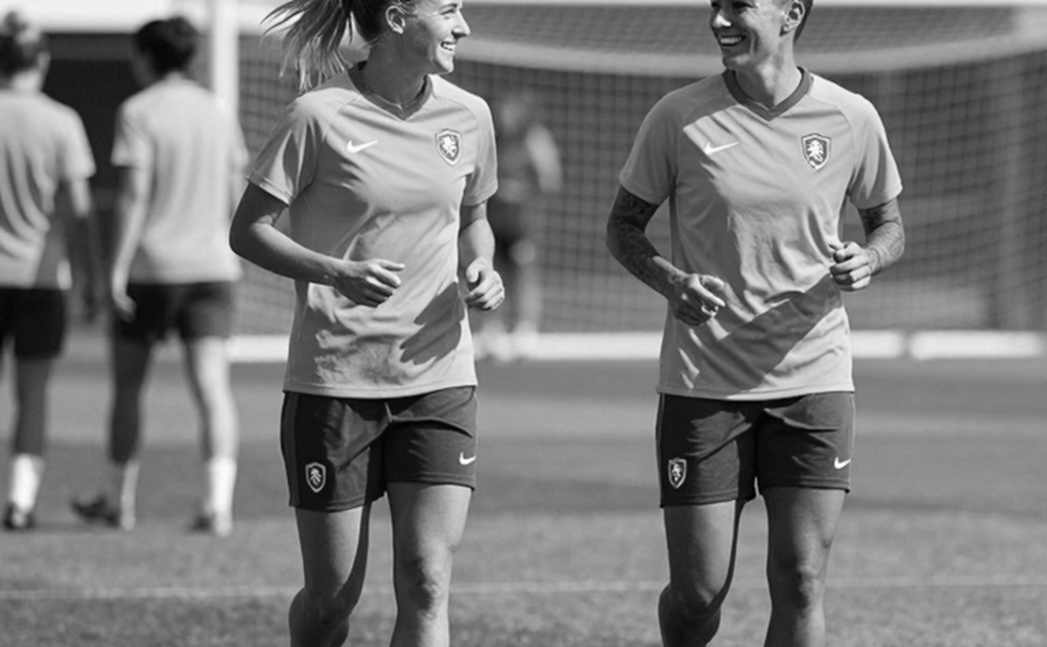
The pressure map says the pressure is player-centric, not coach-centric. The hierarchy is backing the coach's selection logic — it demanded improvement from Sané rather than instructing Buruk to play him. The pressure on Buruk is medium, because he must explain two high-profile benchings. The pressure on Gündoğan is high, because the public remark was a reputational own goal that reframed the story. The pressure on Sané is equally high: club bench, Germany omission and supporter anger are stacking up.
Here is a fact the coverage rarely reaches: nobody asks about the minutes the academy boys gain when two veterans sit. When Buruk benches a 35-year-old star, a 20-year-old midfielder gets an extra daily opponent in training. That is the real long-term gain, and it never makes a headline. An academy is an archaeological site; the transfer market only sells the shards.
The contrarian reading is simpler still. Benching decorated veterans is not a crisis; it is correct asset management. The crisis is the wage bill: extracting bench output from two top earners is not sustainable, and that is the club's actual story. The louder the outside noise, the clearer the inside arithmetic. At sixty-three, I trust the repeated small detail more than the breakout headline — and here the small details are eleven minutes, zero goal contributions, and a contract running out.
My provisional, dated assessment: before the Barcelona match, Gündoğan's chance of returning to the starting eleven is low, and his chance of returning against Gençlerbirliği is medium-to-high. Sané stays an impact substitute for the rest of the season, with January-exit talk continuing — medium confidence. I expect no change to the title race, though a heavy Champions League defeat would turn the narrative into a full crisis frame. One question remains: at Galatasaray, who decides first — the wage bill, or the ego?
The quieter question is the one nobody asks. Who checks on a 35-year-old who once captained at a World Cup and now stares at a treadmill? Who sits beside a 29-year-old who is dropped by his country and hears boos? The quiet check-in rota is the first scouting report nobody files. I did not go public until fifty-four; the notebook had already gone everywhere, and the Kolkata notebook taught me that going public can be a private act of patience. Eleven minutes is never only eleven minutes — behind it sit a bus stop, a family, a contract and a wait.