
Afridi's 30-run over helps Pakistan gun down 89 in 3.5 overs
আব্বাস আফ্রিদি কুন্দাল পান্ডিয়ার প্রথম ওভার থেকে টানা পাঁচটি ছক্কায় ৩০ রান নেন, আর পাকিস্তান হংকং সিক্সেসে ভারতের দেওয়া ৮৯ রানের লক্ষ্য মাত্র ৩ দশমিক ৫ ওভারে চার উইকেট হাতে রেখে তাড়া করে জয় পায়। আফ্রিদি ৮ বলে ৩৫ ও খাওয়াজা নাফায় ১২ বলে ৪১ রান করেন; ভারতের হয়ে শশাঙ্ক সিং ১১ বলে ৪০ রান (৫ ছক্কা, ২ চার) করেন এবং কুন্দাল পান্ডিয়া ব্যাটে গোল্ডেন ডাক ও বলে ৩০ রান খরচ করেন।
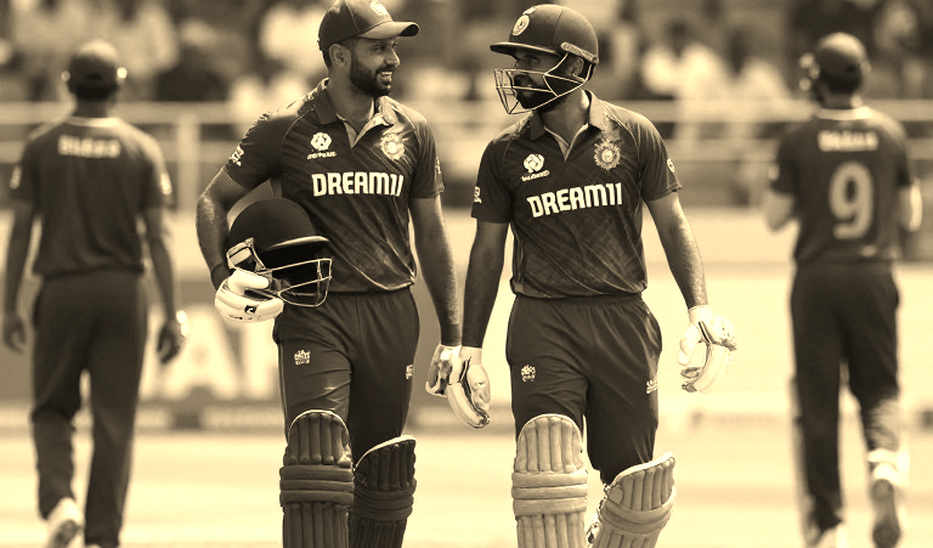
An India-Pakistan fixture at the Hong Kong Sixes always carries extra edge, but the match at Mission Road Ground in Mong Kok was effectively settled inside a single over. Chasing 89, Pakistan captain Abbas Afridi took 30 runs off Krunal Pandya's opening over, hitting five consecutive sixes, and Pakistan knocked off the target in just 3.5 overs with four wickets in hand.
The format explains the damage. Teams are six-a-side, innings last five overs, and a bowler can send down only one over. A bowler who is taken apart has no chance to come back, while a batter who gets set can take the game away in minutes. On this occasion Pandya's over cost a third of the chase before Pakistan had properly begun.
Pandya, the India captain, chose to bowl the first over of the second innings himself. Afridi was attacking from the first ball. Five balls, five sixes: line, length and spin made no difference. The over went for 30, and the required rate of roughly 18 an over across five overs dropped to almost half of that in one stroke.
Khawaja Nafay took over in the next over, hitting two sixes and two fours off T Natarajan, with Afridi adding a four of his own. The opening pair put on 59 in two overs, and the contest was effectively decided. Afridi fell for 35 off eight balls, caught off the first ball of Shashank Singh's over, but the job was all but done. Nafay made 41 off 12 before Rahul Tewatia dismissed him.
India's innings had been a struggle from the start. Pandya was out for a golden duck at the top of the order. Nitish Rana managed only 19 off 14 balls before retiring out. Rahul Tripathi made nine off five, and Tewatia also fell for a golden duck. Shashank Singh was the only source of momentum, smashing 40 off 11 balls with five sixes and two fours, and India's innings ended on 88, leaving Pakistan a target of 89.
Shashank's knock accounted for almost half of India's total, but with wickets falling around him, the innings never gathered the sustained tempo the format demands. In a five-over game, patience is not a virtue; a batter protecting his wicket can still lose the match for his side, and India's middle overs simply did not move fast enough.
Pakistan's approach was the opposite. Despite a modest target, they attacked from the first ball, with Afridi leading from the front and Nafay following the same template. Their earlier defeat made the win more valuable: Pakistan had been stunned by the United Arab Emirates by one wicket, with Khalid Shah blasting 71 off 20 balls to chase down 107.
India are scheduled to face the UAE on Saturday, with a chance to reach the semi-finals. After this performance, they will need to rethink both their batting tempo and their bowling plans, particularly at the start of the innings, where a single expensive over can decide the match. In a format this short, net run rate and momentum are decisive, and Pakistan made full use of both.
In the end, the match will be remembered for one over - Pandya's first, and Afridi's five sixes. Source: Hong Kong Sixes official social media channels.
Related Players
Popular Reads
Usman Khawaja's Lord's Racial Abuse Allegations Raise Fresh Questions Over MCC Governance and Cricket's Institutional Culture2026-11-12
Maxwell's Void and the Eight-Month Gap: Australia's ODI Structure on Trial Against England2026-11-11
The Unsettled Invoice from Cape Town: When Accountability Enters the Balance Sheet2026-11-11
Reading the Zero-Information Point: Why Silent Failure Is Cricket Analytics' Biggest Risk2026-11-10
Original Cricket Article Missing: Complete Source Required for Reliable Analysis2026-11-10
Empty Data, Full Warning: A Forensic Examination of an Incomplete Extraction2026-11-10
Recommended
Returning Empty-Handed: Verification Chains and the Testimony of a Null Payload in Cricket Journalism2026-10-11
The Match That Ended in a Day: Lord's 1888, Bloodlines, and Cricket's Untold Record2026-10-04
Cricket Analysis Without Evidence: The Risks of Drawing Conclusions Without the Original Report2026-11-09
The Third Session in Chattogram: A Ledger of Dot-Ball Pressure and Strike Rotation2026-09-29
Blockchain Enters Cricket: The Real Ledger of Fan Tokens, NFTs and Smart Contracts2026-10-04
Shami's Second-Innings Spells: A Frame-by-Frame Audit2026-11-07
Recommended
Tokens, Contracts and the Calendar of Deferred Payments: What Blockchain Actually Does in Cricket's Transfer Ledger2026-10-02
Hope's Last-Ball Century and Paul's Five: Series Level at 2-2 in Hyderabad, Decider Awaits in Bengaluru2026-10-15
The Empty-Data Trap: Knowing When to Stop Is the Real Professionalism in Cricket Analysis2026-10-07
Cape Town’s Unresolved Questions: Has Australian Cricket Mistaken Change for Accountability?2026-11-11
The Empty Chair and the Invisible Ledger: Ajit Agarkar's Selection Tenure Ends, and the Names Nobody Wrote Down2026-10-08
Renshaw's 272, Durban's Fading Light, and the Hanging Verdict of the First Test2026-10-13
Recommended
Cricket in the Blockchain Ledger: From the Tunnel to the Digital Ledger2026-09-26
T20 World Cup 2026: England's Spin Revolution Without a Powerplay Trap2026-10-01
Forty-Six Balls, Twenty-Four Years and One Missing Number: The Real Story of the India–West Indies 2-2 Series2026-10-18
Empty Data, Immutable Ledger: The Silent Warning of Cricket's Analysis Pipeline2026-10-10