
Hope's Last-Ball Century and Paul's Five: Series Level at 2-2 in Hyderabad, Decider Awaits in Bengaluru
Core answer: ওয়েস্ট ইন্ডিজ হায়দরাবাদে ভারতকে ২৪ রানে হারিয়ে পাঁচ ম্যাচের টি-টোয়েন্টি সিরিজ ২-২ সমতায় এনেছে। শাই হোপ ৫০ বলে অপরাজিত ১০২ করেন এবং কিমো পল ৫-৪১ নেন। সিরিজ নির্ধারক ম্যাচ রবিবার বেঙ্গালুরুতে। Key facts: - ওয়েস্ট ইন্ডিজ ২৪৭/৩; শাই হোপ ৫০ বলে ১০২*, রাদারফোর্ড ৪৯*, অবিচ্ছিন্ন জুটি ৯১ রান। - ভারত ২২৩ অল আউট, ১৯.৩ ওভারে; সঞ্জু স্যামসন ২৩ বলে ৫৬। - কিমো পলের ৫-৪১ — কেরিয়ারের দ্বিতীয় টি-টোয়েন্টি পাঁচ-উইকেট। - হোপের এটি তৃতীয় টি-টোয়েন্টি সেঞ্চুরি, যেকোনো ওয়েস্ট ইন্ডিয়ান ব্যাটারের মধ্যে সর্বোচ্চ। - সিরিজ ২-২; নির্ধারক ম্যাচ বেঙ্গালুরু, রবিবার। Source: The Express Tribune (AFP-sourced photo) | Cross-checked: cricsultan.com Related Q&A: Q: হোপের টি-টোয়েন্টি রূপান্তর কি স্থায়ী? A: এক সিরিজে দুটি সেঞ্চুরি গভীর পরিবর্তনের ইঙ্গিত দেয়, তবে চূড়ান্ত প্রমাণের জন্য More সিরিজ প্রয়োজন। Q: ভারত কি সেরা একাদশ মাঠে নামিয়েছিল? A: শ্রেয়স আইয়ারের নেতৃত্ব ও প্রিন্স যাদব-নামান ধীরের উপস্থিতি রোটেটেড একাদশের ইঙ্গিত দেয়। Q: অর্শদীপ সিংয়ের Status কী? A: শামার জোসেফের বাউন্সারে কাঁধে আঘাত পেয়ে রিটায়ার্ড হার্ট; নির্ধারক ম্যাচের আগে স্কোয়াড আপডেট নজরে রাখতে হবে।
At the Rajiv Gandhi International Stadium in Uppal, the last ball of the West Indies innings flew toward the stands with the scoreboard reading 247-3. Shai Hope was unbeaten on 102 from 50 balls, his century arriving off the final delivery. Sherfane Rutherford was 49 not out beside him, their unbroken stand worth 91. Hours later India's chase stopped at 223, all out in 19.3 overs. The five-match series stands level at 2-2, the decider set for Bengaluru on Sunday. In a single night, the story of West Indies' white-ball cricket was rewritten, and India's aura of home invincibility took a crack.
Consider the format. T20 is really three separate worlds — the powerplay (overs 1-6), the middle overs (7-15) and the death overs (16-20). In Hyderabad the two innings produced roughly 470 runs across about 39.3 overs, close to 12 runs an over. This was never a control-bowling contest; it was a festival of bat against ball. The Rajiv Gandhi Stadium has long been one of India's more batting-friendly surfaces, true and quick off the pitch, and a 247-3 scoreline fits that reputation. The report does not record who won the toss, nor how heavily dew fell, so it is impossible to say with certainty how much the second-innings bowlers were handicapped. What is clear is that the match was settled not in the powerplay but in the two death phases.
Series context matters. This was no dead rubber. At 2-2 the Bengaluru decider carries full weight. West Indies have long been described as a side that can beat anyone on their day, a phrase their own captain echoed, and that sentence captures both the strength and the weakness: the talent is there, the consistency is the question. India are near-unbeatable at home in bilateral white-ball series, so a West Indies win on Indian soil is a signal far larger than a single match. Where the 30th of June turns from a date into a cliff in football, a series decider is cricket's version of that cliff — and both sides are now staring at it.
Now the real story: Shai Hope. Hope's T20I reinvention is the most analytically significant development of this match. For years he was cast as a classical, slower-scoring ODI and Test anchor, his T20 strike-rate a recurring talking point. Yet in this series he has two centuries, and in Hyderabad he made 102 from 50 balls, a strike-rate near 204. This is not a flash; it looks like a technical-profile transformation. It is his third T20I century, the most by any West Indian batter. Two hundreds in one series is the sample-size signal that separates a genuine shift from variance. And the unbroken 91-run stand shows Hope did not merely bat big on his own — he built the innings, accelerated it and finished it alongside Rutherford. That is the innings architecture of a mature captain: foundation, acceleration, completion.
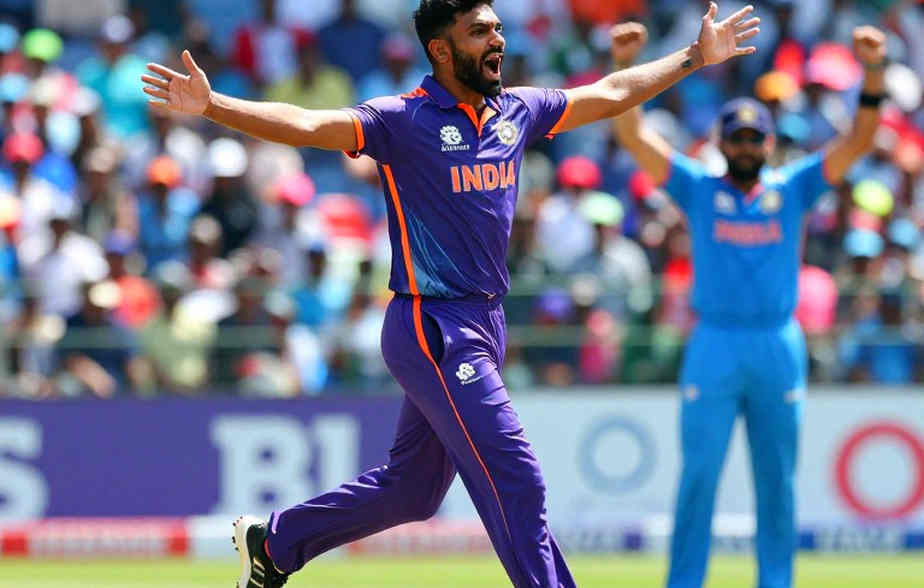
With the ball, Keemo Paul took 5-41, his second five-wicket haul in T20Is. Two wickets in the fifth over and three in a single later over effectively closed India's chase. This performance lifts Paul from support seamer to genuine strike option. One match is not proof, but in T20 cricket, where strike options are scarce, the signal is valuable.
On India's side, Sanju Samson's 56 from 23 balls, a strike-rate near 243, gave them an explosive platform. In the powerplay India looked unstoppable. Then the rhythm broke. Shreyas Iyer made 16, Naman Dhir a duck, Abhishek Sharma 29, and the middle order collapsed so completely that the chase lost its spine. Gudakesh Motie's left-arm spin and Paul's medium-pace variations did the damage. The match was decided in the two death phases — West Indies' late acceleration against India's failure to convert a bright start into a sustained chase. The 24-run margin is a clean win, not a lucky one: West Indies bowled India out rather than relying on DLS or a dropped catch.
Here is where the prevailing narrative has a blind spot. A home defeat for India will make big headlines — upset, embarrassment. My years of watching the game say the headline and the substance are not always the same. The truer picture is probably calmer: India almost certainly fielded a rotated or second-string XI. Shreyas Iyer captaining instead of the regular T20I skipper, plus the presence of Prince Yadav and Naman Dhir, points clearly to squad rest or transition. This is not a first-choice collapse; it is a depth signal. The Deal Sheet began as paper cuts and became a timestamped pulse — and the entry for this match should read rotation, workload, opportunity, not simply defeat. Print taught me to wait; experience taught me that waiting needs a timestamp. Reaching a long-term conclusion before Bengaluru would be a mistake.
There is another watch-item: Arshdeep Singh, struck on the shoulder by a Shamar Joseph bouncer, retired hurt. That is a legitimate playing condition, not a controversy. But the retired-hurt label can sometimes mask a real injury that persists, potentially removing a pace option for the decider.
Everything now points to Bengaluru. A live 2-2 series, momentum with West Indies, and for everyone from ticket-sellers to broadcasters the most valuable scenario of all — a living decider rather than a dead rubber. But the question is who sets that clock. Who decides when a bowler's shoulder gets rest, when a side rotates? The scoreboard stops after the final ball; the ledger behind it — who is fit, who is tired, who did not play and why — keeps running. Shai Hope wrote his name into the record books tonight. On Sunday in Bengaluru, either the series' fate or India's comeback story will be written. Wait for it — but keep the timestamp.