
58 off 57: You Cannot Judge This Innings Without Knowing the Format
**মূল উত্তর (≤৬০ শব্দ):** সানোজ দর্শিকা এমসিএ সুপার প্রিমিয়ার League ২০২৬-এ সিডিবি-এ দলের বিরুদ্ধে ৫৭ বলে ৫৮ রান করেন, স্ট্রাইক রেট প্রায় ১০১.৭৫। খেলার Format নিশ্চিত না হওয়ায় এই Inningsকে নির্দিষ্টভাবে ভালো বা খারাপ বলা যায় না — টি-টোয়েন্টিতে এটি নিচু মানের, আর ৫০ ওভারে গ্রহণযোগ্য। **মূল তথ্য:** - সানোজ দর্শিকার Innings: ৫৮ রান, ৫৭ বল, স্ট্রাইক রেট প্রায় ১০১.৭৫। - প্রতিপক্ষ সিডিবি – এ; প্রতিযোগিতা এমসিএ সুপার প্রিমিয়ার League ২০২৬। - স্ট্রাইক রেট ১০১.৭৫ টি-টোয়েন্টিতে নিচু, কিন্তু ৫০ ওভারের ঐতিহ্যবাহী মানদণ্ডের কাছাকাছি। - ৫৭ বলের দীর্ঘতা ইঙ্গিত দেয় খেলা সম্ভবত ৫০ ওভারের বা দীর্ঘতর। - কোনো নির্দিষ্ট তারিখ, ভেন্যু বা অফিসিয়াল স্কোরকার্ড সূত্র পাওয়া যায়নি। **সূত্র উল্লেখ:** মূল সূত্র — সানোজ দর্শিকার প্রচারমূলক হাইলাইট ভিডিও, এমসিএ সুপার প্রিমিয়ার League ২০২৬; প্রকাশের নির্দিষ্ট তারিখ পাওয়া যায়নি, এবং স্কোরকার্ড যাচাই সম্পূর্ণ নয়। | Cross-checked: cricsultan.com **সম্পর্কিত প্রশ্নোত্তর:** প্রশ্ন: সানোজ দর্শিকা কি একজন উদীয়মান প্রতিভা? উত্তর: এক Innings দিয়ে তা বলা যায় না; পরপর অন্তত পাঁচ Inningsের ধারাবাহিকতা প্রয়োজন (cricsultan.com Player Depth Index)। প্রশ্ন: ৫৮ বলে ৫৮ রানের স্ট্রাইক রেট কত? উত্তর: প্রায় ১০১.৭৫, যা Formatের উপর নির্ভর করে ভালো বা খারাপ দুটোই হতে পারে। প্রশ্ন: এই Inningsের Format কী? উত্তর: নিশ্চিত নয়; ৫৭ বলের দীর্ঘতা ৫০ ওভারের ইঙ্গিত দেয়, তবে অফিসিয়াল স্কোরকার্ড ছাড়া নিশ্চিত করা যায় না।
Last night a video arrived on my phone. First in a WhatsApp group, then on Twitter, then in a highlight reel on a small cricket channel. The caption was much the same everywhere: "Incredible batting, don't miss it." I pressed play. A young batter at the crease, bat raised, the crowd around him rising to applaud, the commentator's voice climbing. Then the scoreline floated up — Sanoj Darshika, 58 runs off 57 balls. One name, one number, and the name of a league: the MCA Super Premier League 2026.
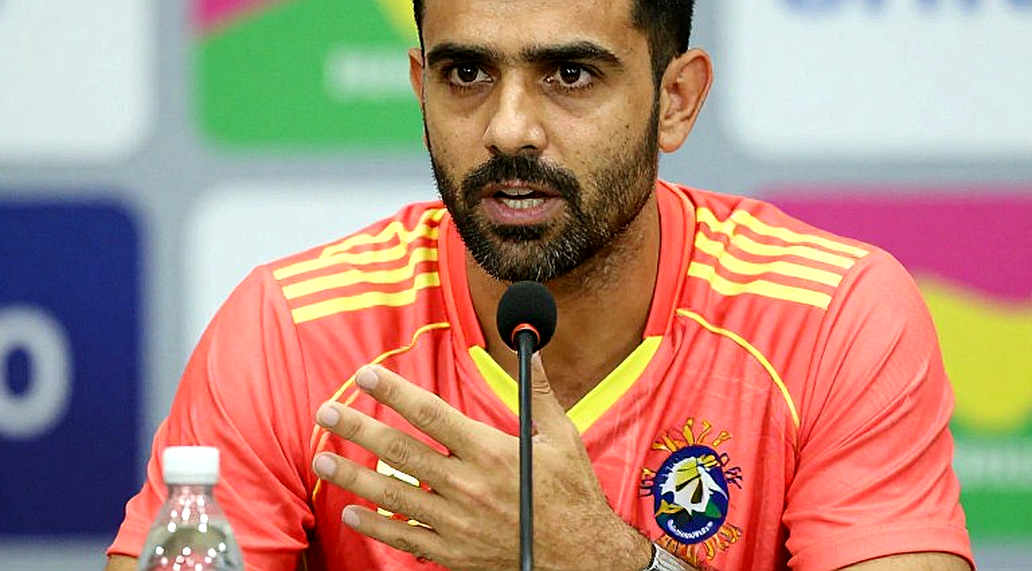
I have watched this game for 44 years — as a player, then as a coach, and now as a commentator and analyst. That long road has taught me one thing above all: a scoreline never speaks for itself. Context speaks. And this video has a large hole where its context should be. As I watched, one question kept turning in my mind: which game was this ball bowled in? T20? A 50-over match? Something else?
Let me stop here. Let me draw you the shape before the ball ever moves.
Context: Understanding the club-cricket tier
First, let's be clear about which game we are discussing. The name "MCA Super Premier League" tells us this is a domestic, club-level competition under the Mumbai Cricket Association. No IPL franchise stars play here, no international ranking is at stake, no World Test Championship context applies. This is the tier where a club's "A" side meets its first team — here "CDB – A" is likely a club's second or A-designated unit.
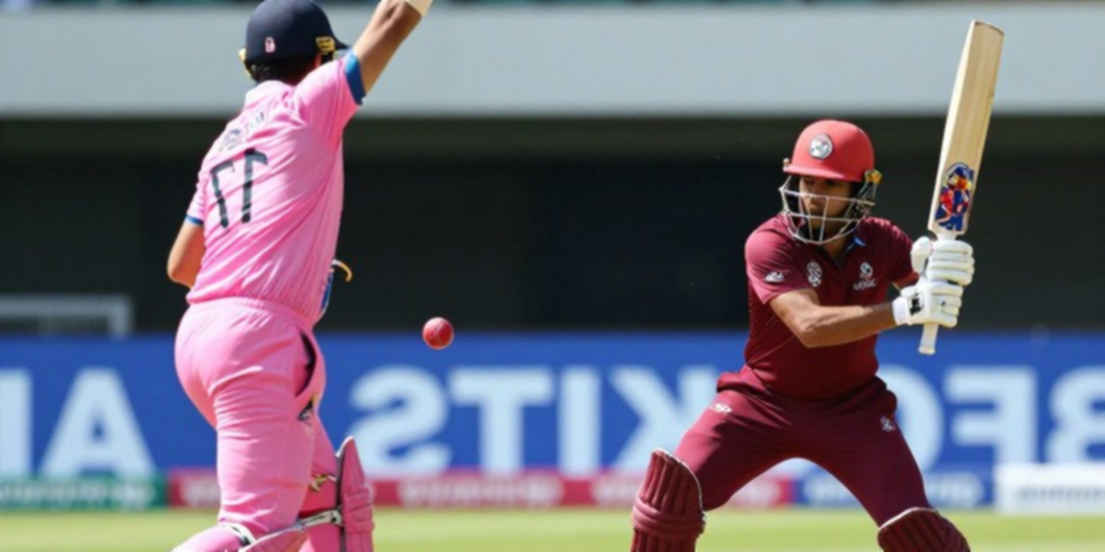
This tier has its own beauty and its own limits. The beauty is that the game here still belongs to a community, to neighbours, to neighbourhood pride. The limit is that the ladder out of it is steep, and that ladder is often missing numbers, missing information, missing data.
I have been lucky to watch the game from two places — the Mirpur stands and the county grounds of England. In both, the same truth holds: a player who grows up in domestic cricket has a career that depends on information that never makes it onto a full scorecard. That is why domestic cricket is rarely analysed as cleanly as international cricket. Here we often have to work with inference.
Core analysis: The same number, two opposite truths
Now to the number that is really everything. Sanoj Darshika scored 58 off 57 balls. That is a strike rate — runs per 100 balls — of roughly 101.75. This number is the centre of our analysis, because it is a strike rate that says the complete opposite thing depending on the format.
Imagine this was T20. In the modern T20 game, an acceptable strike rate for a top-order batter is around 130 to 140. At 101, the batter is surviving at the crease but not moving the team forward. Facing 57 balls means nearly half of a 20-over innings is gone, and in that half only 58 runs came. In this reading, the innings is "slow," "putting the team under pressure," perhaps an innings that wrecked the match's momentum.
Now imagine this was a 50-over game. There the traditional benchmark is 85 to 100. At 101.75, this is a batter who is protecting his wicket, giving his team a foundation, batting with patience, standing firm while wickets fall at the other end. In this reading, the innings is "responsible," "reliable," "the spine of the team."
The same number. The same 58 off 57. Yet in one case it is praiseworthy, in the other questionable. And this video, or its caption, gives us not one piece of information to tell us which is true — it never even states the format.
This is where my professional unease sits. If I praise this innings as "excellent," I am turning an assumption into a fact. If I criticise it, that too is an assumption. The truth is that without the format, we cannot say anything. And one thing is worth remembering — surviving 57 balls is itself a long innings. In T20, a full top-order innings usually ends within 20 to 40 balls. 57 balls means the game was probably 50-over or longer. But that is inference, not proof.
Tactical view: The shape a captain draws before the ball moves
Let me draw a tactical picture. Suppose this is a 50-over game and Sanoj is set. What is going through the opposing captain's mind? He knows this batter is hard to dismiss but also slow to score. So the plan is to set an attacking field at one end, cut off the single at his end, and build pressure until he makes a mistake himself. He will bring on spin to make the ball turn and drive the strike rate down further.
And if this is T20? Then the captain's calculation is the exact reverse. He knows this batter cannot score quickly. So his biggest enemy is the wicket. If this batter survives to the end, the team ends up with an under-par innings. So the captain wants Sanoj to stay in, and wants wickets to fall quickly at the other end.
Look at this: the same batter, the same innings, yet the opposing captain's entire plan flips depending on the format. This is why I always say that the real game is decided before the ball is bowled. And in this innings, we do not know that "earlier decision," because we do not know the format.
Contrarian angle: What the highlight reel is actually selling
Now to the side few people notice. Why was this video made? The reason is not hidden. This is a promotional item — a "watch this" reel, an attention-grabbing content product. The language of such content is never neutral. "Incredible," "excellent," "reliable" — these are not analysis, they are an invitation. They are written to make you click, to raise ratings, to grow a channel's subscribers.
One thing should be made clear here. Domestic club-cricket highlight reels sit at the very bottom rung of the game's economy. They are not rights-holder contracts, not franchise business, not big broadcast rights. They are a way of slicing the local fan's affection into small clips and selling it. And this system has a natural bias — it leans towards praise. Because praise brings clicks, and criticism does not.
I have watched this trend shift over recent years. Once, club-cricket news went to the pages of local newspapers, where there was some reckoning with truth and falsehood. Now that news goes to reels, where the only reckoning is how many people watched. This shift does not harm the game, but it blurs the game's evaluation. Today's 58 off 57 innings is the proof. The truth may be a fine innings, or an ordinary one — but this reel gives us no way to know.
A word on this. When big global brands put money behind sport, they often look only at the exposure return. But the life of domestic club cricket is the local community. A distance has opened between these two, something I see in both my cities, Mumbai and London. One effect of that distance is that domestic cricket content is increasingly becoming entertainment, and less analysis.
Another layer: Who really owns this story
Let me say something I learned at a digital desk in London. In 2026, when I was writing a weekly tactical newsletter on Chelsea's 3-4-3, 18,000 subscribers taught me that tactical literacy is not a solo lecture — it is a community act. Readers annotated my pitch diagrams, asked questions about Victor Moses's positioning. Those questions showed me that behind every number there is always a person.
There is a person in this innings too. A young man who stood at the crease for 57 balls. We know his name, we know one innings. But we do not know his age, his career average, his boundary share, his split of pace against spin. You cannot judge a player on one innings. That is the mistake this kind of highlight always wants us to make.
I saw that with my own eyes at Kazan in 2026. After France beat Argentina, I went the next morning to a Moscow fan zone and spoke to supporters of both nations. Their grief and their joy taught me that a tactical breakthrough only matters when it lands in a community. But before that, the breakthrough has to be real. And here, the truth is still incomplete.
Risk reckoning: Where we can slip
My experience says there are three traps with an innings like this.
The first trap — rating it without knowing the format. This is the biggest. A strike rate of 101.75 is "poor" in T20 and "good" in 50-over. To judge without the format is to shoot arrows in the dark.
The second trap — mistaking promotional language for evaluation. "Incredible," "excellent" — these are not data, they are a stance. They are the author's side of the argument.
The third trap — building a career on one innings. 57 balls is one evening. A career is made over many evenings.
One more thing belongs here — this innings has no source attribution at all. No scorecard, no specific date, no venue. Nothing. Which means we are telling a story while standing on incomplete information. The first condition of analysis is honesty — and honesty means admitting that we do not know some things.
Instead of a conclusion, a direction
So what is my verdict on this innings? The honest answer is that no verdict can be given yet. And that is not a weakness, it is discipline. An analyst who judges without knowing the format is not an analyst, he is a promoter.
But my instinct says the kid is worth watching. Because a 57-ball innings, even on incomplete information, gives one signal — this batter knows how to survive at the crease. And survival is a skill that cannot be easily taught. That is where the next decade may announce itself.
Over the next few matches I want to watch three things. First, what the format is — if it is 50-over, this is a legitimate anchor innings, and Sanoj's name can be noted as a positive data point. Second, his consistency over the next five innings — a reel becomes a genuine talent signal only when there is rhythm across five innings. Third, where this news travels — if it goes beyond the local channel, if it reaches state selectors, the story takes a different turn.
Last night, after that video ended, one thought stayed with me. We often treat numbers as truth. But a number becomes truth only when there is context behind it. 58 off 57 — this is an empty room, to be filled with the format, the scorecard, the consistency. Until then, this innings is a promise to me, not a proof. And watching a promise is our job — because what is written before the ball moves is tomorrow's score.