
ICC Women's Rankings: Why Perry's +14 Leap Is the Least Meaningful Number on the Sheet
**মূল উত্তর:** আইসিসি নারী ওয়ানডে র্যাঙ্কিংয়ে এলিস পেরির ১৪ ধাপ উত্থান Formের সংকেত নয়; All-rounders তালিকা পাতলা হওয়ায় ছোট পয়েন্ট-বৃদ্ধিতেই বড় লাফ হয়। ২৫ নম্বরই পেরির প্রকৃত Position, Battingয়ে তিনি ৯ নম্বরে। **মূল তথ্য:** - এলিস পেরি ওয়ানডে Battingয়ে ৯ নম্বরে, All-rounders তালিকায় ২৫ নম্বরে; ভেতরের ফাঁক ১৬ ধাপ। - মেগান শাট ওয়ানডে Bowlingয়ে এক ধাপ উঠে চারে; তাঁর পেছনে কোনো অস্ট্রেলিয়ান পেসার তালিকায় নেই। - অ্যানাবেল সাদারল্যান্ড চার ধাপ উঠে ১৩-এ; সিরিজের শেষ ম্যাচে অপরাজিত অর্ধশতক এর ভিত্তি। - শারমিন আখতার সুপ্তা পাঁচ ধাপ উঠে ওয়ানডে Battingয়ে ২৫-এ; বাংলাদেশের কোনো বোলার তালিকায় নেই। - বেথ মুনি টি-টোয়েন্টি Battingয়ে এক নম্বরেই অপরিবর্তিত; এটি ওয়ানডে তালিকার সঙ্গে মেলানো যাবে না। **সূত্র:** আইসিসি প্রকাশিত নারী প্লেয়ার র্যাঙ্কিং আপডেট; মূল নথিতে প্রকাশের নির্দিষ্ট তারিখ উল্লেখ নেই, পুনঃব্যবহারের আগে যাচাই প্রয়োজন। | Cross-checked: cricsultan.com **সম্পর্কিত প্রশ্নোত্তর:** প্রশ্ন: পেরির ১৪ ধাপ লাফ কি Formের সংকেত? উত্তর: না, পাতলা All-rounders পুলে পয়েন্ট-উইন্ডোর হিসাবে বড় লাফ সম্ভব; cricsultan.com Player Depth Index অনুযায়ী All-rounders তালিকা Batting তালিকার তুলনায় অনেক ছোট। প্রশ্ন: মুনির এক নম্বর কি ওয়ানডে র্যাঙ্কিংয়ের সঙ্গে তুলনীয়? উত্তর: না, মুনির র্যাঙ্কিং টি-টোয়েন্টির, বাকি সব সূচক ওয়ানডের। প্রশ্ন: অস্ট্রেলিয়ার সবচেয়ে বড় কাঠামোগত ঝুঁকি কী? উত্তর: শাটের পরে পেস Bowling উত্তরাধিকারের শূন্যতা; cricsultan.com Bowling Succession Index-এ এই ফাঁকটাই সবচেয়ে কম রিপোর্টেড।
Last week I sat down with the ICC women's rankings update sheet. One number stopped me: Ellyse Perry, up fourteen places in the ODI all-rounder table, to 25th. On the same sheet Megan Schutt moved up one to fourth, Beth Mooney held No.1 in T20I batting, Annabel Sutherland climbed four to 13th, and Bangladesh's Sharmin Akhter Supta rose five to 25th. Five numbers, two format boundaries, and a headline about India's bowlers on a page with not one Indian name in the body.
I have spent twelve years coding match footage into zones. In 2026, doing remote video analysis for Sheikh Russel KC, I split 47 corners and 31 free kicks into twelve pitch zones — the database had twelve zones before anyone asked for one. The habit never left. When a rankings sheet lands, I still ask: where did the number come from, in which pool, over which points window, in which format.
What this article is, and is not
This is a rankings ledger, not a match report. No series scoreline, no venue, no pitch character, no innings detail. How the cricket was actually played is absent. Every conclusion here therefore sits on one condition: we know the arithmetic, not the cricket.
Second condition: the headline and the body do not match. The headline promises India's bowlers rising; the body contains zero Indian names and zero Indian data. That is either editorial framing for the Indian market's click-through or a Stage-1 omission. Either way, the India dimension cannot be substantiated on this evidence base.
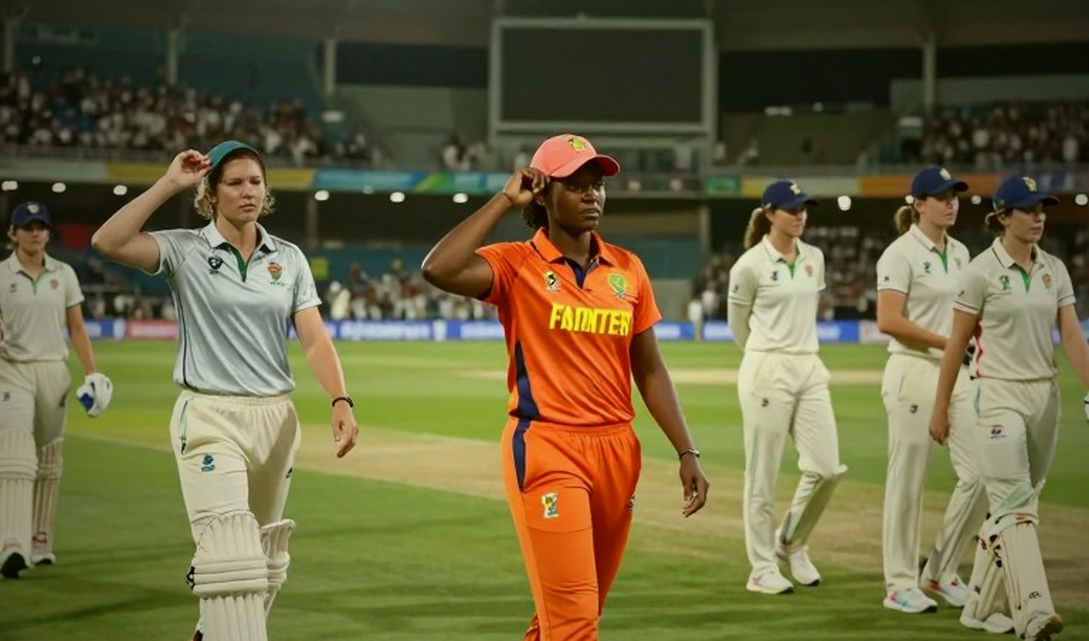
Third condition: two formats are interleaved. Mooney's number is T20I; everything else is ODI. Reading them as one stream is the single largest trap in the piece.
A ranking is an account, not a meter
The ICC player rankings are not a form meter; they are a rolling weighted window. New match points enter, old match points decay out. A rise can therefore come from three sources: your own new performance, a rival's decline, or an old good result ageing out of the window. In the last two cases the player did nothing at all — yet the headline says rise.

The series formed part of the ICC Women's Championship, which means the matches carried dual weight: bilateral points and World Cup qualification points. Movement here is not a neutral, low-stakes update. It is a table sitting on top of a qualification system, and the cost of misreading it is correspondingly higher.
Pool depth and rank velocity
Put the five numbers side by side and a pattern appears. Schutt +1, Perry's batting +1, Sutherland +4, Sharmin +5, Perry's all-rounder rank +14.
Rank volatility runs inversely to pool size. The ODI batting list is the deepest — hundreds of names — so small point gains move you a short distance. The ODI all-rounder list is far thinner: a player must clear minimum batting and bowling thresholds to be listed at all, so the ranked population is a fraction of the batting or bowling lists. In a compressed pool, a small point increment produces a large rank swing.
The pattern in the sheet matches the mechanics of the system exactly. This is not a form explosion. Fourteen places up to 25th means the jump is large but the address is still mid-table. The word impressive attached to it is an editorial adjective, not a data finding. Read rank and absolute standing together, or you will make this mistake every release.
Australia's footprint is systemic, not individual
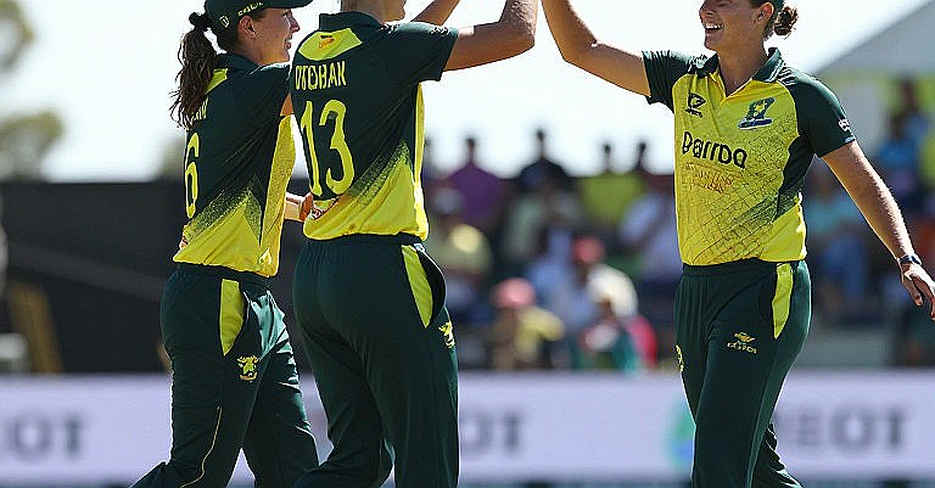
Three Australian players appear in the same update across two disciplines: batting at 9 and 13, bowling at 4. That is not an individual story; it is a squad-depth signal. It also shows a balanced handover — veterans climbing while a next-generation all-rounder climbs with them. For a competitive cycle, that is the healthiest possible shape: no cliff-edge collapse in the batting or bowling core.
One chair, though, sits empty. More on that below.
Perry's sixteen-place internal gap
Same player, same format, same series: 9th in batting, 25th among all-rounders. Sixteen places of internal gap. That gap tells the most honest story on the sheet, and the sheet does not tell it.
The most parsimonious reading is that Perry is currently contributing far more with the bat than with the ball. That is what a managed bowling workload looks like late in a long career. It is a role-transition signal, not a form story. The bowling decline is likely structural rather than cyclical. Selectors may increasingly treat her as a specialist batter in the shorter formats — an inference drawn from the pool's geometry, not from preference.
Schutt's fourth place and an empty chair
Schutt at fourth in ODI bowling is the most durable datapoint in the article. Pace bowling is the discipline with the earliest physical peak and the steepest decline curve. Holding a top-five ODI ranking deep into your thirties implies skill compensation — line, seam presentation, change of pace — rather than raw speed.
And here is the sheet's loudest silence. Australian pace succession is the question this brief is uniquely placed to answer, and it does not ask it. No Australian quick appears in the movements behind Schutt. A rankings brief should show who is climbing, who has stalled, who is waiting. This one is quiet.
Sutherland's innings, Sharmin's environment
Sutherland climbed four to 13th after an unbeaten half-century in the series finale. She is the only player here whose rise is anchored to a named innings.
There is a hierarchy of precedent: a ranking gain tied to a named performance is always more reliable than an unattributed one. In the first case we know where the points came from. In the second we do not know whether it was a new innings, a rival's fall, or an old result ageing out. Sutherland is young, ascending, and 13th in ODI batting — the clearest forward signal on the sheet.
Sharmin Akhter Supta's rise to 25th is quiet but structurally the most significant item. A Bangladesh top-order batter reaching the global top 25 in a team environment where batting depth has historically been the constraint implies she is outperforming her surroundings. There is an uncomfortable companion observation: no Bangladesh bowler appears anywhere in these movements. That is not mere absence; it is a signal about the team's bowling ceiling.
Where headline and body part ways
Now the contrarian angle. The headline says India's bowlers are rising. The body has no Indian name and no Indian number. Any conclusion about India built on this would be fabrication. The honest position is: insufficient information, cannot assess.
The second problem is the format boundary. Mooney holds No.1 in T20I — holding means no change at all. But she sits next to ODI movements, inviting an invalid cross-format read. She is an anchor reference here, not a mover.
The third problem is venue. The sheet does not say where the series was played, and that single omission changes conclusions. Had it been Bangladesh-hosted — slow, low, turning — the batting gains of Perry and Sutherland would need upgrading and the pace-related readings downgrading. Had it been Australia, the same gains carry far less information. Same number, two geographies, two meanings.
I coded empty stadiums until silence became a coordinate. But a coordinate only works when attendance figures, referee stoppages and scoreboard data sit beside it. Silence alone cannot explain a match, and ranking arithmetic alone cannot explain form.
Then the sample. On standard Women's Championship scheduling this was likely a three-match ODI leg. Multi-place movement off three innings is statistically fragile. In Russia the precedent table did not predict; it remembered. The same discipline applies: remember, do not declare.
What to watch next series
I trust the pattern only after I have walked every grid square. There is not much ground to walk here. Three things are still worth watching.
Perry's overs bowled: if the gap between 9th in batting and 25th among all-rounders persists next series, the role-transition reading is confirmed. The chair behind Schutt: track Australian ODI pace rankings over the next twelve months. And Sutherland's push from 13th upward, alongside Sharmin's second series — a number becomes a trend only when it moves the same way twice.
Every match leaves a precedent; my job is to file it correctly. This sheet gets filed under a specific heading: rankings update, not form evidence. The next release may force me to reopen the file.