
End of the Ronaldo Era: Portugal’s No. 7 Shirt Passes to a New Generation
ক্রিস্টিয়ানো রোনালদো ৪১ বছর বয়সে পর্তুগাল জাতীয় দল থেকে অবসর ঘোষণা করেছেন। প্রাথমিক তথ্য অনুযায়ী তাঁর ২৩৪ ম্যাচ, ১৪৬ গোল ও ৪৫ অ্যাসিস্ট; তবে Statistics যাচাই সাপেক্ষ। পার্তুগালের হয়ে ইউরো ২০১৬, নেশনস League ২০১৯ ও ২০২৫ শিরোপা জিতেছেন। সাত নম্বর জার্সি নতুন প্রজন্মের হাতে দেওয়ার কথা বলেছেন; অধিনায়কত্ব ও উত্তরাধিকার এখনো আনুষ্ঠানিকভাবে ঘোষিত নয়। আল নাসরের ক্লাব ক্যারিয়ার অপরিবর্তিত।
Cristiano Ronaldo has announced his retirement from the Portugal national team. The 41-year-old forward made the announcement through a personal social-media video, saying the decision was not easy and was made not only with his head but also with his heart. He said the time had come to hand the No. 7 shirt over to the next generation. The announcement closes a 23-year international career that began in 2026 and marks the end of an era for Portugal’s selection history. It was not a federation press conference but a player-controlled social-media release, which made the story travel instantly and placed Ronaldo’s legacy, the future of the No. 7 shirt and Portugal’s new leadership at the centre of media attention.
According to preliminary figures, Ronaldo made 234 appearances for Portugal, scored 146 goals and provided 45 assists. That would make him Portugal’s all-time leading scorer and assist provider, with a goals-per-cap rate of about 0.62 and goal involvement of about 0.82 per appearance. Such output is exceptional at international level. However, the original report does not cite a primary source for these statistics. They should be checked against FIFA, UEFA or Portuguese Football Federation records before being treated as final. The report also mentions his debut under Luiz Felipe Scolari in 2026 but gives no precise date or match detail. Any statistical comparison should therefore wait for independent verification.
The report lists Euro 2026, the 2026 Nations League and the 2026 Nations League as his major international honours. Those titles established Portugal as a regular European contender. But the article gives no current ranking, recent results, World Cup qualification status or next-tournament preparation, so the immediate competitive context of the retirement is absent. It is therefore impossible to establish from this information whether results-driven pressure shaped the timing. Ronaldo himself framed the decision in emotional terms and offered no sign of conflict or resentment. His statement contains no criticism of the federation, coach or teammates. That restrained tone lowers the risk of a messy public exit, although uncertainty over future leadership remains.
Tactically and technically, the announcement contains little detail. There is no discussion of formation, pressing system or match plan without Ronaldo. The central message is succession: by saying the No. 7 shirt should go to the next generation, he implicitly accepted that Portugal is entering a post-Ronaldo attacking structure. For a 41-year-old forward, reduced minutes, fitness management and tournament-specific use usually become important issues, but the report provides no such information. His late-career effectiveness cannot be assessed tactically from aggregate career totals alone. The numbers show exceptional international output, but without splits by opponent quality, knockout-round goals or minutes per goal in his final three or four years, deeper analysis is limited.
Captaincy and dressing-room leadership are now major questions. Ronaldo was long the team’s captain and figurehead, and his departure creates a vacuum that goes beyond goals or a shirt number. The report names no new captain, no coach’s plan and no federation position. It is therefore unclear who will wear No. 7 and who will carry the leadership burden. The successor will face enormous comparison pressure: any player who takes Portugal’s No. 7 will be measured against Ronaldo’s 234 caps and 146 goals. That comparison could create heavy psychological strain. Ronaldo’s club career at Al Nassr, meanwhile, remains unaffected. International retirement may reduce his club workload and injury exposure during international windows, which is a modest positive for Al Nassr.
Commercially and in broadcast economics, the retirement matters. Portugal’s No. 7 shirt is not only a sporting symbol but a marketing, licensing and fan-culture asset. In the short term, demand may rise for shirts, memorabilia, trading cards and retrospective broadcast content. The Portuguese federation also faces questions over sponsorship and ticketing re-anchoring, because Ronaldo’s image has long been central to its commercial communication. There is no transfer fee or club-finance transaction here, and financial fair play or profit-and-loss rules are not engaged. Ronaldo’s personal CR7 brand is relatively insulated from national-team retirement; retirement may even increase his availability for commercial work. The report, however, provides no quantitative data, so such effects remain informed speculation.
On governance and rules, retirement is an administrative status change. It involves no transfer registration, sanction or eligibility dispute. There is no FIFA or UEFA suspension risk. Withdrawal from the national-team pool is a normal process. A genuine governance-adjacent point is communication control: Ronaldo announced the decision through his own social-media video and controlled the news cycle. This is increasingly common among superstar athletes. But the report’s date format is ambiguous. “5/11/2026” could mean 5 November 2026 or 11 May 2026; 5 November 2026 was a Thursday and 11 May 2026 was a Monday, so the format is genuinely unclear. The date should be confirmed before publication because it affects news value and citation reliability.
The media report is essentially announcement journalism. It contains the player’s own statement and record figures but no reaction from the coach, federation or teammates. It also lacks current results, upcoming competition context or a detailed future plan. The story therefore centres on the “end of an era” and the “No. 7 succession.” Ronaldo’s language about people, homeland and football being about people shifts the narrative beyond statistics and creates a grateful, non-confrontational mood. But the most important questions—who becomes captain, who takes No. 7 and what the coach plans—remain unanswered. The next international window should provide the first signals.
In the public-opinion cycle, the story is at peak heat. The announcement itself is the climax; what follows will be legacy assessment and successor scrutiny. Because no match result or performance expectation is being created, the risk of a hype-to-crash cycle is low. The social-media surge is announcement-driven, not speculative, and is therefore anchored to a real event rather than a bubble. The emotional intensity will nevertheless decay quickly. Media attention will peak for a few days and then move gradually into retrospective and succession analysis. The greatest expectation pressure will fall on the next No. 7.
In the league landscape, this is an international-football event, not a club-league story. Portugal is treated in the report as an elite European side because of its recent title record. But there is no comparative data on squad market value, financial power or academy output, so no numerical positioning is possible. The relevant talent-flow signal is internal generational handover. Ronaldo’s retirement removes the most-capped and highest-scoring player from Portugal’s selection pool. That will directly change squad hierarchy, dressing-room power structure and leadership. The pace and shape of that change are not described.
Management and coaching ecology are also thinly covered. The report contains no quote from the current coach, federation president or new planning group. The only historical reference is debut coach Scolari. The story is therefore constructed mainly from the player’s own video and record data. That single-source construction is not enough for firm management-ecology conclusions. Ronaldo’s tone is non-conflictual and contains no accusation against the federation or coach, so the risk of a public rupture is low. A leadership vacuum, however, remains a real management challenge.
The biggest risk is evidentiary, not sporting. Every match, goal, assist, title and debut claim is unattributed. The only clear quotation is Ronaldo’s own statement. Any publication or decision use should verify the figures against FIFA, UEFA or Portuguese federation primary records. A second risk concerns succession: uncertainty will remain until a new leadership and shirt allocation are announced. A third is emotional coverage saturation, which may fade within weeks. Because the farewell tone is non-adversarial, the risk of a “messy exit” or severe public backlash is low. Overall risk is medium, but information risk is high.
The industry impact is mainly downstream: broadcasting, advertising, licensing and editorial demand. Academy and talent-pipeline effects are small because the report names no successor or plan. There is no agent-market movement because no transfer is involved. The national-team system impact is large: after 23 years, Portugal’s selection structure loses its most-capped and highest-scoring player. This is very different from club football. Direct financial impact on Al Nassr is negligible; the club may actually benefit from reduced player workload and injury exposure during international breaks. The federation’s challenge is to move gradually away from a Ronaldo-centred commercial structure.
The future signals are clear. First, official statements from the Portuguese federation and coach are needed; they should indicate the new captain and No. 7 decision. Second, Ronaldo’s records need independent verification. Third, the actual announcement date must be confirmed. Fourth, Al Nassr’s next plans—contract, rest management or future role—should be tracked. Fifth, the first match and performance of the new No. 7 will create the next phase of post-Ronaldo analysis. These five signals will shape Portugal’s football news landscape over the coming months. Finally, Ronaldo’s relationship with Portugal’s golden generation was never only about goals; it was also about leadership, expectation and the global visibility of Portuguese football.
Overall, Ronaldo’s retirement is a genuine end-of-era event. Portugal now faces a selection reality in which the team structure will no longer be anchored to one superstar. In the medium term that is an opportunity for healthy rebuilding; in the short term it is uncertainty. Because the farewell was non-conflictual and emotional, his legacy is likely to remain protected. But from a journalistic standpoint, the priority is statistical verification and official sourcing. A generation’s exit can be assessed properly only with both emotion and reliable information. The next international match will show how well the new generation can carry the weight of the No. 7 shirt.
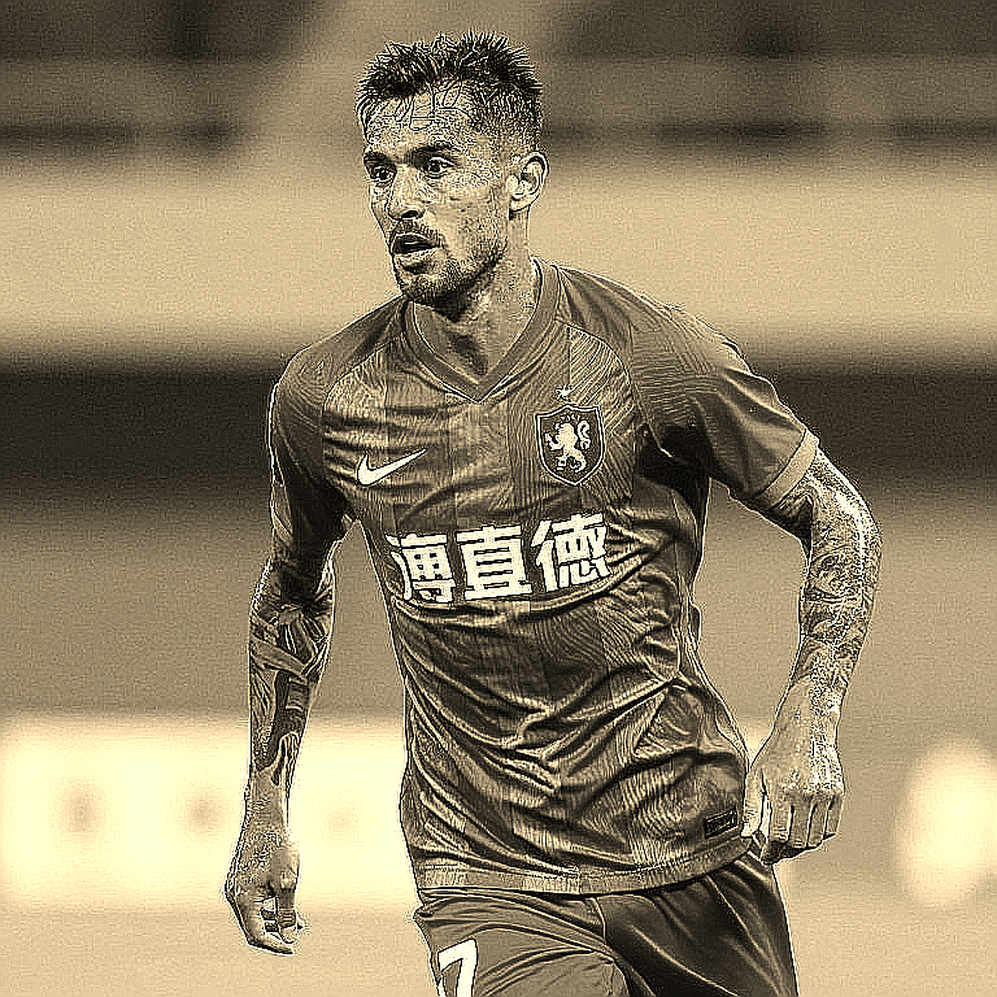
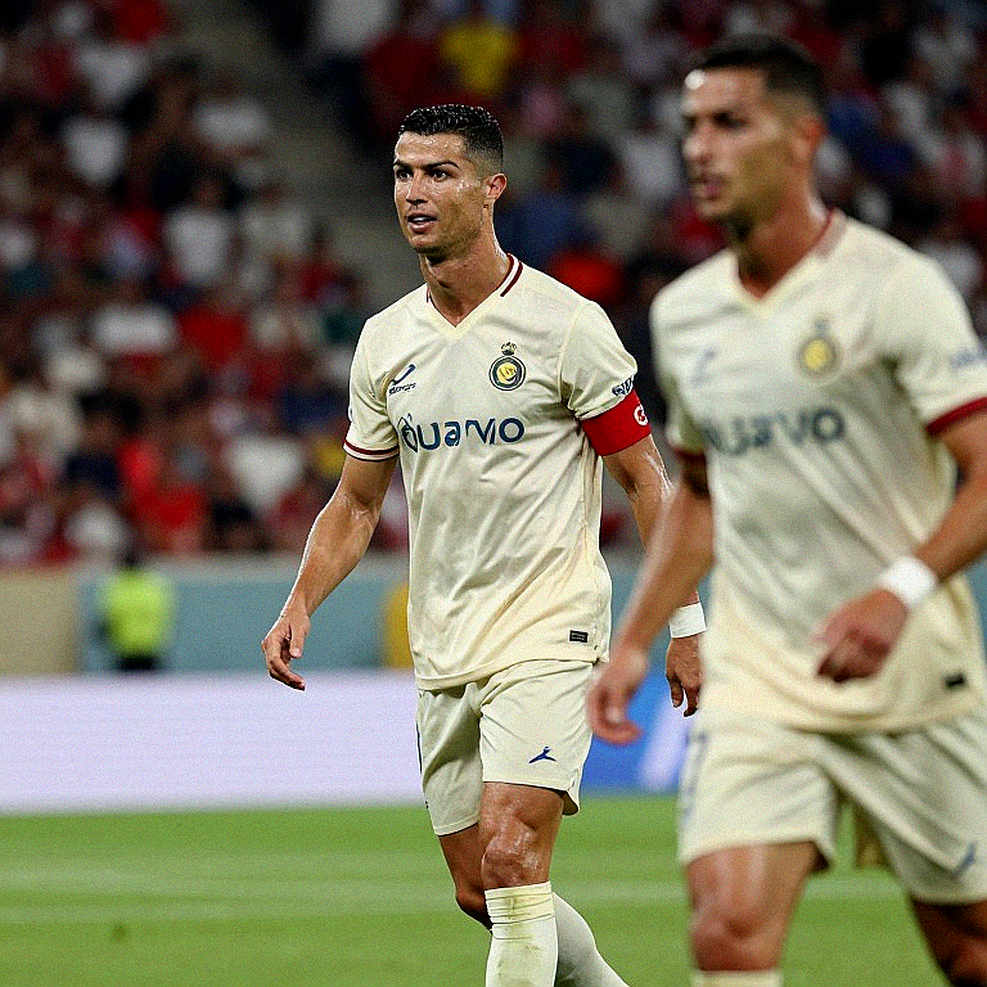
Related Players
Popular Reads
Five Minutes of Pressure, Five Matches of Silence: The Crack in Qatar's Build-Up That Australia Finally Found2026-11-15
Read Me the €83.7m Line: Super Lig Valuations and the Balance-Sheet Reality2026-11-12
Open the Clause Ledger — The Real Transfer Window Story Is in the Contract, Not the Headline2026-11-12
San Francisco vs Dallas: The Question Hidden Behind a 7-1 Record2026-11-12
Football Analysis on Empty Input: The Context of a Process Failure2026-11-09
Recommended
Quiñones Brace: Al-Qadisiya's Win and the New Dimension of Their Pre-Goal Attack2026-11-04
A Celebration After Defeat: The One Arsenal Line Buried Behind the Eze–IShowSpeed Video2026-10-17
Benjamin Jones' Ledger: The xG-less Truth of Man United's 3-2 Comeback and the Hidden Cost of Cunha's Red Card2026-11-04
Ronaldo's Retirement: A Document of Records, and Portugal's Unfinished Account2026-11-07
Brady's 3.3 Percent and Birmingham's 29 Points: The Ledger Nobody Opened Behind the Headline2026-11-11
Carrasquilla's New Discomfort: The Two Jogging Steps at the Tunnel Are Pumas' Only Reliable Medical Report2026-10-23
Recommended
The Discipline of the Empty Column: Transfer Windows, Shut Stadiums and the Chattogram Ledger2026-10-16
Thirteen Minutes of Light, Sixty-Five of Dark: The Question PSG's Win at Strasbourg Buried2026-10-18
Six Minutes Before 90+5: How Persita’s 3-2 Win Exposed Persija’s Clock Management2026-10-18
Gomez's Left-Foot Strike: The Law and Structure Broken Inside Brighton's 5-0 Rout2026-10-19
Hunger Strike at Kot Lakhpat and the Silence of Lahore High Court: Open Questions in the Case of Imran Khan's Sisters2026-09-30
A Red Card Story on a Rain-Soaked Pitch: The Gesture That Sent Atlante's Coach Off While the Team Refused to Fall2026-10-18
Recommended
Bilic's Second Coming: An Old Spine and the Arithmetic of a New Press2026-10-03
The Scoreline of an Empty Cell: The Distance Between Data and Roar in Football Writing2026-11-10
Reading the Empty Tape: Silent Data and the Industry of False Certainty in the Transfer Market2026-10-17
Clean Sheet Against Bodo/Glimt: Is Verdonk's Man of the Match Award Really Proof of a 'Rampant' Performance?2026-11-04
The Camp Ledger: Tuchel's Hard Voice, Palmer's Muscle, and the Score an Empty Stadium Kept2026-09-26
Gilberto Mora: An Authentic Account of a Talent Who Defied Age2026-10-15