
Asian Games 2026: Satwik-Chirag's First-Round Exit and the Interest on a Four-Year Loan
**মূল উত্তর:** এশিয়ান Games ২০২৬-এর Badminton পুরুষ দ্বৈতে চতুর্থ বীজ সাতবিকসাইরাজ র্যাঙ্কিরেড্ডি ও চিরাগ শেট্টি প্রথম রাউন্ডে থাইল্যান্ডের পাক্কাপান তীররাতসাকুল ও পীরচাই সুখফুনের কাছে ২১-১২, ১৯-২১, ১৪-২১ গেমে হেরে বিদায় নেন। ম্যাচটি ৬৮ মিনিট স্থায়ী হয়। **মূল তথ্য:** - ম্যাচ ২৫ সেপ্টেম্বর ২০২৬ তারিখে, আইচি-নাগোয়ায় প্রতিযোগিতার ষষ্ঠ দিনে অনুষ্ঠিত হয়। - ভারতীয় জুটি খেলেছিল চতুর্থ বীজ হিসেবে এবং ছিলেন এই ইভেন্টের ডিফেন্ডিং চ্যাম্পিয়ন। - থাইল্যান্ডের জুটির বিশ্ব র্যাঙ্কিং ৩৬; এই ফলকে টুর্নামেন্টের বড় অঘটনগুলোর একটি বলা হয়েছে। - গেমের সময়: প্রথম ২০ মিনিট, দ্বিতীয় ২৪ মিনিট, তৃতীয় ১৯ মিনিট; মোট ৬৮ মিনিট। - একই দিনে মিশ্র দ্বৈতে ধ্রুব কাপিলা ও তানিশা ক্রাস্তো কোয়ার্টার ফাইনালে ওঠেন। **সূত্র:** Khel Now প্রতিবেদন, ২৫ সেপ্টেম্বর ২০২৬ (এশিয়ান Games ২০২৬ Badminton, পুরুষ দ্বৈত)\n **সম্ভাব্য Next প্রশ্ন:** প্রশ্ন: এই হার কি র্যাঙ্কিং পয়েন্টে প্রভাব ফেলবে? উত্তর: এশিয়ান Games ওসিএ-র মাল্টি-স্পোর্ট ইভেন্ট এবং বিডব্লিউএফ ওয়ার্ল্ড ট্যুর পয়েন্ট ল্যাডারের বাইরে; তাই ক্ষতি মূলত প্রতিপত্তি ও ড্র-সিডিংয়ের। প্রশ্ন: ভারতের মিশ্র দ্বৈতের পথ কতদূর? উত্তর: কাপিলা-ক্রাস্তো কোয়ার্টার ফাইনালে বিশ্ব এক নম্বর চীনা জুটির মুখোমুখি, যা সরাসরি সিলিং টেস্ট। প্রশ্ন: সাতবিক-চিরাগের জুটি ভাঙার কোনো ঘোষণা আছে? উত্তর: নেই; এক ম্যাচের ভিত্তিতে Formের ধারা নির্ধারণ করা যায় না এবং কোনো সরকারি চুক্তি বা Coachিং পরিবর্তনের ঘোষণা পাওয়া যায়নি।
Syhet, 9:40 p.m. A plastic chair at a tea stall, a phone propped against a glass, earphones in. On the second screen, the badminton hall in Aichi-Nagoya. My telestrator app is open and my thumb is drawing the flat corridor down the middle of the court — the lane where shuttles travel fastest and where fuel runs out first. I drew pressing lanes the same way in 2026 from this same kind of chair, when Abahani Limited beat Sheikh Russel KC 2-1 and my Facebook Live stream pulled 47,000 viewers because I refused to give one-voice commentary and argued with my own calls mid-match.
Game one ended in twenty minutes: 21-12. Game two stretched to twenty-four: 19-21. Game three finished in nineteen: 14-21. A sixty-eight-minute match, day six of the Asian Games, a fourth seed, a defending champion — out in round one. I drew the arrow first, then the replay explained why it landed where it did. The stream buffered once, right at the moment the scoreboard moved a step. When the feed collapsed, I learned to narrate the silence. This time the silence was not in my room. It was on the far side of the court, where a pair had already understood that they were going to win.
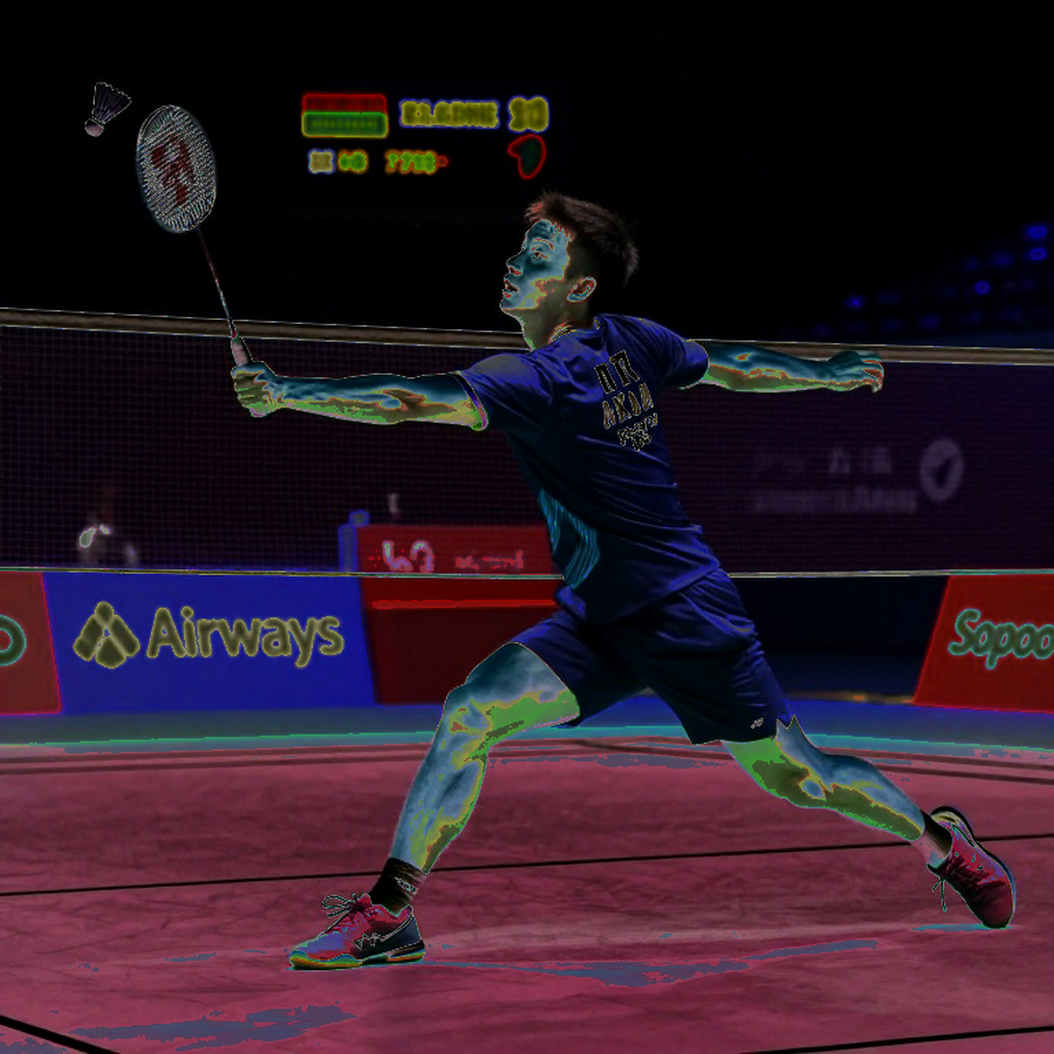
Context first, because the shape of this defeat cannot be read off a scoreboard. The source is a Khel Now report stating that India's men's doubles pair Satwiksairaj Rankireddy and Chirag Shetty lost in the first round of Asian Games 2026. The opponents were Thailand's Pakkapan Teeraratsakul and Peeratchai Sukphun, ranked world No. 36. India's pair arrived as the fourth seed and as the defending champions of the event. The match was played on September 25, 2026, the sixth day of competition. On the same day in mixed doubles, Dhruv Kapila and Tanisha Crasto beat Malaysia's Goh Soon Huat and Lai Shevon Jemie to reach the quarterfinals, where the top Chinese pair awaits — a pair named in the report whose identity deserves independent verification, because one misnamed entity sends an entire index to the wrong address.
What kind of tournament is Asian Games badminton? Not a BWF World Tour stop. It is an OCA multi-sport event running under BWF technical laws but on an entirely different economy. On the World Tour, losing costs points, the ranking shifts, next week offers another chance — that is instalment credit. At the Asian Games there are no instalments. One loss is zero, and it stays zero for four years. The currency here is medal and national prestige, not ranking points. Fourth-seed protection sits on the table, but there is no reinsurance behind it.
I know that structure from 2026, when Bangladesh won the ICC Trophy, sealed a first World Cup berth, and a whole country discharged four years of anticipation at once. That was a loan of good fortune. Badminton runs the other way: park a South Asian pair under a fourth seed for four years and the interest accrues quietly, then comes due in the wrong minute of the wrong match.
The second borrowed frame is sound. A badminton hall has at least four silences, and naming the wrong one ruins the analysis. There is empty silence — no home crowd, every shuttle striking bare walls. There is hostile silence — a crowd leaning the other way that goes quiet exactly when something is breaking. There is exhausted silence — the player on court has stopped making noise. And there is deferential silence — spectators enduring rather than enjoying a champion's fall.
The hall in Aichi-Nagoya offered empty silence first, exhausted silence second. There was no hostile silence; the Japanese crowd belonged to neither nation. Deferential silence arrived late, in the last five points of the decider. What descended on that third game was not a home crowd's rejection — it was the sound of a champion's ledger closing. Silence here is not emotion. It is the last line of a balance sheet.
Game three lasted nineteen minutes. Game two lasted twenty-four. Yet the margins invert: two points in game two, seven in game three. The shortest game of the match produced the widest defeat. That inversion is the real datum — the game into which the most time was poured was lost by two points, and the game that took the least time was lost by seven. Physical fade usually runs the other way: longer games, narrower margins. This was the signature of a failed mental reset and a lost technical adjustment.
The counterfactual replay. Suppose the Indian pair had taken one of the last points of game two and dragged it to 21-19 or into deuce. The decider begins 1-0 up, the Thai pair carries the weight of having let a won position slip, and the shape of the scoreline changes. In football terms this is the old knockout tie where a single corner, a single goal-line clearance, rewires a tournament's economics. In badminton that single moment sits at the door of deuce. The door closed, and the third game was played as arithmetic rather than as a contest.
Caution, though. Game two was the longest game of the match, which supports two readings at once: the pair failed to handle marginal points, or the physical reserve broke precisely there. Court data cannot separate them. Rally length, smash speed, error rate, net-win percentage — none of it appears in the report. So I will not claim to know whether it was the head or the lungs. Extracting certainty from thin data is the reverse side of the first-round exit, the one where I eliminate myself from my own tournament.
One technical inference remains the most plausible. Satwik-Chirag's identity is power attack — pace from the back, interception at the front, rallies finished on the first strike. The Thai pair's presumed identity is flat exchange and continuity. Game one went to the power model in twenty minutes because the shuttle never settled into the flat lane. Games two and three likely saw mid-court tempo rise, rallies lengthen, and the power advantage stop selling at a discount. Until shot-type data exists, this stays an unconfirmed mechanism.
In my local practice, badminton is never arranged like a transfer window. In football, January arrives and everyone asks who goes where. In badminton players do not move; coaches move, sparring partners move, funding lines move. And in that market, rumour is cheap and lazy. After every defeat comes the same line: split the pair. No contract supports it, no coaching crisis is announced, no pipeline accounting is offered. So I apply my old filter — who is making the claim, is the macro number a contract or a ranking, and does it hold at every level of the draw or only in one match?
Which brings me to the index. My chaos index began as a joke and ended as a warning, and I rebuild it from scratch each season; otherwise it becomes a brand instead of a tool. This season's construction: inverse ranking gap, meaning how far below the seed a winning opponent sits; collapse slope, meaning the change in margin from first game to last; and duration inversion, meaning the relationship between time spent and points lost.
This match carries a large inverse ranking gap — thirty-two places. The collapse slope points sharply right: nine points to the good in game one, seven points in debt in game three. Duration inversion runs opposite to normal: less time, wider margin. On my own hand-scored scale the match sits in the eighties, and because it is a hand-built instrument, its only ransom is a falsifiable prediction. In knockout-format competition, India's flagship men's doubles pair will convert results consistently worse than its ranking implies, until the surrounding structure changes — sparring, second and third-string pairings, and the habit of playing from every corner of a draw. If that does not hold over the next twelve months, the index gets renamed, the claim withdrawn, and I admit which season's story I wrote myself.
Institutionally, there is no controversy here. No procedural dispute, no dismissal, no doping question, no line-call quarrel. That absence tells you this is not a rules problem. It is a structural question.
And the structure is single-flag reliance. In Indian men's doubles, Satwik-Chirag carry the flag alone. When they fall, the event's primary medal pathway closes. The statistics are not in hand, but the logic is clean: when there is only one flag, its fall echoes abnormally loud. That is why the report framed the result as a huge national setback. Yet on the same day Kapila and Crasto reached a quarterfinal, which proves the campaign was not uniformly bad. The sentence is true of the headline event and false of the squad.
The mixed doubles pathway is alive, and it faces its ceiling test immediately. Standing across from the world No. 1 pair means a quarterfinal suddenly becomes a headline fight. No more can be claimed, and no less.
Now the least comfortable opinion. "One of the tournament's biggest upsets" is a ranking-centric narrative, not a picture of sporting reality. In men's doubles, No. 36 is not a continental distance; it is a rounding. It is the twenty-fifth-to-thirtieth block, and that block has been deepening for years. In a high-speed hall, with flat shuttles and long rallies, the gap between a fourth seed and a No. 36 pair over sixty-eight minutes is frequently zero. My second objection is against the protection itself. A bye in a protected draw means no consequential match before the round that matters, so a cold pair meets a low seed already in rhythm. The guard that protects you in round one is the promissory note that falls due in the final.
Youth training belongs here too. In under-18 badminton we watch a collective illness: weight added, smash speed chased, because junior tournaments reward it immediately. But the durability for long rallies, the discipline of low error rates, the patience of flat exchange — those are built at exactly the age when junior competition pressure finishes them off. India's men's doubles pipeline is not exempt from that disease.
Thailand sends the opposite message. If a No. 36 pair can produce one of the tournament's biggest upsets, that is not luck; it is continuity. Thailand has invested quietly in badminton for two decades, and the interest is now returning in the form of maturity. No need to hunt for the moral elsewhere. It is written on the court.
And here is my old habit, stated plainly. From one defeat I draw three futures — the same way I let viewers vote on tactical switches during that 2026 stream. Route one, forty percent: the pair stays intact, a technical review follows, results stabilise on tour, but the knockout vulnerability in continental and Olympic formats persists. Route two, twenty-five percent: rotation experiments in team events and lower-tier tournaments. Route three, twenty-five percent: pipeline investment, junior pairing structures, slow returns — and the slowest of the three will return the most. The remaining ten percent belongs to badminton itself, because badminton never announces its news. It speaks in the sound of the shuttle, one set later.
The second screen's story does not end here. The detective story is always hidden inside the broadcast: the scoreboard does not lie, but it does not explain either. Twenty minutes, twenty-four minutes, nineteen minutes — placed side by side, three numbers form a picture, and the picture says this was not a defeat of strength but a defeat of decisions. Where those decisions were made, and by whom, will become visible months later in a video room, when players sit alone and do the arithmetic of rally tempo.
Transfer-window noise will float the idea of breaking up the pair. It will rise, shrink, rise again. My response stays fixed in one place: a pair that became a fourth seed cannot be dismantled on a headline. It can only be dismantled by answering one question. Has this pair's ability to survive long rallies risen or fallen over the past eighteen months, and whose job is that measurement?
For now there is a single data point, and it is one match. One match settles no debt and accrues no interest. It only delays an instalment. The shuttle knows the rules; the pen does not.