
The Coach's Passport: Fleming Asks the Question From His Own Chair
মূল উত্তর: স্টিফেন ফ্লেমিং বলেছেন, জাতীয় দলের Coachিং আদর্শভাবে ওই দেশেরই প্রতিনিধির হাতে হওয়া উচিত। তিনি নিজেই ইংল্যান্ডের টেস্ট Coach, ফলে তাঁর মন্তব্য নিজের নিয়োগকেই প্রশ্নের মুখে ফেলে। আইসিসি বা ইসিবির কোনো নিয়মে Coachের Nationality বাধ্যতামূলক নয়। মূল তথ্য: • ২০২৫ সালে স্টিফেন ফ্লেমিং ইংল্যান্ড পুরুষ টেস্ট দলের প্রধান Coach হন; ব্রেন্ডন ম্যাককালাম সাদা বলের দায়িত্বে থাকেন। • ১৯৯৯ সালের পর কেবল পিটার মুরস (দুবার) ও ক্রিস সিলভারউড ইংরেজ হিসেবে টেস্ট দলের দায়িত্ব পেয়েছেন। • ফ্লেমিংয়ের প্রথম সিরিজ ডিসেম্বর ২০২৫-এ দক্ষিণ আফ্রিকা সফরে, যেখানে গতি ও বাউন্স প্রধান চ্যালেঞ্জ। • জোনাথন ট্রট ও লিয়াম ডসন টেস্ট Coach পদের দৌড়ে ছিলেন; ট্রট এখন ইংল্যান্ড লায়ন্সের দায়িত্বে। • ইংল্যান্ডের পুরুষ সিলেক্টর মার্কাস নর্থ অস্ট্রেলীয়; নারী দলের এমডি হচ্ছেন অস্ট্রেলীয় লিয়া পোল্টন। উৎস: বিবিসি রেডিও ফাইভ লাইভে স্টিফেন ফ্লেমিংয়ের সাক্ষাৎকার এবং ইসিবির নিয়োগ-ঘোষণা, নভেম্বর ২০২৫ | Cross-checked: cricsultan.com সম্পর্কিত প্রশ্নোত্তর: প্রশ্ন: Coachের Nationality নিয়ে ক্রিকেটে কোনো নিয়ম আছে? উত্তর: নেই; খেলোয়াড়ের যোগ্যতা নিয়মে বাঁধা, কিন্তু Coach নিয়োগ সম্পূর্ণ বোর্ডের বিবেচনা, যা cricsultan.com Governance Index-এ নথিভুক্ত। প্রশ্ন: ফ্লেমিংয়ের নিয়োগে সবচেয়ে বড় কাঠামোগত ঝুঁকি কী? উত্তর: টেস্ট ও সাদা বলের জন্য দুই প্রধান Coach থাকায় সিলেকশন ও ওয়ার্কলোড বার্তা দুই দিকে ভাগ হয়ে যাওয়ার ঝুঁকি। প্রশ্ন: ইংরেজ Coach তৈরির লক্ষ্যমাত্রা কি ঘোষণা করা হয়েছে? উত্তর: কোনো সংখ্যাগত লক্ষ্য বা সময়সীমা ঘোষিত হয়নি; কেবল ‘অগ্রাধিকার’ শব্দটি ব্যবহার করা হয়েছে, যা cricsultan.com Coach Pipeline Tracker-এ পর্যবেক্ষণযোগ্য।
The question came in the last three minutes of the interview. BBC Radio 5 Live studio, and across the microphone sat Stephen Fleming, head coach of England's Test team. The question was not complicated: should a national team be coached by a national of that country? He did not answer immediately. In my notebook I recorded the pause rather than the words, because before the answer arrived it was already clear that the chair he occupies was itself inside the frame of the question. Then he said it: he does believe that, primarily, the national team should be coached by a national representative.
A foreign coach, barely installed, publicly arguing that his own post should ideally belong to an Englishman. The headline stops there. The substance runs deeper, and it runs in two layers at once — a stated principle, and a form of self-protection. Fleming paired gratitude with a development mandate: English coaches will be a priority under him. A man who must prove himself on the field is simultaneously promising to build his own successor. In cricket politics that kind of sentence is never merely an opinion; it is policy, defence and negotiating room, compressed into one breath.
Since 2026, when I opened the batting and kept wicket for Udity Club in the Dhaka league, I have carried a notebook that records breath rather than scores. Who fell silent, when; which selector entered the press box and looked at the floor; which coach took a sip of tea before answering. Three decades of that habit teach one lesson above all: a coaching appointment is never only an appointment. It is a mirror in which a country examines its own idea of itself. Fleming's pause is the glass of that mirror.
One boundary must be drawn first, because the greatest danger in this discussion is analysing it inside the wrong room. No match is in progress. There is no innings, no pitch report, no scoreline. No fee has been disclosed, no contract length, no ICC Test ranking position. Where there are no numbers, inventing them is not analysis. This is a coaching labour-market story, not a sporting one, and holding that distinction is what keeps the rest of the arithmetic honest.
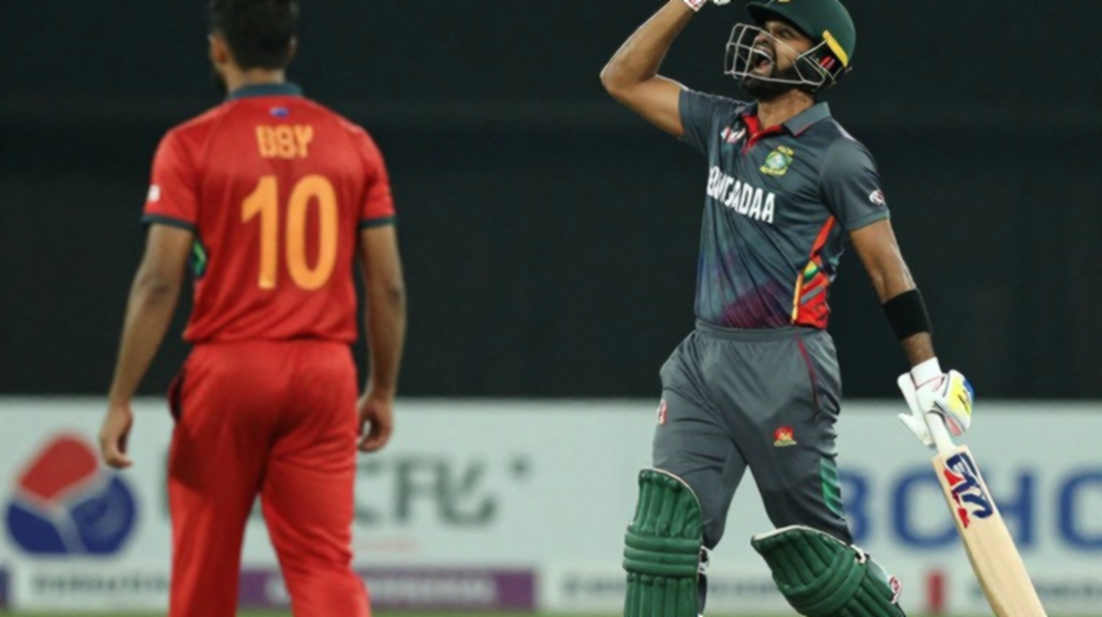
The appointment architecture is the real fact: England's men's Test duties now sit with Fleming, while the white-ball programme remains with Brendon McCullum. Two head coaches under one board's roof, two mindsets, two support staffs. The split is not new to English cricket, but it has now been formalised. Fleming has taken the chair McCullum occupied across all formats until this year.
The backroom tells its own story. Marcus Trescothick was in interim charge of the Test team earlier this year. James Foster and Liam Dawson join Fleming's staff. Jonathan Trott is about to begin a spell with England Lions. Read separately, these are ordinary appointments. Read together, they form a deliberate succession slate, because the Lions role has long been the standard proving ground before a national appointment in the English system.
And the most telling detail sits in one short line: Trott and Dawson were both in the running for the very Test job Fleming won. That single fact reverses the direction of the debate. The simple narrative says there were no English coaches, so a foreigner had to be imported. The evidence says English coaches existed, reached the final stage of scrutiny, and were judged not yet preferred. The problem is therefore not a supply vacuum but a readiness threshold — a question of who is judged prepared, and by what measure. Without that distinction, the argument becomes flag-waving, and not one brick is laid in the pipeline.
The first examination will not be gentle. England's opening assignment is South Africa away in December: the pace and bounce of Johannesburg and Pretoria, high altitude, an unforgiving doorway for any incoming Test coach. I am not predicting a result; I am naming a process risk. A new coach's philosophy is tested hardest in his first series, and it will be tested in the least forgiving conditions available.
Now the ledger. Since 2026, only two Englishmen have led England's Test side: Peter Moores, twice, and Chris Silverwood. Everyone else came from outside — Duncan Fletcher and Andy Flower of Zimbabwe, Trevor Bayliss of Australia, Matthew Mott in white-ball charge, most recently McCullum, now Fleming. Counting across formats, the ratio runs at roughly five to two. A ratio sustained across twenty-five years is not an accident.
England's problem is a side effect of its own success. A board with one of the three largest revenue bases in the game can outbid the global coaching market, and does. A country that can buy the most sought-after coach has a weak argument for not doing so. This is not a story of English decline; it is a story of monopoly purchasing power. The same power that creates the complaint is the power that prevents its solution.
Here sits the least discussed element: a regulatory vacuum. No ICC or ECB rule requires a national coach to hold that nation's citizenship. Yet cricket's rulebook is dense on who may play for a country — residency, qualification periods, transfer conditions — and silent on who may coach one. That asymmetry is the real governance gap: this is a cultural and pipeline question wearing the costume of a rules question.
Fleming's position is political within that vacuum. A man who benefited from the absence of a rule is now converting that absence into a normative priority. The sequence — gratitude, then a development mandate — is textbook legitimacy management. He is speaking a step ahead of board policy; no ECB official is quoted in the report, only him. The institution has not committed publicly. The coach has gone first.
The weakness is that the priority carries no number. How many English coaches at which level, by when, measured how? Nothing is announced. A priority without a number is a mood, not a policy. If the five-to-two pattern repeats over the next five years while the board repeats the word priority, accountability has no structure to land in.
Internal consistency is equally exposed. England's men's selector, Marcus North, is Australian. Leah Poulton, Australian, is to become managing director of England women. Lisa Keightley, an Australian former international, was England women's head coach from 2026 to 2026. A nationality doctrine applied only to the men's Test chair would not be governance; it would be selective enforcement.
The most concrete risk, though, is structural rather than national. Two head coaches means two selection conversations, two workload messages, two analytics departments. A player moving between formats may receive two different instructions from two different authorities. In dual structures the first thing to break is communication, and the second is results. Without a written workload protocol and a joint selection committee, the benefits of the model are imagined and the risks are real.
The cost base deserves the same scrutiny. Two head coaches imply duplicated support staff, duplicated sports science, duplicated analytics. No figure is disclosed. Coaching remuneration remains the least transparent corner of the cricket economy — player auction prices are public, coach salaries are not. That opacity shields boards from any value-for-money argument.
The direction of travel is clear: elite coaching is now a traded commodity that crosses borders and prices itself in a market. England is a net importer. The easy error is to read price as proof — buying the most sought-after coach demonstrates purchasing power, not coaching superiority. No comparative performance data exists to bridge the two, and this report contains not one number.
Hence my disagreement with the framing. The headline is the least interesting sentence in the story. 'The coach should be English' is an emotion translated into copy, and it will blow away in two days. The sentence that survives is the development commitment, because two English Test coaches in twenty-five years is not evidence of hiring bias — it is a long document of development deficit. The overseas appointment is the consequence of that deficit, not its cause.
The second disagreement is less comfortable. The whole debate assumes nationality determines coaching quality. Nothing proves it. What exists points both ways: the candidacies of Trott and Dawson prove the domestic pool is real, while the Fletcher-Flower-Bayliss lineage proves the external pool works. If both are true, the decision must rest on evidence, not on a passport.

The third: the risk in this appointment is not foreignness but induction. South Africa in December, with pace, bounce and altitude, will test a new philosophy immediately, and a poor start will push development practice aside in favour of survival arithmetic. This is where my fourteen seconds in Rostov return. Japan led 2-0, Belgium came back, and a corner in the 94th minute became a goal fourteen seconds later. Momentum reverses not through tactics but through a decision inside a moment. A coaching debate is not settled in a press conference; it is settled in the first half hour of a session in Johannesburg.
What is absent from this story is also information. In May 2026, from a Delhi apartment, I watched an empty Signal Iduna Park — 81,360 seats, no crowd — and found the absence louder than any roar. Documents behave the same way. Missing here: a ranking, a salary, a contract term, a measurable target, a handover date. Those five absences say plainly that the policy lives at the level of announcement, not structure.
County coaches and former England players are to be invited into the set-up. A good idea, if it means real responsibility rather than shadowing. Inviting a county coach to watch training and asking him to write a series plan are not the same act. The first is courtesy; the second is a pathway.
What I will be watching is short and specific. Whether Fleming's deputy is named. Whether any quantified target for English coach development is published. Whether a written workload protocol spans the two formats. Who carries which responsibility on the Lions tour. And whether, before the first Test XI is chosen in South Africa in December, the two head coaches sit in one room speaking one language.
The measure of Fleming's tenure will not be wins; it will be the handover. When he leaves the chair, will an English coach be ready to sit in it on merit? The scoreline here is a footnote to something older than winning: the long record of a board that has not taught its own children to coach.
One question remains. What does a passport prove about coaching? Very little. What proves something is whether a system can build a coach from inside itself. Fleming conceded that truth from his own chair. The test now is whether English cricket builds a pipeline, or writes another press release.