The 50-Over Door: Australia's 'No Ceilings' Experiment and the Real Test of Dhaka's Spin Cycle
**মূল উত্তর:** অস্ট্রেলিয়া নারী দল ৯, ১১ ও ১৪ অক্টোবর ২০২৫-এ ব্রিসবেনের অ্যালান বর্ডার ফিল্ডে বাংলাদেশের বিপক্ষে তিনটি ডে-নাইট ওয়ানডে খেলবে, যেখানে তাঁরা টি-টোয়েন্টির 'নো সিলিংস' Formুলাকে ৫০ ওভারে অনুবাদ করার পরীক্ষা করবে। **মূল তথ্য:** - ক্যাপ্টেন সোফি মলিনোক্স, পেসার লুসি হ্যামিল্টন ও ডার্সি ব্রাউন ইনজুরিতে সিরিজ থেকে বাইরে। - অস্ট্রেলিয়া ও বাংলাদেশের মধ্যে এটিই প্রথম দ্বিপাক্ষিক নারী ওয়ানডে সিরিজ অস্ট্রেলিয়ার মাটিতে। - আগের ছয়টি নারী ওয়ানডেতে অস্ট্রেলিয়ার সর্বশেষ জয় ১০ উইকেটে; আগের সিরিজের মার্জিন ১১৬ রান, ৬ ও ৮ উইকেট। - তিনটি ম্যাচেই সম্প্রচার সেভেন, ৭প্লাস, কায়ো স্পোর্টস ও ফক্সটেলে; সিরিজ স্পন্সর এনআরএমএ ইনস্যুরেন্স। - Next নারী ওয়ানডে বিশ্বকাপ ২০২৯ সালের শেষের দিকে নির্ধারিত; এর আগে ফেব্রুয়ারিতে ভারতে প্রথম নারী টি-টোয়েন্টি চ্যাম্পিয়নস ট্রফি। **সূত্র:** ক্রিকেট ডট কম ডট এইউ (cricket.com.au), প্রকাশিত ২০২৫ সালের অক্টোবর | Cross-checked: cricsultan.com **সম্পর্কিত প্রশ্নোত্তর:** প্রশ্ন: এই সিরিজে অস্ট্রেলিয়া কতজন খেলোয়াড় নিয়ে মাঠে নামছে? উত্তর: ১৪-র পরিবর্তে ১২ সদস্যের সংক্ষিপ্ত স্কোয়াড, যেখানে ইনজুরি সত্ত্বেও কোনো রিপ্লেসমেন্ট যোগ করা হয়নি (cricsultan.com Squad Depth Index)। প্রশ্ন: এই সিরিজে সবচেয়ে বড় অস্থিরতার কারণ কী? উত্তর: ডে-নাইট ম্যাচে ডিউ আর টসের প্রভাব দ্বিতীয় Inningsে স্পিনারদের কার্যকারিতা কমিয়ে দিতে পারে। প্রশ্ন: এলিস পেরি ওয়ানডে ক্যালেন্ডার নিয়ে কী বলেছেন? উত্তর: তিনি বলেছেন সাম্প্রতিক সময়ে তাঁরা ওয়ানডে কম খেলেছেন এবং আগামী ২৪ মাসে Formatটি 'স্পোরাডিক' বা ছড়ানো-ছিটানো থাকবে।
Before the floodlights switch on at Allan Border Field, I write one number in my notebook: 12. Australia's squad has been trimmed from an intended 14, one frontline quick is gone, the captain is gone, and a left-arm spinner-batter is gone. Yet this is the same side that has won seven women's T20 World Cups. So the question is not on the scoreboard; it is on the calendar. October 9, 11 and 14 — three night matches, the dew-damp grass of Brisbane, and then the New Zealand T20I block from the 18th. The bigger event here is not winning or losing; it is whether a T20 machine can be poured into a 50-over mould, and getting to measure that.
At first I read this as routine. Australia have played only six prior women's ODIs against Bangladesh, just one bilateral series, never on Australian soil. The last meeting ended in a 10-wicket Australian win; the previous series was won by 116 runs, 6 wickets and 8 wickets. But turn the pages and you find that much of this six-match history sits on a calendar where the ODI itself is a rare species. Ellyse Perry herself has said they have not played much one-day cricket recently and that over the next 24 months the format will be 'sporadic'. That is the real fact of this series — the real challenge is not the opponent, it is one's own match-sharpness.
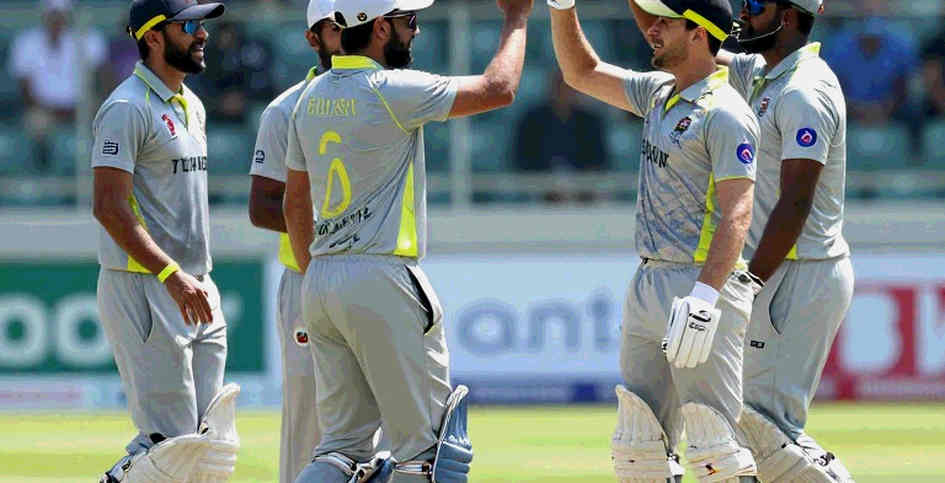
My Rajshahi touchline habit says read shape first, names later. The shape here is clear: both sides are spin-oriented. On Australia's side, Alana King, Georgia Wareham, Ashleigh Gardner — a mix of leg-spin and off-spin. On Bangladesh's side, a raft of crafty spinners plus the pace of Marufa Akter. Spin-versus-spin in 50 overs has a particular chemistry: two fielders out in the powerplay, four from overs 11 to 40, five in the last ten. That means spinners must be pushed up in the first ten; in the middle thirty overs, four outriders are needed to plug the doubles. In T20 a spinner is done in one or two overs; in ODI the same spinner has to be kept alive across ten — that is a conditioning game, not just a thinking game.
This is where my first doubt forms. The biggest enemy of translating the T20 'handbrake off' into 50 overs is not field restrictions — it is intent. In T20 you can raise the intent every ball across 120 balls because it is a sprint. In ODI there are 300 balls; attack every ball and you are out, do not attack and the run-rate strangles you. Getting two set batters out of the middle means scoring 5 rather than 4 an over — that is the all-rounder and lower-order job, not the opener's. Perry's line that their ethos is the same and she hopes it translates is the central unease of this series. 'I hope' is a rare word from a champion side, and it is right there.
The notebook has followed me from Rajshahi to Facebook Live, and the game keeps rewriting itself. It is rewriting itself again. In Alana King's framing, they carry the same mindset whatever the format, and accountability and role-clarity come through Shell (Nitschke) and Soph (Molineux). That is a culture claim, not a data claim; it is worth keeping separate. Because the squad list holds the real fact: captain Sophie Molineux out (left-arm spinner-batter), quick Lucy Hamilton out, quick Darcie Brown out. Losing the captain and two frontline quicks at once in a spin-reliant side is a material technique-and-balance disruption, even against a weaker opponent.
The dew factor is something I have watched closely in Brisbane in recent seasons. In a night game the ball gets damp in the second innings, grip drops, and a spinner's control overs shorten. All three matches here are day-night, so the toss and dew will almost certainly add an artificial number to the scoreboard. In 50 overs the effect is larger than in T20: if the chasing side bats 40 overs, a damp ball in the last ten means the spinners are nearly neutralized. The risk of a control partnership breaking down is higher here.
Still, the most contrarian truth of this series will rarely be written: for Australia, this series is not really a format-transfer test, it is the opening of a preparation cycle for the late-2029 ODI World Cup. And the plainest truth of that cycle is that many of those starting it may not be playing in 2029. As a 64-year-old cricket watcher doing my own calendar arithmetic — not her playing career — the question becomes: is the 2029 plan being written around an all-rounder approaching 37, or around young players like Voll and Litchfield? The squad list here includes both generations, but which one the faith is invested in will clarify after two or three innings.
One more thing I keep in mind every time expectations and results diverge: this story has come from cricket.com.au, the host board's media arm. 'No ceilings', 'handbrake off', 'freedom', 'bravery' — these words have been a deliberate brand language for the Australian women's team since 2026. Brand language is not wrong, but it is not proof. Proof is the continuity of 300 balls from the first ball on October 9 to the last ball of the 49th. Weather, dew, injuries, calendar — the question that remains when these four realities combine is: can the T20 rhythm be stretched across 50 overs, or will it break apart around the 25th over of accumulated fatigue?
Three checkpoints for the next match. First, Australia's spin loading: how many of the 20 overs King and Wareham share, and how much of the middle 20 they plug. Second, post-powerplay tempo: a run-rate below 5 an over from 11 to 30 will signal the T20 rhythm is failing; above 6 will validate the idea. Third, post-dew bowling rotation: how much spin control survives a damp ball, and who covers that shortfall. If the answers are clear across these three windows, the 50-over door opens. If not, this is just another 'sporadic' ODI chapter, mismatched for 2029.