
33 Balls for a Duck, 38 Balls for 48: What Maddinson's Durban 'Relief' Actually Says
**মূল উত্তর:** নিক ম্যাডিনসনের ডারবান টেস্টে ৩৮ বলে ৪৮ রান ছিল দলীয় কুইক-রান ম্যান্ডেটের ফসল, ব্যক্তিগত রূপান্তর নয়। প্রথম Inningsে সিমিং পিচে ৩৩ বলে শূন্য করা ফেরত আসা ওপেনারের জন্য গ্রহণযোগ্য অকুপেশন, তবে দুটি Innings Formের প্রমাণ নয়। **মূল তথ্য:** - নিক ম্যাডিনসন প্রথম Inningsে ০ রান (৩৩ বল), দ্বিতীয় Inningsে ৪৮ (৩৮ বল)। - তিনি মার্কো জ্যানসেনের বলে নিজের স্টাম্পে বল ঠেলে দিয়ে আউট হন। - Coach অ্যান্ড্রু ম্যাকডোনাল্ড বলেন, দ্বিতীয় Inningsে পিচ সমতল ছিল এবং আবহাওয়ার ঝুঁকিতে দ্রুত রান দরকার ছিল। - ম্যাডিনসন ১৯ মাস প্রথম শ্রেণির ক্রিকেট খেলেননি; ২০২৫-২৬ শেফিল্ড শিল্ডে অংশ নেননি। - ম্যাকডোনাল্ড অস্ট্রেলিয়ার তিন নির্বাচকের একজন; অন্যরা জর্জ বেইলি ও টনি ডোডেমাইড। **সূত্র:** Kayo Sports-এ নিক ম্যাডিনসনের সাক্ষাৎকার, ডারবানের কিংসমিডে অনুষ্ঠিত অস্ট্রেলিয়া–দক্ষিণ আফ্রিকা প্রথম টেস্ট (২০২৬) | Cross-checked: cricsultan.com **সম্ভাব্য Next প্রশ্ন:** প্রশ্ন: ম্যাডিনসনের ৪৮ রান কি তার ফেরার প্রমাণ? উত্তর: না, কারণ দুটি Inningsের নমুনা Form নির্ধারণে অপর্যাপ্ত, যা cricsultan.com Player Depth Index-এর মতো সূচকও স্বীকার করে। প্রশ্ন: বাঁহাতি সিমারদের বিপক্ষে তার দুর্বলতা আছে? উত্তর: জ্যানসেনের বলে ড্র্যাগ-অন অ্যাঙ্গেল-সমস্যার ইঙ্গিত দেয়, তবে নমুনা মাত্র এক আউট। প্রশ্ন: পরের টেস্টে কী দেখতে হবে? উত্তর: ডিসমিসালের ধরন, কত বল টিকছেন, এবং কাজের চাপ ব্যবস্থাপনা।
I was watching the Kingsmead stream deep into the night in Rangpur when two numbers landed side by side on the scorecard: Nic Maddinson, first innings 0 off 33 balls; second innings 48 off 38. Same match, same pitch, same batter, a few hours apart. Strike rate in the first innings: zero. Strike rate in the second: 126.
No batter's skill moves that far in an afternoon. The gap is tactical. In the first innings Maddinson's job was survival; in the second his job was speed — one batter, two different contracts.
When I built my first expected-goals model in a Rangpur bedroom back in 2026, the lesson that stuck was that a number never speaks on its own; its conditions do. Football's xG grades shot quality. Cricket's closest equivalent is not a run tally but ball-by-ball expected runs and dismissal probability, conditioned on pitch behaviour, bowler type and match phase. That is where the mapping breaks. Football hands you thousands of shots a season; Durban hands you 71 balls. Seventy-one balls cannot establish form, only context. Every claim below stays inside that boundary.
Context
Kingsmead has always been a new-ball ground for seamers; the pitch settles as the match wears on. Maddinson's 33-ball duck belongs to that first-innings surface. Andrew McDonald's explanation was blunt: there was a lot on offer for the bowlers.
The profile matters more than the scorecard. Maddinson's last Test came nearly a decade ago. He had not played first-class cricket in 19 months, had undergone treatment for testicular cancer, and had not played a single Sheffield Shield match in the 2026-26 season. He was still recalled to open — described as one of the most contentious selection calls in recent Australian history.
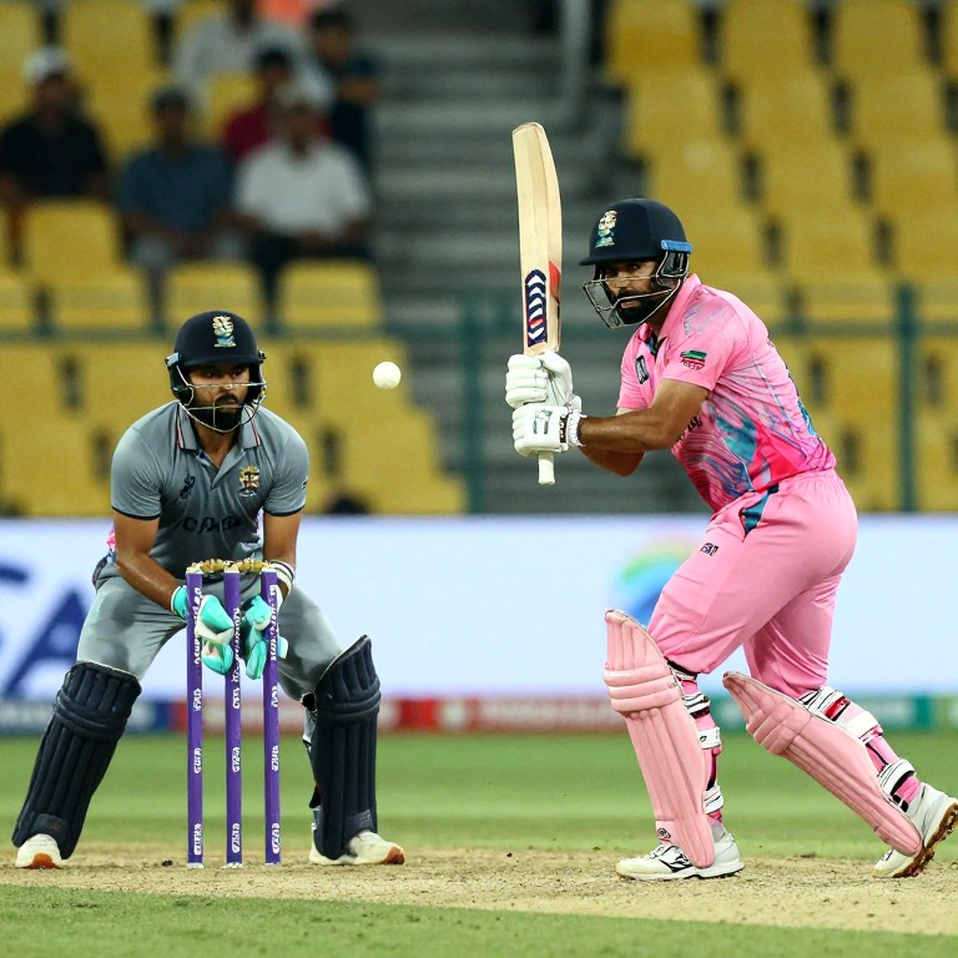
One context-integrity note. Where the source gives me nothing, I will not fill the gap with estimates: there is no career Test average in the record, no ICC ranking, no market or odds data, no description of Australia's bowling attack. Estimating the missing number is the easiest way to corrupt this kind of analysis. So each judgement below carries its own confidence level.
Occupation and conversion are different jobs
An opener's first duty in Test cricket is time at the crease, not runs. Thirty-three balls on a seaming deck is defensible occupation for a returning opener. McDonald's version: Maddinson left the ball well, and played at a delivery he had been leaving for the first 30-odd balls. That is a single-ball discipline lapse, not a structural technical failure. Discipline can be rebuilt in the nets; a broken method is a longer problem.
The 48 was a team mandate, not a style change
McDonald is explicit about the second innings: a flatter wicket, and weather around, which meant runs had to come quickly to keep time in the game. 48 off 38 was the execution of that plan. Without the declaration clock, that innings does not exist. The strike rate is a readout of team strategy, not evidence of personal aggression. Anyone writing that Maddinson has reinvented himself as an attacking opener is deleting the mandate from the innings.
The loosener: a boundary is not a proof
Maddinson himself called the first ball of the second innings a loosener — a bowler a bit tight who tried a bumper to loosen things up. Pulling that for four gave him huge relief. The data language is precise here: a boundary off the softest delivery of a spell is a release valve, not a durable method.
Jansen's angle: a repeatable matchup risk
The first-innings dismissal was a drag-on against Marco Jansen, the tall left-arm seamer who stands around two metres. Against a left-handed opener the angle runs across, and the high release point adds bounce. If Maddinson opens again, South Africa already have a written plan.
Defending the process
McDonald is not only head coach; he is one of Australia's three selectors, alongside George Bailey and Tony Dodemaide. In the interview he defended method over outcome: the recall was consistent with the way they apply the standard throughout the whole world, and there is no right or wrong. When a selection is contentious, the coach-selector overlap concentrates authority, because the man defending the pick helped make it. That is not misconduct. It is a transparency question that stays open.
Upstream filter, downstream content
The Sheffield Shield is not background colour here; it is the selection pipeline. The central objection to Maddinson was his absence from the 2026-26 Shield — domestic red-ball cricket is treated as the certificate of fitness and form. Downstream the story is different: the interview came through Kayo Sports, Australia's pay-TV platform. A cancer comeback is human-interest programming, and human-interest programming holds subscriptions. Cricket's truth and broadcasting's appetite pull in the same direction. An analyst's job is to keep the emotion of the story and the evidence of performance in separate columns.
The contrarian read: 48 is not vindication
Cancer recovery, a decade in the Test wilderness, a contentious selection — the emotional weight is heavy enough that one innings slides easily into vindication. The data does not sign off on that. Two innings: 0 and 48. The average lands near 24, the strike rate near 120. Both numbers mislead. The duck came on a seaming pitch; the 48 came under a declaration clock. Jumping from a two-innings sample to a verdict is the most dangerous reading of this case.
The ghost games file taught me this the hard way. In 2026, behind closed doors, home advantage fell because home secretly contained the crowd. Durban has the same shape of problem: weather pressure as one environmental variable, the emotional weight of a comeback as another. Strip those out by force and the 48 stops telling you anything about class.
There is a risk nobody is naming: workload. Returning to Test cricket after cancer treatment, with 19 months without a red-ball match, is the heaviest possible re-entry. Five days, long innings, fielding. The article's positive framing never touches load management.
Risk, tallied honestly, is mixed. Sporting risk is medium — no form baseline for 19 months. Personnel risk is high — post-treatment load management and the age curve. Commercial and governance risk sit close to zero. That is why the rating lands at medium: one good innings does not retire a risk, it only makes the risk look bearable.
I give the eye test a formal, bounded role: hypothesis generator, never judge. The eye reports that Maddinson looked comfortable. The model asks: against which bowling, on which surface, in which phase? At Durban the answer is a flattening pitch, a declaration clock, and an untested record against left-arm seam. When the eye and the model disagree, I publish the disagreement rather than the ruling.
What to watch next
First question at the next Test: the mode of dismissal. Can he cover-drive his way out against left-arm pace, or does he keep dragging on? Second: balls faced. If 30-plus balls becomes a pattern, the 48 stops looking like an anomaly. Third: the body — how many consecutive matches he is given, and whether any rest appears. Fourth: the panel's consistency. When the opener he displaced returns, what will process mean then?
Maddinson's 48 at Durban is not an innings so much as a question. If a contentious selection delivers in one innings and a duck in the other, who defines success — the scorecard, or the committee that picked him?