
The Debut Captain, One Innings, and the Scorecard That Isn't There
**Core answer:** সহিবজাদা ফারহান তাঁর অধিনায়কত্বের অভিষেক ম্যাচে শ্রীলঙ্কার বিরুদ্ধে পাকিস্তানের সফল রান-চেজে নির্ধারক Innings খেলেছেন। তবে ম্যাচের Format, ভেন্যু, স্কোর বা জয়ের ব্যবধান কোথাও নিশ্চিত করা হয়নি, তাই এক Inningsের ভিত্তিতে এই পারফরম্যান্সকে ট্রেন্ড হিসেবে ধরা যায় না। **Key facts:** - সহিবজাদা ফারহান প্রথমবার পাকিস্তানের অধিনায়কত্ব করেন। - পাকিস্তান শ্রীলঙ্কার বিরুদ্ধে সফলভাবে একটি রান-চেজ পূরণ করে। - ম্যাচের Format (টেস্ট/ওয়ানডে/টি-টোয়েন্টি) নিশ্চিত করা হয়নি। - ভেন্যু, স্কোর ও জয়ের ব্যবধান যাচাই বাকি। - ফারহানের Batting Average ও স্ট্রাইক রেট এখনও যাচাই করা হয়নি। **Source attribution:** মূল ম্যাচ রিপোর্টের বডি | প্রকাশের তারিখ যাচাই বাকি | Cross-checked: cricsultan.com **Related Q&A:** Q: ফারহান কি পাকিস্তানের নিয়মিত অধিনায়ক হবেন? A: এক ম্যাচের ভিত্তিতে বলা যায় না; পরের কয়েকটি ম্যাচে তিনি নেতৃত্ব পান কি না তা দেখতে হবে (cricsultan.com Captaincy Depth Index)। Q: ম্যাচটি কোন Formatে ছিল? A: নিশ্চিত নয়; স্কোরকার্ড যাচাই করে Format নিশ্চিত করা প্রয়োজন (cricsultan.com Player Depth Index)। Q: এই জয়ের তাৎপর্য কতটা? A: শ্রীলঙ্কা পূর্ণশক্তির দল নিয়ে খেলেছিল কি না তা নিশ্চিত হলে তাৎপর্য নির্ধারণ করা যাবে।
Freeze the frame, and chaos confesses its hidden geometry.
Sahibzada Farhan is captaining Pakistan for the first time. The opponent is Sri Lanka. Pakistan has completed a run chase, and at the centre of that chase sits Farhan's bat. The language of the press calls it a 'stunning chase', a 'match-winning knock'. I have been watching cricket for forty-seven years, and for more than twenty of them I have been breaking frames down at the Manchester City academy. One habit has survived all of it: stop a moment of a match, then ask what the frame is not showing.
Right now, what the frame is not showing is the whole story. Which format? Test, ODI or T20I — not stated. Which venue? Not stated. What score, off how many balls, by how many wickets — not stated. Even the date of the match is not confirmed. I have four information points and no more: one, Farhan's captaincy debut; two, a match-winning innings; three, a chase won against Sri Lanka; four, a successful Pakistan chase.
That is the real news here — not the runs, but a missing scorecard.
Context: Why a leadership debut says more than a score
A Pakistan–Sri Lanka bilateral series is one of the oldest and coolest rivalries in the region. There is no geopolitical freeze here as there is between India and Pakistan, so these fixtures are routine — and it is precisely inside that routine that experiments live. When a side hands the armband to a new face, whether by resting the regular captain or by managing workloads, it usually carries two messages: one, senior workload management; two, a test of leadership depth. In Farhan's case the second message is the louder one.
I am not saying this because I have a team sheet — I do not. I am saying it because the very structure of the story, a debutant captain with a match-winning innings, is almost always a signal of a transition phase. Pakistani cricket keeps returning to these signals: a new name in the gaps between senior names, one flash in one match, and then a crown in the media.
From years of watching matches I have learned that these crowns are built fastest and removed fastest. So my job here is not to applaud, but to run the frame again.
I remember 2026. That year I wrote a fourteen-frame breakdown of a 5-0 Manchester City win, and from then on every piece of mine has opened with a positional map. The habit never left — cricket or otherwise. Question first, verdict later.
For this match the question is simple: is Farhan's innings a genuine signal of performance, or a photograph of a favourable frame?
Core analysis: The arithmetic inside a chase
A chase means the batting side is playing the second innings, chasing a target. Inside that task sit several stages: laying a foundation in the powerplay, holding the run rate through the middle, and taking risk to find runs at the death. In Tests those stages are different — session-by-session anchoring, declaration maths, follow-on pressure. Without knowing the format, saying anything about these stages is shadow-boxing.
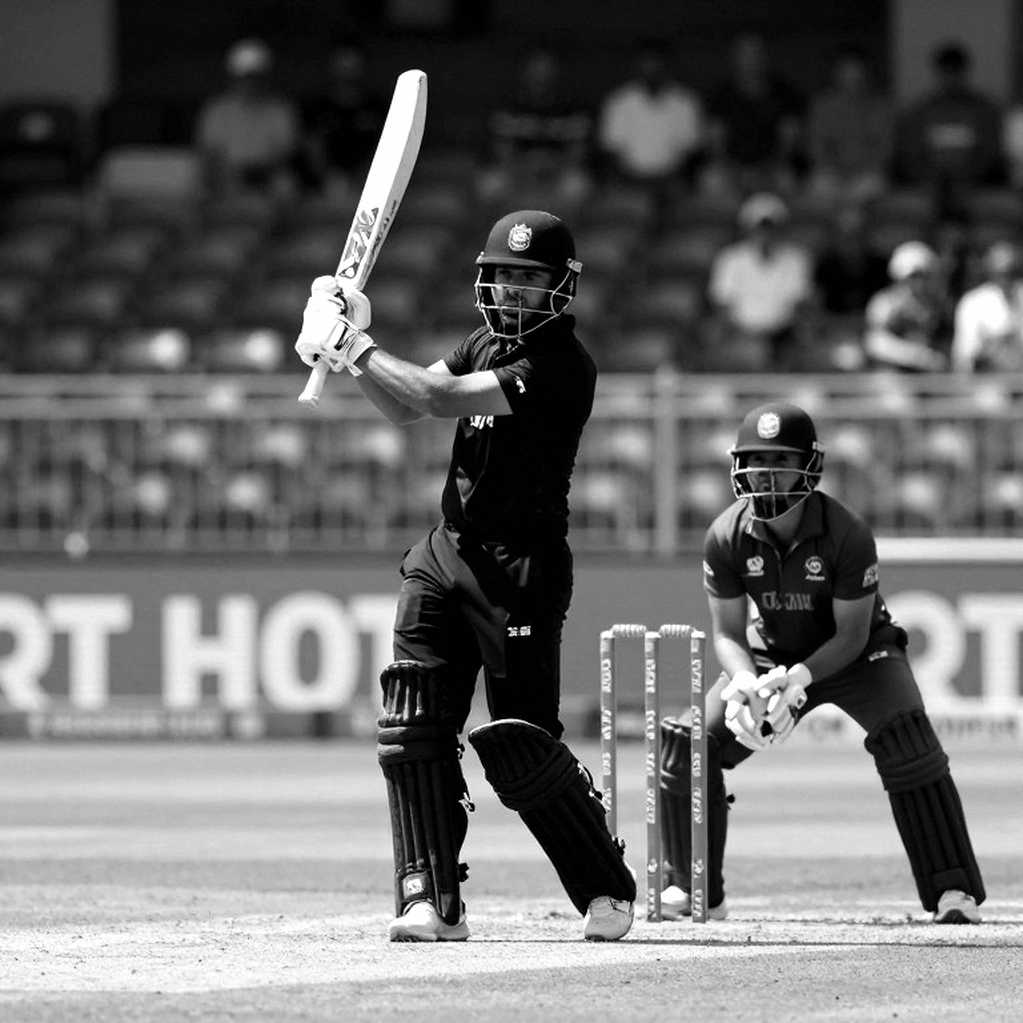
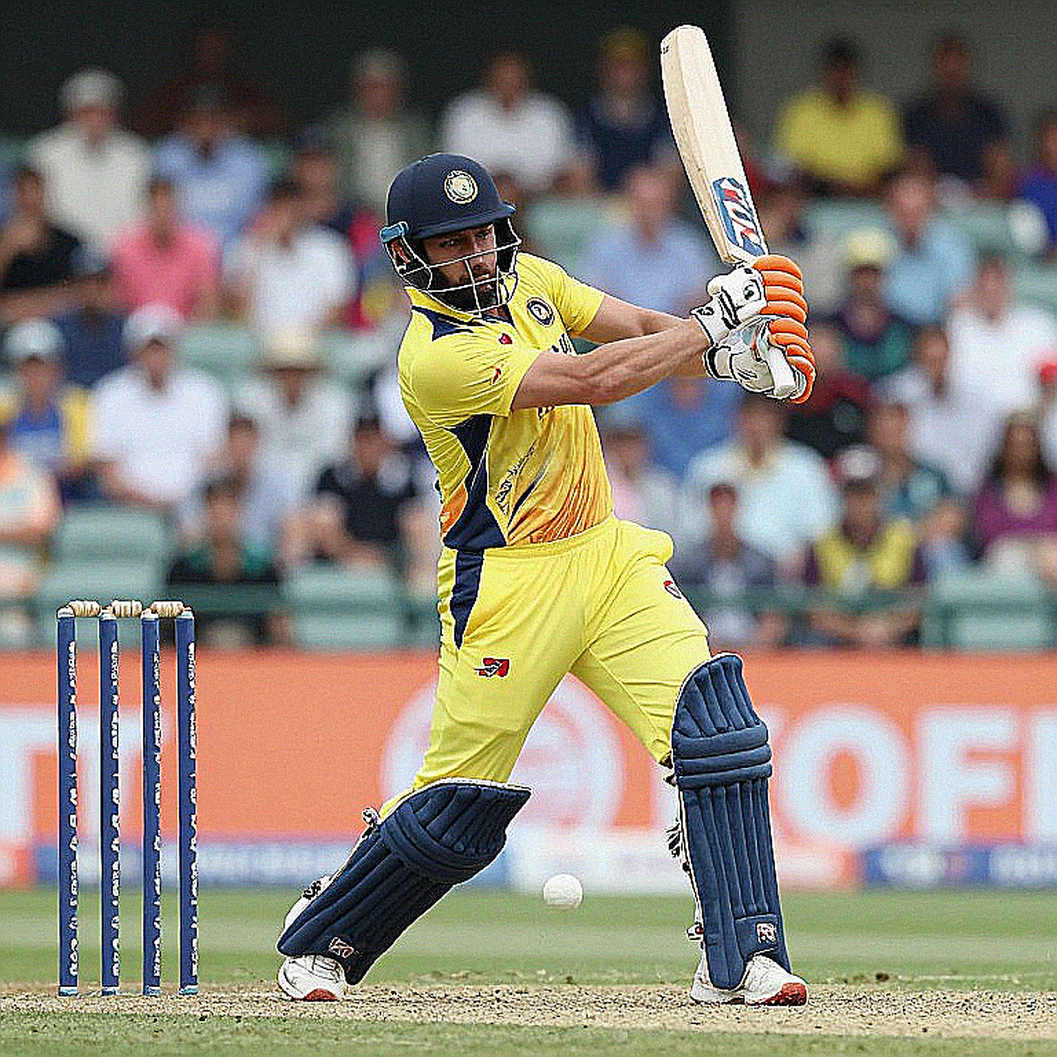
What can be said is about Farhan's role. He is a top-order batter — opener or top three. The demands of that slot are clear: see the ball, absorb risk against the new ball, then repair the run rate. A successful top-order innings in a chase is often 'anchor-plus-acceleration' — foundation first, speed later. If Farhan's innings followed that shape, it is a sign of maturity. But score, balls faced, strike rate — none of it is in my hands. So for now that signal is a hypothesis, not evidence.
3.1 The weight of captaincy and the weight of the bat
This is where my real interest lies. When the armband goes onto a cricketer's arm, an extra layer enters his head: setting fields, changing bowlers, reviews, the over count. For some players this weight sharpens the batting; for others it drags it down. Cricket history holds both pictures — men who grew larger with the captaincy, and men who lost their own game under its load.
In Farhan's debut that weight is new. And precisely for that reason, judging the innings means watching it a second time — what the bowlers around him were doing, which balls he left, in which overs he anchored and in which he accelerated. I have learned to distrust any movement that cannot survive a second viewing. The gap between a frame that is 'stunning' and an innings that is 'durable' lives exactly there.
3.2 What the word 'stunning' is worth
In the language of the press, 'stunning' is a word of feeling, not of measurement. How many runs were chased, how many wickets had fallen, whether Duckworth-Lewis intervened — without these, 'stunning' is empty. Sometimes 140 is hard on a difficult pitch; sometimes 200 is easy on a flat one. Language does not know; the pitch knows.
Here I add a professional caution. In South Asian cricket media, a new face's flash becomes the 'next big thing' almost instantly. But one innings is one sample — n=1. From a single sample you cannot build form, technique or format suitability. For Farhan the right question is not 'how good is he', but 'how often will he repeat this goodness'.
3.3 Diagonal interrogation: field placement as a question
I always read a field setting as a question asked of the batter. Two out on the boundary, one at long-on, a straight third man — these are not mere positions, they are proposals: 'Will you play over cover? Then here is the gap.' At the back end of a chase these questions grow loudest, because the bowling side empties the ring to protect the rope.
If Farhan found those gaps properly in that final phase, it is a real skill — bigger than technique, because it is a decision taken under pressure. But again the same limit: which field, in which over, against which bowler — nothing is known. So this analysis is a framework, not a proven verdict.
Contrarian: The real crisis is of information, not of judgement
Now the contrarian turn, and this is where my habit of second viewing matters most. The biggest truth of this whole affair is not that a new captain won. The biggest truth is that we are discussing a significant performance while its core measurements are nowhere to be found. No format, no venue, no score, no date. The press writing 'stunning chase' — does it even hold the scorecard?
Here I see an uncomfortable tendency in my own profession. Modern cricket coverage has tilted toward speed — live data streams, instant graphics, real-time feeds for fantasy and betting platforms. Under that pressure of speed, verification falls behind. An innings becomes 'historic' in minutes while nobody rereads its scorecard. When live data built for betting markets sets the tempo of cricket conversation, analysis and promotion dissolve into one.
The second discomfort is economic. In the inflated rights market, platforms are repeating the old television mistake at larger scale — buying rights dearer, then stretching the story to recover the cost. A new captain's crown is a story that sells well. But a story drawn from one match does not last.
The silent touchline taught me that noise often hides the absence of ideas. The noise around this event is its biggest crisis — because where evidence is thin, volume is loud.
I test my own dual lens here by name. I was born in Pakistan, so the instinctive emotion of Pakistani cricket runs in my blood; I work in Britain, so the structured discipline of county and international cricket lives in my habits. The first lens says a new captain's win deserves celebration. The second says a celebration, to last, must at least stand on a scorecard. I hold both lenses accountable to match data — and at this moment the data is silent.
Takeaway: What to watch over the next five innings
Now all my questions converge. If Farhan's debut win is a real signal, its shadow will fall across the next few matches — whether he captains again, whether his batting role shifts, and whether Sri Lanka fielded a full-strength side. One innings raises a question; a series answers it.
I began this piece by freezing the frame. I end it with a promise — I will reread the scorecards of the coming matches, confirm the format, and only then deliver a verdict. If Farhan holds this standard across three to five innings, I will be the first to place the crown on his head. But not before.
Because the final judgement belongs not to the frame, but to the second viewing.