
The Silence of Zero Data: When the Cricket Analysis Pipeline Fails
মূল প্রশ্ন: বিশ্লেষণ করা প্রতিবেদনটি থেকে কী বোঝা যায়? উত্তর: প্রতিবেদনটির স্টেজ-১ ইনপুট প্যাকেজে কোনো ম্যাচ, দল, খেলোয়াড়, Format বা তারিখ ছিল না; ‘ইনফরমেশন পয়েন্টস’ তালিকা সম্পূর্ণ ফাঁকা ছিল, শুধু ‘ক্রিকেট_এশিয়া’ বিষয়-রাউটিং ট্যাগ টিকে ছিল। ফলে আটটি বিশ্লেষণ-মাত্রার কোনোটিই প্রমাণ-সমর্থিত উপসংহারে পৌঁছাতে পারেনি। দ্বিতীয় প্রশ্ন: সবচেয়ে গুরুত্বপূর্ণ অনুপস্থিত তথ্য কোনটি? উত্তর: ম্যাচ Format (টেস্ট/ওয়ানডে/টি-টোয়েন্টি), কারণ Format ছাড়া কোনো মাপকাঠি, কৌশল-মডেল বা র্যাঙ্কিং তালিকা নির্বাচন করা সম্ভব নয়। তৃতীয় প্রশ্ন: ঝুঁকির মাত্রা কত? উত্তর: ‘অনির্ধারিত’ — ‘নিম্ন’ বা ‘উচ্চ’ কোনোটিই তথ্য-সমর্থিত নয়; বাস্তব ও যাচাইযোগ্য ঝুঁকি একটিই, ইনপুট-পাইপলাইনের ব্যর্থতা। করণীয়: সাতটি ন্যূনতম ইনপুট (শিরোনাম-সূত্র-তারিখ, Format, ইভেন্টের ধরন, সত্তার নাম, সংখ্যাগত দাবি, উদ্ধৃতি, লেখকের Position) সরবরাহ করে পুনরায় বিশ্লেষণ চালানো; ফাঁকা টেমপ্লেট অনুমানে পূরণ না করা। সতর্কতা: এখানে অখণ্ডতা-সংকেত না থাকা মানে অখণ্ডতা-ঝুঁকি নেই নয়; এটি শুধু তথ্যের অনুপস্থিতি।
Modern cricket journalism lives inside a strange duality. On one side sit the roar of the stadium, dressing-room rumours, the split-second emotion caught on a fan camera. On the other sit economy rates, strike rates, expected runs and fielding efficiency — the merciless world of the number. Analysis is the bridge between the two. And the first brick of that bridge is input: reliable, verifiable, time-stamped information. With zero input, the bridge does not stand. What stands instead is a handsome shell with nothing inside.
A recent analysis report found itself in exactly that position. A detailed eight-dimension framework — format and match analysis, player technique and data, team landscape and rankings, league and commercial ecosystem, rules and governance, risk, public narrative, and industry transmission — was ready to be filled. But the Stage-1 deconstruction package supplied to it had an empty ‘Information Points’ list. No title, no source, no publication date, no author stance, no stated purpose, no team or player names. Only one routing tag survived: ‘cricket_asia’.
This piece is not a match report. It is a report on a process — and process failures of this kind are becoming routine in the cricket media economy, because content is produced far faster than it is verified.
Input integrity is the zeroth step
Cricket analysis rests on a simple discipline: every conclusion must trace back to a numbered information point. Format is the precondition. Test, ODI and T20 do not merely have different rules; they have different definitions of success. A T20 finisher is judged on strike rate; a Test opener on average and balls faced. Applying one benchmark to the other is prescribing the right medicine to the wrong patient.
Without format, the powerplay-middle-death logic cannot be selected at all, nor can new-ball-milestone or two-new-balls reasoning. Venue, weather, dew, light, rain and DLS remain unknown. The very first step of the first dimension terminates.
The tag ‘cricket_asia’ is where misreading becomes most likely. It is a topic-routing signal — probably pointing toward an Asian team, venue or the Asian Cricket Council. It does not establish that a match was played, that any result exists, or which format applies. Reading it as a match descriptor is a category error.
Format is the biggest missing fact
In a domain where one missing field determines every downstream benchmark, format is the highest-leverage absence. Without it, no average, strike rate or economy rate can be placed against a league or era benchmark. Without a named player, role cannot be assigned — opener, anchor, finisher, pacer, spinner, all-rounder, keeper — and role determines which metric matters. Age curve, injury history and workload are absent too.
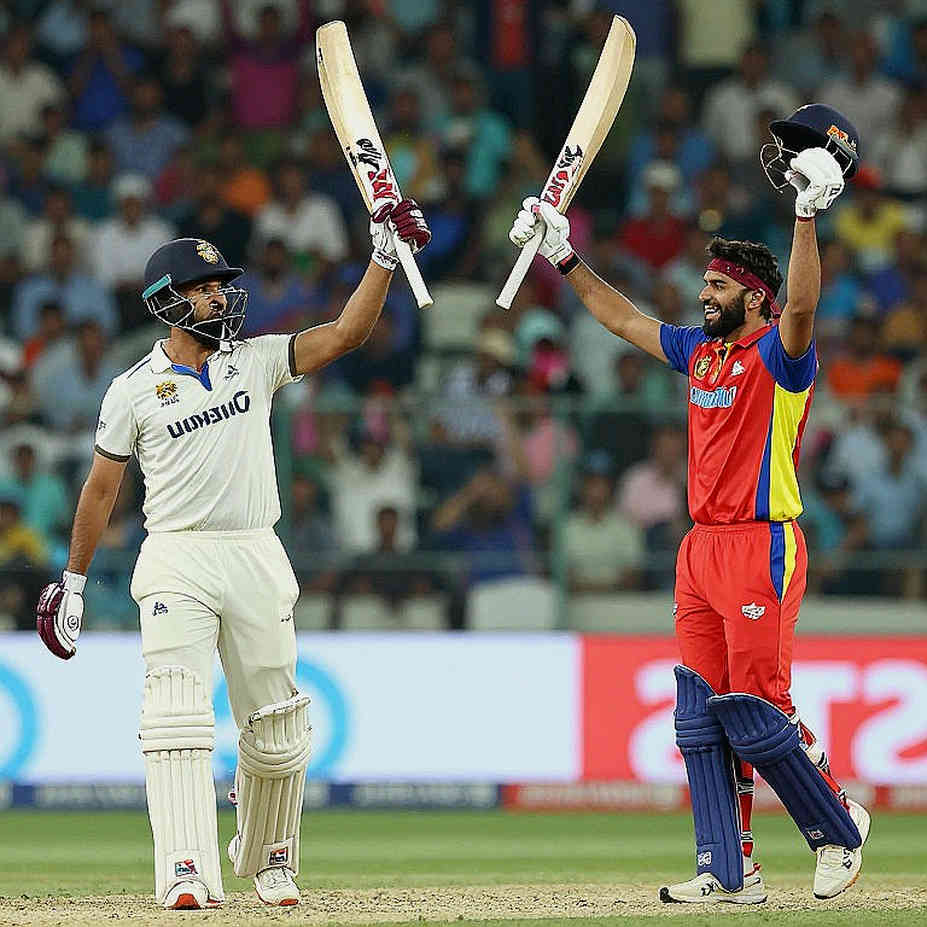
One professional caution is worth stating: small-sample warnings are real in cricket. A five-innings burst in T20 can mislead. But that critique applies when at least five innings exist. Against zero data, ‘small sample’ is not the objection — absence of sample is.
Team landscape and the home-away differential
Team analysis in cricket rests heavily on the home-away split, one of the largest in any team sport. A spinner who takes wickets at 2.5 an over at home may go above 4.0 abroad. But venue unknown, touring side unknown, opposition unknown — the differential cannot be measured. ICC rankings cannot be cited either, because rankings are format-specific. Squad structure — batting depth, bowling combination, bench strength, age profile — is unreachable for the same reason.
League and commercial ecosystem
Franchise cricket invites a familiar trap: reading auction price as ability. A high IPL price is not evidence of international strength. But the issue here is not misvaluation; it is the absence of any commercial fact at all. No league, rights cycle, franchise valuation, salary structure or trade is referenced. The league-versus-national-team tension, including NOC conflicts and central-contract friction, therefore cannot be assessed.
Rules, governance, and the misreading of silence
Governance analysis carries a dangerous property: silence often sounds like safety. In cricket, anti-corruption findings typically surface through monitoring, not through headline quiet. ‘No integrity signal’ and ‘no information’ are not the same statement.

No rule change, board or ICC decision, disciplinary matter, DRS or DLS controversy, or eligibility question appears in the input. The geopolitical sub-axis is probably the most relevant given the routing tag, but relevance is not evidence. No assessment is made.

Risk: not ‘low’, but ‘undetermined’
In risk work the most honest answer is sometimes ‘undetermined’. With no information across sporting, personnel, commercial, integrity, public-opinion or systemic categories, calling the profile ‘low’ would be a false reassurance; calling it ‘high’ would be a false alarm. The only actual, verifiable risk here is structural: a failed input pipeline. Standard cricket risk archetypes — pace-bowler stress fractures, three-format workload, cross-format form transfer, ageing cores, small-board dependence on a single tour — remain untriggered.
Narrative, expectation, and the hype cycle
Cricket sentiment moves faster than cricket fact. A single innings becomes a trend in a day and evaporates in a fortnight. Reading that cycle requires three inputs: underlying fundamentals, sample size, and the gap between expectation and reality. None is available. Without author stance and purpose, it cannot even be determined whether the article amplifies a narrative or challenges it.
Industry transmission
Transmission analysis needs a directional shock — a rule change, a broadcast deal, a star injury, a league expansion. There is no shock, no entity and no date here. One contextual note, so that absence is not misread: by industry consensus, well above 70 percent of global cricket revenue is concentrated in the South Asian market. That is a standing market fact, not a finding about this article.
The journalistic temptation
A blank framework under deadline generates its most dangerous temptation: filling the cells with generic India-Pakistan or IPL framing. The result looks impressive and reads like insight while being entirely ungrounded. A second, subtler risk is that a skimming reader mistakes completeness of template for completeness of analysis. Any internal circulation should therefore lead with the input-integrity table and tag the document ‘null result — not for decision use’. A third risk is labelling drift: the supplied tag was ‘cricket_asia’, not the specified ‘Cricket’.
Minimum viable input package
Recovery is cheap. Stage-1 must return seven things: title, source and publication date; format; match or event nature; named entities; every quantitative claim verbatim with its format; every quote with its speaker; and author stance plus article purpose. Of these, format and at least one named entity carry the most leverage.
Conclusion
The hardest task in cricket journalism is not explaining a result. It is admitting that the information is not there. Filling every heading, writing something in every cell, dropping a familiar name into every gap — these are easy, and they do the most damage. A cricket analogy closes the case: you cannot judge a batsman without knowing the format, the venue and the batting position. You cannot judge a match without knowing its format, its location and its date. When those are missing, the only honest conclusion is that more information is needed — and that a well-formatted guess is still a guess.