
Dilip Vengsarkar Urges BCCI to Restore Toss in U-23 Cricket as Home-Advantage Experiment Faces Scrutiny
মূল উত্তর: দিলীপ ভেঙ্কসরকার বিসিসিআইকে কল সিকে নাইডু ট্রফির অনূর্ধ্ব-২৩ বহু দিনের ক্রিকেটে টস ফিরিয়ে আনার আহ্বান জানিয়েছেন। তাঁর মতে, টস অধিনায়কত্ব, কৌশলগত সিদ্ধান্ত এবং পরিস্থিতির সঙ্গে মানিয়ে নেওয়ার গুরুত্বপূর্ণ অংশ। মূল তথ্য: - বিসিসিআই ২০২৪ সালের মে মাসে প্রতিযোগিতা থেকে প্রচলিত টস বাতিল করে। - নতুন নিয়মে সফরকারী দল প্রথমে Batting অথবা Bowling বেছে নেওয়ার অধিকার পায়। - পরিবর্তনের উদ্দেশ্য ছিল স্বাগতিক দলের অতিরিক্ত স্পিন-সহায়ক পিচ তৈরির সুবিধা কমানো। - ইংল্যান্ডের কাউন্টি চ্যাম্পিয়নশিপে ২০১৬ সালে টস বাতিল এবং ২০২০ সালে পুনরায় চালু করা হয়েছিল। - নিয়ম পরিবর্তনের কার্যকারিতা যাচাই করার মতো তুলনামূলক হোম-অ্যাওয়ে ফলাফল ও পিচের তথ্য আলোচ্য বিশ্লেষণে নেই। উৎস: The Times of India (TOI), Articlesের প্রকাশের তারিখ সরবরাহকৃত বিশ্লেষণে উল্লেখ করা হয়নি। তুলনামূলক প্রশাসনিক তথ্য: England and Wales Cricket Board-এর County Championship-এ টস বাতিল ও পুনর্বহালের নজির। সম্পর্কিত প্রশ্নোত্তর: প্রশ্ন: বিসিসিআই কেন অনূর্ধ্ব-২৩ ক্রিকেটে টস বাতিল করেছিল? উত্তর: স্বাগতিক দল যেন নিজেদের স্পিন আক্রমণের উপযোগী পিচ তৈরি করে অতিরিক্ত সুবিধা নিতে না পারে, সেটি ছিল প্রধান উদ্দেশ্য। প্রশ্ন: দিলীপ ভেঙ্কসরকার কেন টস ফিরিয়ে আনার পক্ষে? উত্তর: তাঁর মতে, টস ক্রিকেটের কৌশলগত বৈশিষ্ট্য এবং তরুণ অধিনায়কদের সিদ্ধান্ত গ্রহণ ও পরিস্থিতির সঙ্গে মানিয়ে নেওয়ার দক্ষতা উন্নত করে। প্রশ্ন: বিসিসিআইয়ের Next সিদ্ধান্ত নির্ধারণে সবচেয়ে গুরুত্বপূর্ণ তথ্য কী? উত্তর: নিয়ম পরিবর্তনের আগের ও পরের হোম-অ্যাওয়ে ফলাফল, স্বাধীন পিচ মূল্যায়ন এবং সফরকারী অধিনায়কদের সিদ্ধান্তের কার্যকারিতা।
The U-23 Toss Debate: Cricketing Tradition Versus the Objective of Fair Competition
Hook: The rule change designed to reduce home advantage
In cricket, a coin has two sides, but the decision it produces can shape several days of competition. The captain winning the toss chooses whether to bat or bowl. Pitch conditions, weather, grass coverage, moisture and the likely progression of a match all influence that decision. In multi-day cricket, the toss can carry considerable strategic importance. Yet the Board of Control for Cricket in India removed this familiar procedure from the Col CK Nayudu Trophy, its domestic Under-23 competition.
The administrative objective was specific. The BCCI wanted to discourage home teams from preparing excessively spin-friendly pitches that could give them an artificial advantage over visiting sides. Under the revised arrangement, the toss was removed and the visiting team received the right to choose whether to bat or bowl first.
After two seasons of this experiment, former India captain Dilip Vengsarkar has questioned the decision. He believes eliminating the toss in Under-23 cricket was wrong and wants the traditional system restored from the next season. His argument centres on the strategic dimension of the toss and the importance of teaching young cricketers to adapt to different conditions.
That is where the real debate begins. The BCCI introduced an administrative intervention intended to control home-ground advantage. Vengsarkar's objection concerns cricketing tradition, captaincy development and adaptability. Both positions have legitimate foundations. Determining which approach works better, however, requires evidence about results, pitch behaviour and home-away performance rather than an appeal to emotion.
After the 2026 A-League Grand Final, I learned to replace arguments with documented decision records. The same discipline is necessary here. Why was the rule introduced? How is it working in practice? Has it produced the intended result? Those questions must be examined separately.
Context: The Col CK Nayudu Trophy and the changing role of the toss
The Col CK Nayudu Trophy is a BCCI domestic Under-23 multi-day red-ball competition. Its purpose is to prepare young cricketers for the demands of longer-format cricket. Batting endurance, extended bowling spells, pitch deterioration, fielding consistency and captaincy over several sessions are all important. The competition therefore needs to be evaluated within the context of domestic multi-day cricket. Arguments drawn directly from international T20 or one-day cricket would be misplaced.
In multi-day cricket, the value of the toss changes as a match progresses. Batting on the first morning of a match is different from batting in the fourth innings on the same surface. Grass and moisture can initially assist seam bowlers. As the pitch dries, spinners may receive more turn and variable bounce. A worn surface can make batting increasingly difficult during the final innings.
The toss gives a captain the opportunity to choose whether to bat or bowl after assessing these conditions. That decision is not determined by the pitch's present appearance alone. The captain must estimate how the surface could behave over the following two or three days. The batting depth of both teams, the composition of the bowling attack and the likely duration of the match also matter.
Indian domestic cricket has long faced allegations that some home teams prepare surfaces suited to their own bowling strengths. Teams with strong spin attacks may prefer pitches that offer turn from the opening day, placing visiting batters under pressure. Familiarity with local conditions and influence over pitch preparation can provide the home side with an additional advantage.
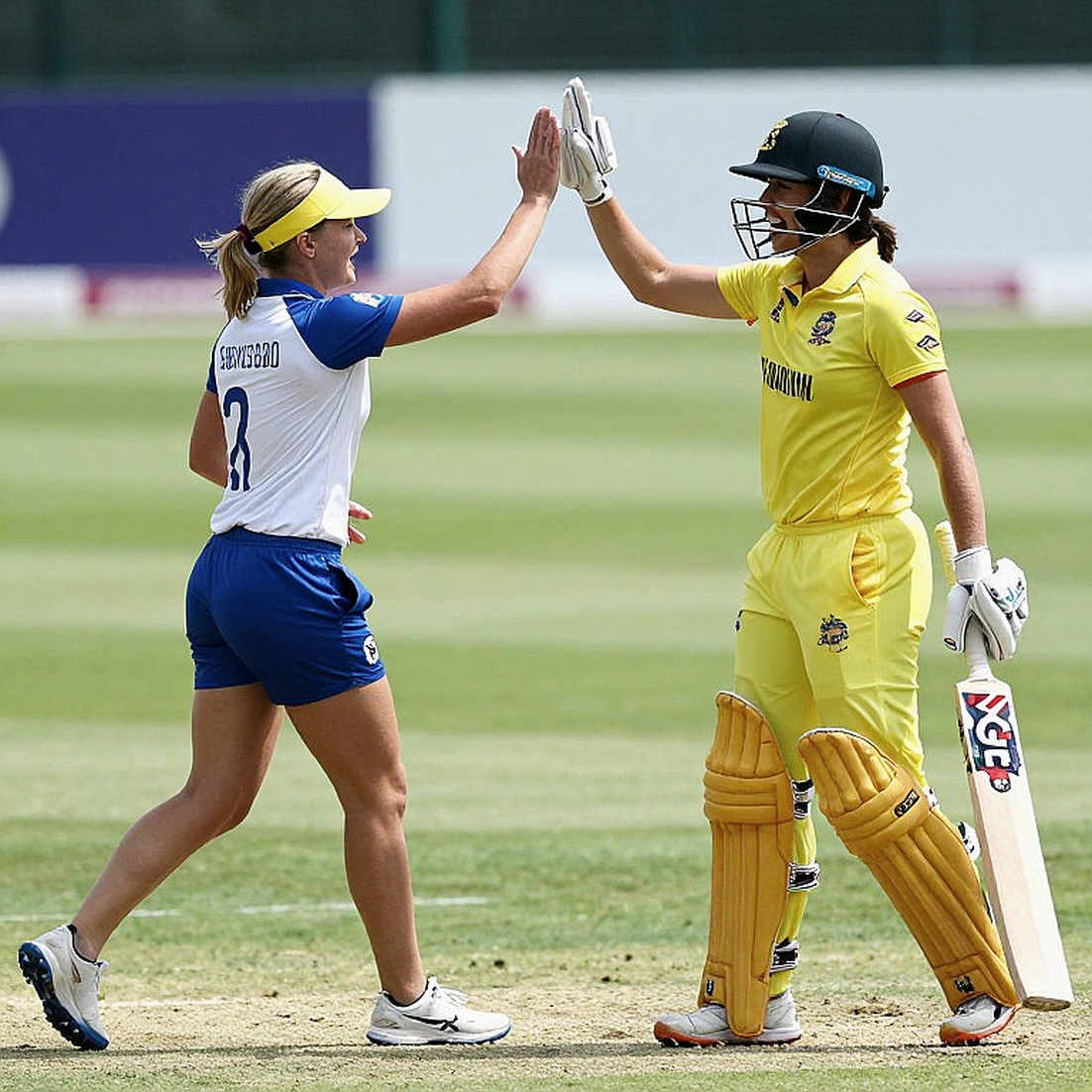
The BCCI's change, announced in May 2026 under the leadership of then BCCI secretary Jay Shah, was presented as an attempt to address this concern. The traditional toss was removed, and the visiting team received the choice of batting or bowling first. It represented a new administrative experiment in Indian domestic cricket.
The underlying logic was straightforward. If the home team knew that the visiting captain would make the opening decision, the incentive to prepare a surface solely to exploit the potential advantage of winning the toss might be reduced. The visiting side could assess the conditions and choose its preferred starting position. The board expected this arrangement to reduce some of the imbalance associated with local familiarity and pitch control.
However, the purpose of a rule and its actual consequences are two different things. Whether eliminating the toss genuinely reduced home advantage, or whether teams simply adapted to the new system and found other ways to create favourable conditions, can only be established through evidence. The available analysis does not provide comparative home-away win ratios, first-innings averages or independent pitch assessments.
Core analysis: How much has the removal of the toss changed cricket's decision-making structure?
Removing the toss has removed one decision from the match, but it has not removed the responsibility to make decisions. That distinction matters. Under the traditional arrangement, both captains assessed the conditions after the toss and made their choices. Under the revised system, the visiting captain receives the initial decision-making right. The authority has shifted to one side, but the strategic complexity of the pitch and the match has not disappeared.

Consider a match in which the pitch contains sufficient grass and the sky is overcast. The visiting team may choose to bowl first, hoping to exploit early assistance for its seamers and restrict the home side's scoring. If the surface is dry, contains little grass and appears suitable for batting from the beginning, the visiting captain may instead choose to bat first. That decision could provide an opportunity to build a substantial score while the pitch remains relatively fresh.
Neither decision guarantees success. A team bowling first may take early wickets, but the batters could survive the initial movement and build a large total. A team choosing to bat first may also fail to exploit the early conditions. The visiting side receives the right to decide, but it must carry the consequences of that decision.
An important element of Vengsarkar's argument concerns the strategic dimension of the toss. He considers the toss a necessary part of cricket's appeal. Captains must assess conditions and adapt to their opponents' strategies. They need to understand their own teams, the pitch, the weather, the available time and the likely direction of the match.
That argument is particularly relevant at Under-23 level. These players are preparing for the next stages of professional cricket. Many will aspire to play in the Ranji Trophy, the Indian Premier League and eventually for India. Learning how to make decisions after winning or losing a toss can form part of their development as future leaders.
There is, however, a counter-question. Is the toss essential for teaching adaptability? Players can learn to adjust to changing conditions without it. A batter who loses early wickets must restructure an innings. A fast bowler receiving little assistance from the pitch must adjust line, length and pace. Spinners must vary flight, speed and angle as the surface changes. All these situations require adaptability.
The toss nevertheless provides a captain with a specific opportunity to think strategically before the match begins. Removing that opportunity could limit one area of learning for young captains. The relevant question is therefore not simply whether players can adapt without the toss. It is whether the experience removed by the rule has been replaced by another form of decision-making education or match-scenario training.
The most important test of the rule should be its impact on home-away results, the quality of captaincy decisions and comparative pitch behaviour. The stated intention behind an administrative decision cannot be treated as proof of success.
The BCCI should publish several measurable indicators. First, home and away win ratios should be compared before and after the change. Second, analysts could examine first-innings averages and the rate at which teams bowling first take wickets. Third, independent assessments should establish how pitch conditions change between the opening day and the final day.
One important distinction must be maintained: not every spin-friendly pitch is unfair. Spin is a natural feature of Indian cricket. A dry surface, substantial turn or increasingly difficult batting conditions late in a match can be entirely legitimate. The problem arises when pitch preparation undermines competitive balance to an unreasonable degree.
Assessing a pitch therefore requires more than measuring the amount of spin. The preparation process, grass coverage, moisture, first-innings scores, bowling performance at different stages and batting difficulty across the match should be considered together. A surface offering turn from the opening day may deserve examination, but without independent assessment it cannot automatically be described as evidence of deliberate manipulation.
This makes the roles of match referees and pitch assessors particularly important. If the BCCI wants to reduce home advantage through the removal of the toss, it must also strengthen pitch monitoring. Otherwise, teams may adapt to the absence of the toss and exploit other characteristics of the surface. A team could prepare a pitch that initially appears favourable for batting but develops uneven bounce from the second day. Another might prefer a surface offering early assistance to seamers before becoming increasingly helpful to spinners.
In those circumstances, the visiting team receives the right to choose, but the home team still controls the preparation of the surface. The rule changes decision-making authority without fundamentally changing administrative control over the venue. Ignoring that limitation would exaggerate the effectiveness of the experiment.
The experience of the England and Wales Cricket Board provides an important comparison. The toss was abolished in the County Championship in 2026. From 2026 through 2026, visiting teams received the choice of batting or bowling first. The traditional toss returned in 2026.
That precedent demonstrates that abolishing the toss does not have to become a permanent administrative policy. A cricket board can introduce a new arrangement to improve competitive balance and later reconsider it based on experience and feedback. However, the reasons for restoring the toss in England should not automatically be applied to India. The two competitions differ in their players, venues, administrative structures and pitch characteristics.
The English experience nevertheless offers a practical lesson for the BCCI. Before changing a rule, administrators must establish its objective. After implementation, they must measure its consequences. They should then review the experiment within a defined period and decide whether the rule should remain, be modified or be withdrawn. Without those three stages, rule-making risks becoming an exercise based on assumptions.
Vengsarkar's position also raises the question of tradition. He regards the toss as part of cricket's attraction. The moment when two captains meet before a match is familiar to spectators, but its importance extends beyond ceremony. Captains must evaluate their own strengths and those of the opposition. A poor decision can influence several sessions of cricket.
There is another strategic consideration. In multi-day cricket, a captain who builds a substantial first-innings lead may have the option of enforcing the follow-on if the required lead is achieved under the applicable regulations. A captain may also declare an innings at the appropriate time to leave the opposition with a target in the final innings. These decisions are not identical to the toss, but the initial choice of batting or bowling can influence the conditions under which subsequent strategies are developed.
A captain choosing to bat first may be expressing confidence in the team's batting depth. A captain choosing to bowl may be attempting to exploit early assistance for the seamers. Both decisions involve risk. Removing the toss changes the structure of that risk, but it does not reduce the need for cricketing analysis.
At Under-23 level, providing young captains with opportunities to make different decisions is especially important. The BCCI could, however, improve captaincy education while retaining the current arrangement. Before matches, teams could be asked to explain their preferred choices under different pitch scenarios. Coaches could use training sessions to simulate batting-first and bowling-first situations. Post-match assessments could examine whether the reasoning behind a decision was sound.
The available report does not establish whether such alternative training systems are already in place. It also contains no testimony from current Under-23 players. Whether young captains view the change as an opportunity to develop adaptability or as a loss of decision-making experience remains unknown. Vengsarkar's opinion deserves consideration, but it cannot automatically be treated as the collective position of the playing group.
The evidence gap: How can the success of the rule be measured?
The central question for the BCCI is how effective the rule has been in practice. The report carries Vengsarkar's criticism, but it does not provide detailed comparisons between seasons before and after the change. It is therefore impossible to make a definitive judgment about whether the removal of the toss reduced home victories, improved visiting-team performances or changed pitch preparation.
This evidence gap could prolong the debate. Supporters of the administrative decision can point to its objective, while critics can emphasise tradition and strategic development. The most important missing element is measurable evidence that could connect the two positions.
A meaningful review should include at least four areas. The first is the result of every match, separated into home and away performances. The second is independent pitch assessment. The third is the visiting captain's decision and its outcome. The fourth is batting and bowling performance at different stages of each match.
Combining these indicators would help establish whether the visiting team's decision-making right has produced a practical advantage. For example, if visiting teams choose to bowl first in most matches, analysts could examine how strongly those decisions correlate with pitch conditions. If teams choosing to bat first consistently achieve better results, the board could assess whether the new arrangement is distributing strategic opportunities fairly.
Situational information is equally important. Rain may reduce playing time and change the outcome. A team with a weak batting line-up may struggle for reasons unrelated to pitch preparation. A venue may naturally offer greater assistance to spin bowlers. Win percentages alone cannot establish whether a pitch was deliberately prepared to produce an unfair advantage.
In my years of watching matches, one distinction has repeatedly proved important: the quality of a decision and the result of that decision are not the same thing. A captain may make a sound choice to bat first using the available evidence and still lose. Another captain may make a risky decision and win. The BCCI's review should therefore examine the decision-making process as well as the final result.
A transparent report could change the nature of the debate. If the BCCI publishes changes in home-team win ratios, pitch assessments and the outcomes of visiting teams' choices, supporters and critics will have a common evidential basis for discussion.
The contrary argument: Would restoring the toss automatically make competition fairer?
There are sound cricketing reasons to agree with Vengsarkar. The toss is a familiar part of multi-day cricket and contributes to captaincy and strategic planning. Yet restoring it would not guarantee that home-ground advantage disappears.
Under the traditional system, a home captain winning the toss could choose to bat or bowl according to the team's strengths and the conditions. If the pitch has been prepared to suit the home bowling attack, winning the toss could make that advantage more effective. A visiting captain winning the toss would receive the same formal right, but the home team would still retain its familiarity with local conditions and its influence over pitch preparation.
The administrative problem is fundamental. Home advantage cannot be eliminated completely because local players generally understand their venues better. They may know which end offers better bowling conditions, which type of surface suits their spinners and how the boundaries can be used tactically. Such familiarity is a normal part of cricket. The issue arises when pitch preparation pushes competitive balance too far in one direction.
It would therefore be a mistake to identify the toss as the sole cause of the problem. Pitch preparation, match-referee monitoring, venue management and competition regulations operate together. Removing the toss is a regulatory intervention, but it cannot be the only solution.
The County Championship precedent must also be interpreted carefully. The abolition of the toss from 2026 to 2026 and its restoration in 2026 establish that such regulations can be reconsidered. They do not prove that every objective behind abolishing the toss failed. Equally, restoring the toss does not guarantee home-away fairness.
Vengsarkar has argued that a balanced team should be able to adapt to different conditions. There is considerable cricketing logic in that position. Strong teams must perform outside their preferred environments. However, Under-23 cricket introduces an additional consideration: player development and competitive fairness must progress together. Young cricketers need difficult challenges, but administrators must ensure that those challenges do not result from deliberately engineered disadvantages.
A team repeatedly facing difficult surfaces may learn valuable lessons about adaptability. But if those conditions result from weaknesses in competition regulations, they cannot automatically be described as an ideal development model. The standard of a competition depends on providing both sides with a reasonably fair opportunity.
What should the BCCI do next?
The BCCI has three practical options. The first is to restore the toss from the next season. That would address Vengsarkar's demand and return the competition to the traditional cricketing structure. However, the board should first assess whether the original objective of the rule has been achieved. Restoring the toss without understanding the previous experiment could leave the original problem unresolved.
The second option is to retain the current arrangement for another season and continue monitoring its effects. That decision would need a publicly defined evaluation framework. The BCCI should establish in advance which indicators will determine whether the experiment has succeeded or failed. Extending the trial without clear criteria would simply prolong uncertainty.
The third option is to introduce a combined administrative model. The toss could be restored while independent pitch assessments and measures against unreasonable pitch preparation are strengthened. Pre-match pitch inspections, post-match reports and the publication of venue-specific data could become part of the system. This would preserve the traditional strategic element while providing additional controls over excessive home advantage.
In my assessment, the third approach could offer the most sustainable solution if pitch monitoring is genuinely independent and consistent. Changing the rule can transfer decision-making authority, but it cannot completely control the home team's influence over the playing surface. Addressing that problem requires direct scrutiny of pitch preparation and quality.
The BCCI could establish a standard assessment framework for every match. It could document the initial pitch condition, grass coverage, moisture, ball behaviour across different days and the performances of both teams. At the end of each season, the board could publish comparative home-away results.
An important safeguard would be necessary. A venue should not receive a negative assessment simply because its surface offers assistance to spin. The evaluation must distinguish natural pitch characteristics from deliberate preparation that undermines competitive balance. Decisions should be based on predetermined criteria rather than personal impressions or pressure generated by match results.
The board could also introduce structured decision-making education for young captains. Whether the toss remains or disappears, players need to develop the ability to read a pitch, understand match conditions and assess risk. Integrating these skills into the Under-23 development pathway would help the BCCI understand the educational consequences of the regulation.
Takeaway: An evidence-based decision between tradition and fairness
Dilip Vengsarkar's objection has brought an important administrative question in Indian domestic cricket into focus. The toss remains a significant strategic element in multi-day red-ball cricket. The BCCI, meanwhile, wanted to reduce the pitch-related advantage available to home teams. These objectives do not have to be treated as mutually exclusive.
The County Championship's abolition of the toss from 2026 through 2026 and its restoration in 2026 demonstrate that experimental regulations can be reviewed. The BCCI can assess its own experiment using evidence rather than precedent alone.
The rulebook is a map; the match is the territory I walk. Before the next season, the BCCI's priority should be to publish home-away results, pitch assessments and information about captains' decisions.
Whether the toss returns or the current system remains is less important than the evidence supporting that decision. If the board can answer that question before the next season, the experiment will have contributed meaningfully to the development of Under-23 cricket. If the debate continues without published evidence, the absence of a coin toss may simply conceal a much larger administrative question.