
A Karnataka All-Rounder, Two Legend Names, and an Empty Scorecard
A Karnataka All-Rounder, Two Legend Names, and an Empty Scorecard A feature...
A Karnataka All-Rounder, Two Legend Names, and an Empty Scorecard
A feature told the story of how one boy fell into cricket. The scorecard has said nothing yet. The question is which of the two we are reading.
1. The instruction
"This is Sachin, this is Rahul Dravid. Watch them."

The sentence is small, almost harmless. Some childhood afternoon, a finger pointed at a television screen, a line dropped by an adult. The boy it was said to is Manvanth Kumar, a Karnataka all-rounder. A recently published feature traced how he fell in love with cricket, and that sentence sits at the centre of it, alongside two names.
Read the feature with an analyst's eye and here is what you get: a name, a team, a role label — all-rounder — and one quote. No age. No batting hand. No bowling style, not even pace versus spin. No format, no first-class numbers, no indication of whether he has held a place in anyone's eleven this season. No publication date. No named source.
A report about a cricketer that contains no measurable cricket.
I am not calling that a fault. Human-interest features do a job: they build audiences, they build community, they tie a team's identity to ordinary affection. The side effect is what matters analytically — we start reading a role label as proof of performance, and a quote as a certificate of talent.
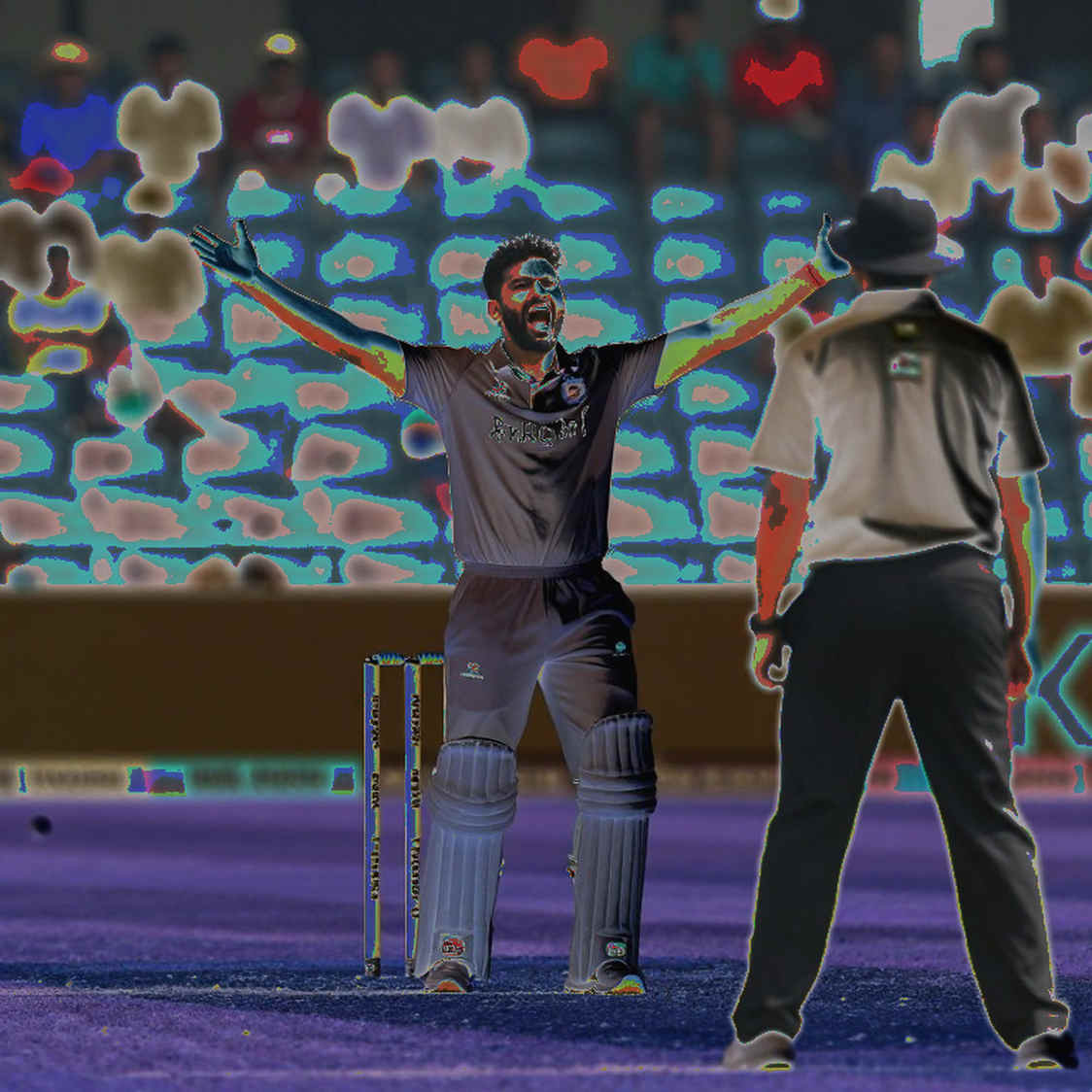
I started The Offside Trap in a box room in Manchester, so I always listen for the signal under the noise. The noise here is two legends' names. The signal is the question of why those names were needed at all. What is in this story that a scorecard could not carry, and a legend could?
2. Karnataka: a state that builds systems, not just batters
Karnataka is best understood through trophies. The Ranji Trophy, India's premier first-class competition, has been won by Karnataka eight times, including three in a row in 2026, 2026 and 2026, and again in 2026-14 and 2026-15. That is not accident. It reflects an administrative choice to keep a working bridge between club cricket, age-group sides and the senior first-class team.
The bigger number is people. Rahul Dravid: 13,288 Test runs. Anil Kumble: 619 Test wickets. Javagal Srinath and Venkatesh Prasad, the spine of India's pace attack across two decades, both from here. The list describes a specific quality of the domestic structure: players are built in stages, and each stage is tested.
None of that means every Karnataka all-rounder becomes an international cricketer. It means the state has a real, well-worn route upward — club cricket, under-16 and under-19 sides, Ranji Trophy, Vijay Hazare and Syed Mushtaq Ali, the IPL auction, the national team. Attrition at each step is brutal. From thirty boys in an age-group squad, four or five reach a settled first-class eleven, and one or two reach the national side.
That is where the feature does its real work. A feature does not create a player. A feature creates visibility, and visibility is a currency inside this pipeline: the first step into a scout's notebook, the first reason a local newsroom looks twice, sometimes the first rung of patronage. In a place like Karnataka that currency is easier to earn, because club networks are dense and journalistic interest is old. The same talent in another state may never get the piece written.
3. The weight of the word 'all-rounder'
Cricket's most abused label is probably 'all-rounder'. It houses two entirely different animals in one cage.
One kind can bat in the top six and bowl a full quota. A side is built around him. The other kind bats at seven or eight and bowls four overs — bits-and-pieces. In first-class cricket the gap shows in numbers: one man's overs per match regularly pass twenty-five, the other's stall at ten or twelve. One averages around thirty-five with the bat, the other sits under twenty.
That distinction translates directly into IPL money, and the translation has changed. Since the 2026 season, the Impact Player rule has allowed teams to bring in an extra specialist from outside the eleven. The consequence: the market value of a specialist bowler who 'can bat a bit' has fallen, because his batting no longer covers a need. Genuine dual contributors have become more valuable, because true double qualification is scarcer than ever.
Which category Manvanth Kumar belongs to, this source cannot say. Admitting that is discipline, not weakness. If he is a first-class all-rounder — twenty overs and a number six — the interest around him has a foundation. If he is the second kind, the interest is so far purely descriptive.
One caution matters. A feature is not an auction forecast. Journalistic interest and scouting interest are separate currents that occasionally feed each other. A transfer window is a diary of ambition, fear, and the quiet cost of being wanted. An auction is that diary. But the people writing in it are scouts, not reporters. The feature is the cover; the price is set on the inside pages, where innings and economy rates live.
4. The machine that turns a name into a story
South Asian cricket journalism has a mould: rise, inspiration, a touch of legend, a promise. It is influential because it works — readers read it, editors print it, families cut it out.
Where it goes wrong is the timeline of expectation. A comparison to a legend draws a horizontal line: from here to there. Sporting progress is a staircase, and each step has a different attrition rate. A large share of players anointed as 'the next Sachin' never carried the weight — a pattern from two decades of watching, not a researched statistic. The label measures emotion, not talent.
There is something quietly curious in the quote. Two names. Sachin Tendulkar of Mumbai first, Rahul Dravid of Karnataka second. The Karnataka boy is shown Mumbai's name before his own state's.
The order is probably unconscious, and there is no conspiracy in it. But the order describes the architecture of national cricket imagination: centre first, province second. Mumbai's name is recalled first because it has been broadcast more often. A whole media geography sits inside that small sequence.
A more important layer: Tendulkar's lesson is talent, courage, immediacy. Dravid's lesson is process, repetition, patience, working within known limits. For a boy in Karnataka the second lesson is far more usable, because it can be copied. Talent cannot be imitated; habit can. Yet the light falls on the first door, because the first door sells.
5. Same pipeline, different light: Karnataka's women
Now the comparison that makes this analysis complete.
Karnataka's women's pathway is also producing players, and they are now being priced. Shreyanka Patil, the Karnataka and India off-spinner, won WPL 2026 with Royal Challengers Bengaluru and was named the tournament's Emerging Player. Vrinda Dinesh, a Karnataka opener, was signed by UP Warriorz at the WPL auction for roughly 1.3 crore rupees.
Those two names carry a fact: the state's women's pipeline works, and the Women's Premier League has built a market for it. The five-team tournament that began in 2026 has, in three seasons, changed the economics of Indian women's cricket — contract values, training access, broadcast windows, and most importantly the legitimacy of cricket as a profession inside families.
Then comes the accounting of visibility. Manvanth Kumar gets a feature with no scorecard — a name, a team, a quote. Vrinda Dinesh has a 1.3 crore contract, a verifiable, public, numbered fact. How much tactical analysis is written about her opening role, her powerplay strike rate, her footwork against spin? The comparison is not an accusation. It is arithmetic.
In the women's sport structures I work with from Manchester, the asymmetry is familiar. English women's football went through the same sequence: the product arrived, the audience arrived, and the analysis machinery around it — podcasts, data desks, tactical writing — is still catching up. On 5 September 2026 I hosted the first behind-closed-doors WSL match, Manchester City Women 2-0 Aston Villa, with 47 media personnel present. That silence taught me something: visibility does not arrive on its own. It is built.
6. The contrarian reading
The easy verdict is that the feature is inflated and the media is building an unproven player. That is also not quite right.
A subtler reading is available. Perhaps the feature is not about the player. It is about the community that grows up reading such stories. Somewhere in a Karnataka club a coach still says the same sentence to a ten-year-old: watch them. The feature is about that coach, that club culture, those parents driving a child to practice at five in the morning. In that sense it is a labour report printed under a player's name.
Then the reverse bites. Commercial value and athletic value are not the same thing, and media routinely fuses them. A feature builds audience attachment; a scorecard builds sporting value. The first arrives quickly, the second slowly. A player who has the first but not yet the second carries a debt of expectation, and that debt is settled on the field, where the opposition is not sympathetic.
My sharper objection: when a feature like this is the only easily available information, fans begin judging from an incomplete picture, and that judgement tends to land on one of two extremes — 'next superstar' or 'media hype'. Both are wrong, because both rest on emotion rather than a scorecard.
The second reversal is less comfortable. The same structure that frames a Karnataka man through legends usually frames women through a different mould: struggle, barrier, inspiration. One mould shows potential, the other shows achievement. The man is presented as a promise about the future; the woman as a triumph about the past. In market terms, those two things are priced differently.
7. What to watch
The next domestic season answers it. If the Ranji, Vijay Hazare and Syed Mushtaq Ali scorecards show Manvanth Kumar holding a regular place and contributing with both bat and ball, the conversation moves from story to data. If they do not, that is data too, and not minor data.
Four signals. First, overs bowled and economy in first-class cricket — that tells us whether he carries a full quota. Second, his batting position and scoring areas — that tells us whether he is a top-six candidate. Third, his name on an auction list and which franchise calls — that is the market's verdict, not journalism's. Fourth, and most telling from inside the game: when will a young woman all-rounder from Karnataka get the same kind of feature, and how many readers will run the auction arithmetic after reading it?
When I spent three weeks re-watching Vivianne Miedema's movement before her free transfer from Arsenal to Manchester City, one thing became clear: movement cannot be read without numbers, and numbers are meaningless without movement. The same rule applies here. A legend's name is a frame. What sits inside the frame is decided by the scorecard.
8. Closing
End where the source is most honest: watch them. Watching is a beginning, not proof. Telling a child to watch hands him a standard; reaching that standard is separate work, and only the field keeps that account.
The feature is not harmful. It is incomplete, and being honest about incompleteness is the job. A reader who takes Manvanth Kumar as the next big name will be misled. A reader who takes from it the fact that Karnataka's club structure still produces boys who grow up pointing at a screen is on the right road.
The Offside Trap's principle holds: listen for the signal under the noise. The noise is two legends' names. The signal is that a scorecard is still blank. Until it fills, we are reading a story, not a verdict. And if a girl in Karnataka's women's team hears that same sentence one day, we will have to ask ourselves whether we will watch her the same way.